Africa09 July, 20263 min read
Anti-Immigration Protesters Seize Foreigners From Homes in Johannesburg and Hand Them to Police
Anti-immigration protesters in Johannesburg seized foreigners from homes and handed them to police. Protests included door-to-door searches and intimidation across major cities, with heavy security deployed.
Door-to-door raids
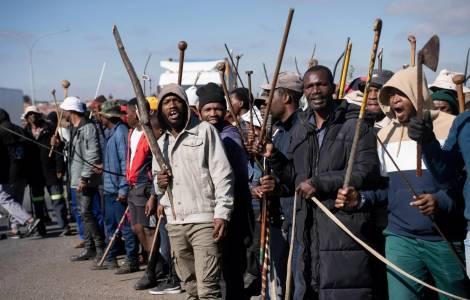
Anti-migrant protests in South Africa hardened on Thursday as groups of anti-immigration South Africans seized foreigners from their homes in Johannesburg and handed them to police, a Reuters reporter said in Johannesburg’s Alexandra township. In Alexandra, Reuters saw protesters breaking down doors and entering houses where they believed undocumented immigrants were hiding, and they escorted those they found to police vans where they were taken away, including a woman and a small child from Malawi. Reuters also reported that another man apprehended by the marchers told Reuters he was in the country legally, saying, "I am a ZEP holder," referring to the Zimbabwean Exemption Permit.
The protests also spread to Soweto, where anti-immigrant protesters marched through the township wielding sticks and flags, with plans to go search for undocumented immigrants, while another march took place in Durban on the east coast. The movement’s leader, former radio presenter Jacinta Ngobese-Zuma, said on June 30 that protests would take place every Thursday until demands were met, and her group March and March demanded tighter border controls and mass deportation.

Aid warnings and testimonies
Humanitarian groups and regional countries were on alert as vigilantes searched for undocumented migrants, and Doctors Without Borders (MSF) warned of growing humanitarian needs and disruption to healthcare following xenophobic violence and displacement. MSF said it launched an emergency response to assist people unable to access medical care as a consequence of xenophobic violence and intimidation, and MSF Emergency Coordinator Claire Waterhouse said, "Our priority is to address disrupted access to healthcare for those most at risk, regardless of who they are or where they come from." A 49-year-old Malawian man living in Lenasia, south of Johannesburg, told MSF he was refused medical help after anti-migrant protesters came to his house during a door-to-door campaign, stealing all of his money and laptop.
Reuters also reported that in Johannesburg’s Alexandra township on Thursday, protesters broke down doors and entered houses where they believed undocumented immigrants were hiding, and they escorted the people to police vans where they were taken away. South Africa’s President Cyril Ramaphosa acknowledged public concerns over illegal immigration but warned protesters against taking the law into their own hands, as Reuters reported.
Reintegration calls and deportations
As anti-immigration pressure prompted thousands of undocumented foreign nationals, including Zimbabweans, to return home, the Archbishop of Bulawayo Archdiocese in Zimbabwe called for reintegration of Zimbabweans returning from South Africa. Archbishop Alex Thomas Kaliyanil said in a letter dated Wednesday, July 8 that, "as they come home, let us welcome them without any prejudice and, to the best of our ability, integrate them into our Small Christian Communities (SCCs)," and he urged that returnees be integrated into Associations, Missions/Parishes. The ACI Africa report said authorities deployed more than 3,000 soldiers to support police in maintaining order as demonstrations escalated into looting, intimidation of foreign nationals, and attacks on businesses believed to be owned by migrants, and it said more than 900 people were arrested during the unrest.
In parallel, Reuters reported that Malawi’s government said on Thursday that over 38,000 of its citizens had returned from South Africa in recent weeks, while over 60,000 Zimbabweans had also returned to neighbouring Zimbabwe. The same Reuters reporting described the protests as culminating in nationwide protests on June 30, an informal deadline set for undocumented immigrants to leave the country, and it said the movement March and March demanded for schools and health centres to serve South Africans first.