Climateupdated 2h ago2 min read
Armenia Opens COP17 Biodiversity Conference in Yerevan, Elects Hambardzum Matevosyan President
This article is an automated aggregation of coverage from news outlets. Our editorials offer in-depth analysis curated by the NewsCord team.
COP17 opened in Yerevan as Armenia-hosted CBD conference. Hambardzum Matevosyan elected COP17 president during opening plenary.
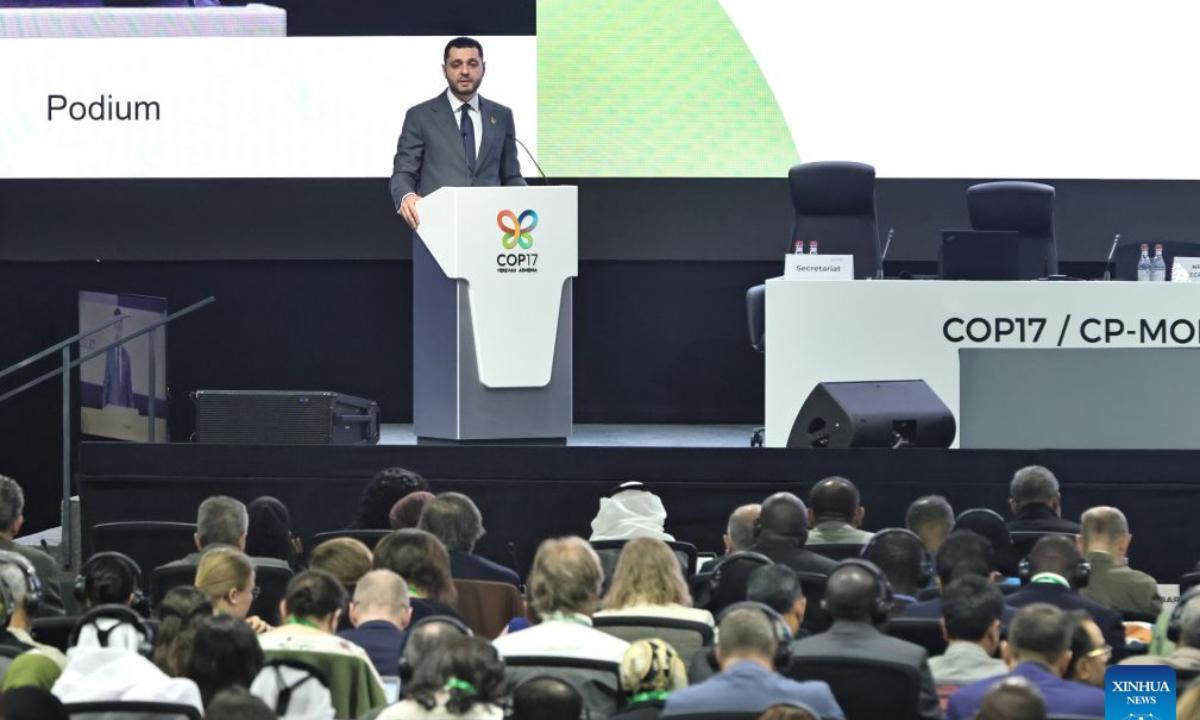
COP17 opens in Yerevan
The 17th Conference of the Parties to the UN Convention on Biological Diversity (COP17) officially opened in Yerevan, Armenia, with the opening plenary held on Monday.
“The opening plenary of the 17th meeting of the Conference of the Parties to the UN Convention on Biological Diversity (COP17) was held here on Monday.”
Armenia’s Minister of Environment, Hambardzum Matevosyan, was elected president of COP17, assuming responsibility for leading the international community’s joint efforts at the conference.
Astrid Schomaker, executive secretary of the Convention on Biological Diversity, told the opening plenary that the international community has made some progress in implementing the Kunming-Montreal Global Biodiversity Framework, but the pace and scale of action remains insufficient to achieve its targets.
Schomaker said the conference should advance global biodiversity governance through "accountability, alignment and acceleration," and she urged parties to strengthen alignment between national actions and global targets.
COP17 runs through Oct. 30, with the FAO describing the meeting as the first global review of collective progress toward the Kunming-Montreal Global Biodiversity Framework, the global plan to halt and reverse biodiversity loss worldwide.
Wildlife and climate stakes
The International Fund for Animal Welfare said governments are being urged to turn wildlife commitments into action at biodiversity COP17 in Armenia. Matt Collis, senior director of policy at IFAW, said, "At the last biodiversity COP, governments took an important step by recognising that wild animals play a role in tackling climate change." Collis added that COP17 is an opportunity "to move beyond recognition and ensure that protecting and restoring wildlife populations becomes part of the practical decisions governments make to strengthen ecosystems and address climate change."
IFAW argued that decisions on biodiversity and climate change should explicitly recognize the ecological functions of wild animals and include wildlife populations in ecosystem protection and restoration. IFAW said the stakes are significant, because healthy wildlife populations contribute to the functioning of forests, grasslands, oceans, and other ecosystems that capture and store carbon.

Targets, money, and legal pressure
FAO said COP17 is the midpoint between the Framework’s adoption in 2022 and its 2030 target deadline, and it described the meeting as a critical opportunity to assess collective progress, identify gaps, and accelerate action. The Guardian said COP17 will focus on assessing progress on decade targets including protecting 30% of land and sea for nature, reforming $500bn of environmentally damaging subsidies, and restoring 30% of the planet’s degraded ecosystems. JusticeInfo.net said the COP17 on biological diversity takes place from October 19 to 30, 2026 in Yerevan, Armenia, and it described the conference as the 17th conference of the 196 States Parties to the Convention on Biological Diversity.
JusticeInfo.net quoted Astrid Schomaker saying, "Collectively, we are not acting on the scale required," and it added that to achieve the targets, "we need a response from societies as a whole." Noticias Ambientales said COP17 faces major financial challenges, and it cited Antonio Guterres, UN Secretary-General, emphasizing that the necessary pace to reverse environmental destruction has not yet been achieved.