
As the U.S. gears up for a potential ground war in Iran, $100-plus oil threatens ‘demand destruction’ — starting in Asia
Key Takeaways
- Ground war in Iran likely; troops, ships, aircraft moving; U.S. undecided on boots-on-ground.
- Goal to reopen Strait of Hormuz; safe-route map published with shipping fees.
- Oil above $100 per barrel could trigger demand destruction, with price easing yet risk.
Markets: oil and stocks
Oil is heading down but stock markets aren’t buying it
Oil declined to $109 per barrel after Israel’s Benjamin Netanyahu said his forces would no longer target Iran’s energy infrastructure.
Netanyahu also said Iran’s ability to enrich uranium had been destroyed—a key war goal.
“This war [is] ending a lot faster than people think,” he said.
S&P 500 futures were down 0.71% this morning prior to the open in New York.
The index fell 0.27% yesterday.
Markets in Asia were largely down this morning, again, with the exception of India’s Nifty 50 (up 0.49%) and South Korea’s KOSPI (up 0.31%).
Europe was a different story: the Stoxx 600 rose 0.25% before lunch.
Chip-smuggling arrest
ONE BIG THING
Supermicro founder arrested in chip-smuggling probe
Federal agents on Thursday arrested Yih-Shyan “Wally” Liaw, a prominent Silicon Valley executive deep in the AI ecosystem who co-founded Supermicro in 1993 and is a close confidante of CEO and chairman Charles Liang.
The stock tumbled roughly 12% in after-hours trading following the news, Fortune’s Amanda Gerut reports.
According to a stunning release from the Department of Justice, an indictment was unsealed in Manhattan federal court on Thursday charging Liaw, 71, and two others with allegedly working in secret to divert billions in Supermicro AI servers to China in violation of U.S. export control laws.
The two alleged co-conspirators charged alongside Liaw include Supermicro’s Taiwan general manager Ruei-Tsang “Steven” Chang, who remains a fugitive, and a third-party fixer named Ting-Wei “Willy” Sun, who was also taken into custody on Thursday.
Ground war and Hormuz route
The likely next phase is a ground war
We’re starting to get a clearer picture of the next phase of the war: An assault on Iran’s assets around the Strait of Hormuz.
Some U.S. lawmakers like Sen. Richard Blumenthal, D-Conn., are fearful that will require putting troops inside Iran.
“Some of the objectives that [Trump] continues to espouse simply cannot be achieved without a physical presence there—securing the uranium cannot be done without a physical presence,” he told the Associated Press.
President Trump denied he would engage in a ground war in Iran, but also left open the door to that same scenario: “I’m not putting troops anywhere,” Trump told the New York Times. “If I were, I certainly wouldn’t tell you.”
The reality is that there are 2,200 U.S. Marines aboard the amphibious assault ship U.S.S. Tripoli on their way to the region and they will receive backup from A-10 Warthog jets and Apache attack helicopters.
Those assets can be used to provide close air support for ground troops, Fortune’s Jason Ma—an ex-Marine—tells me.
The White House confirmed to Reuters that it had discussed using ground forces but that no decisions have been made.
There is, in fact, a safe route through Hormuz
The strait isn’t blocked—it is controlled by Iran, which selectively allows friendly ships through the seaway that normally supplies one-fifth of the world’s oil.
Eight ships this week have successfully navigated the 24-mile gap between Iran and Oman, according to the Financial Times.
They have pursued an unusual route, the paper says, by heading around the north side of Larak Island, hugging the coast of Iran, before moving south again.
It looks like this:
The cost of safe passage is $2 million per operator, Lloyds of London reported.
Any “enemy” ships face a sea potentially full of mines, drone strikes, or attacks from fast-moving speed boats.
Using U.S.-allied planes and helicopters to clear the strait will take weeks, the Wall Street Journal says.
The logistics of using military escorts to safeguard ships in the strait are formidable: Two destroyers are needed for every two to four tankers, the Financial Times says.
Oil market and consequences
‘Demand destruction’: The high price of oil is changing everything
It’s day 21 of the war against Iran.
In the last 24 hours, Israel struck sites in Syria and Lebanon, and Iran targeted Kuwait’s Mina Al-Ahmadi refinery and locations in Dubai and Bahrain.
4,200 people have been killed so far, according to Bloomberg.
With no sign of the conflict ending soon, the cost of long-term $100-per-barrel oil is forcing companies and governments to rethink everything.
The worst-case scenario is outright “demand destruction,” according to a research note by energy research company Wood Mackenzie, seen by Fortune.
While the global economy can work around high oil prices by buying less, operating more efficiently, or deploying alternatives, a “demand destruction” scenario implies a complete cessation of certain activities because the price of oil rules them out.
Some examples:
- Jet fuel in Asia has reached $200 per barrel.
- The International Energy Agency has urged people in Asia to work from home, avoid air travel, and drive at slower speeds.
- Officials at Saudi Aramco are forecasting that oil could go to $180 per barrel, according to the Wall Street Journal.
- The sky is the limit: Wood Mackenzie isn’t ruling out $200.
- CEOs have been operating with a wartime mindset since 2025, Fortune’s Geoff Colvin says.
CHART OF THE DAY
The French really are thinner than the rest of us
In the U.S., 12% of adults use GLP-1 weight loss drugs. The rate is just 2% in the E.U. and U.K., according to ING. The market for these drugs could reach $100 billion in 2027, according to ING’s Thijs Geijer and Diederik Stadig.
NUMBER OF THE DAY
$200 billion
That’s the budget the Pentagon requested to continue fighting the Iran war. It might fund the U.S. military for just 140 more days, according to Fortune’s Jake Angelo.
The war is costing roughly $11.3 billion per week, per Piper Sandler analyst Andy Laperriere.
More on Iran
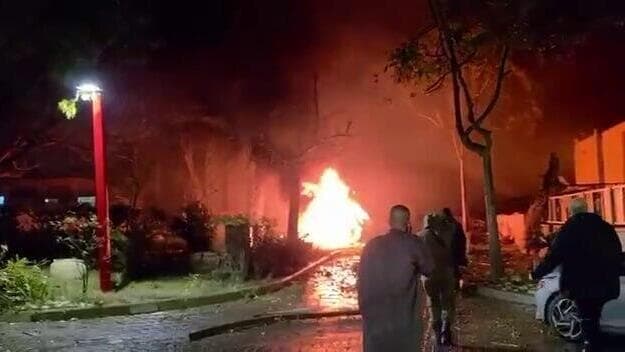
Iranian missiles strike Dimona and Arad, injuring over 100.
47 sources compared
Israel and U.S. Strike Natanz Nuclear Facility Again; Iran Blames Attack
69 sources compared

Iran Attacks Diego Garcia with Long-Range Missiles, Targeting U.S.-UK Base
82 sources compared
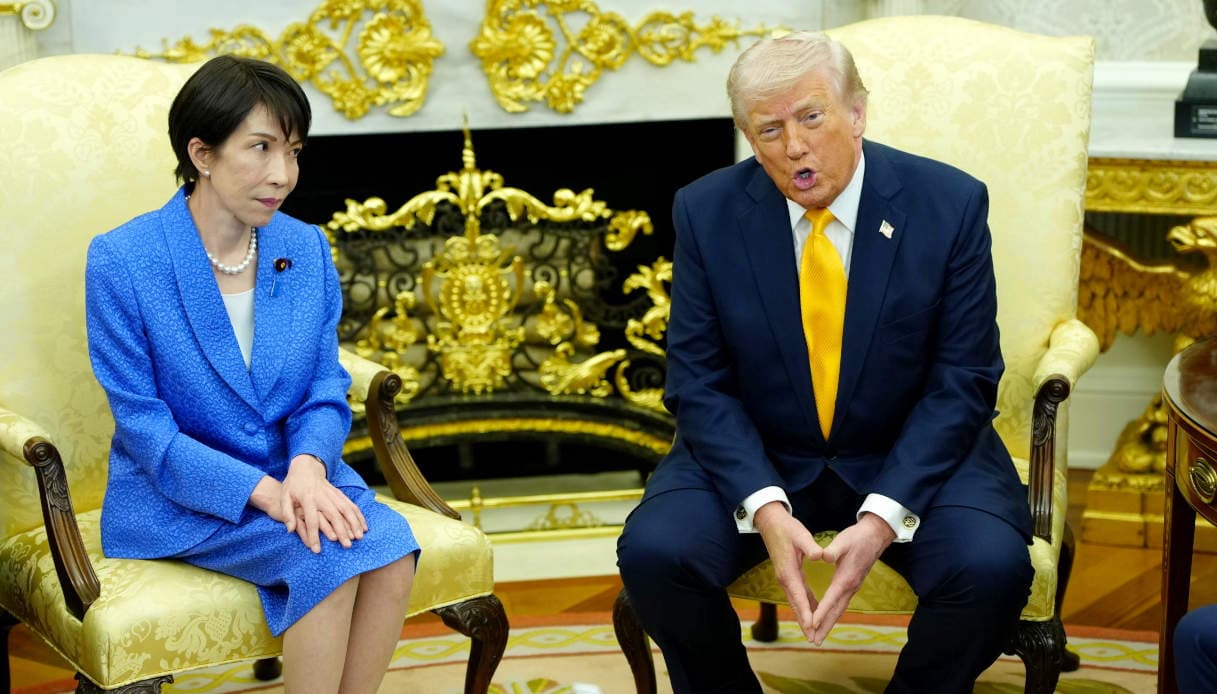
Trump Defends Iran War by Citing Pearl Harbor
12 sources compared