Iran08 April, 20263 min read
Australia Grants Asylum to Five Iranian Women Footballers and an Official
This article is an automated aggregation of coverage from news outlets. Our editorials offer in-depth analysis curated by the NewsCord team.
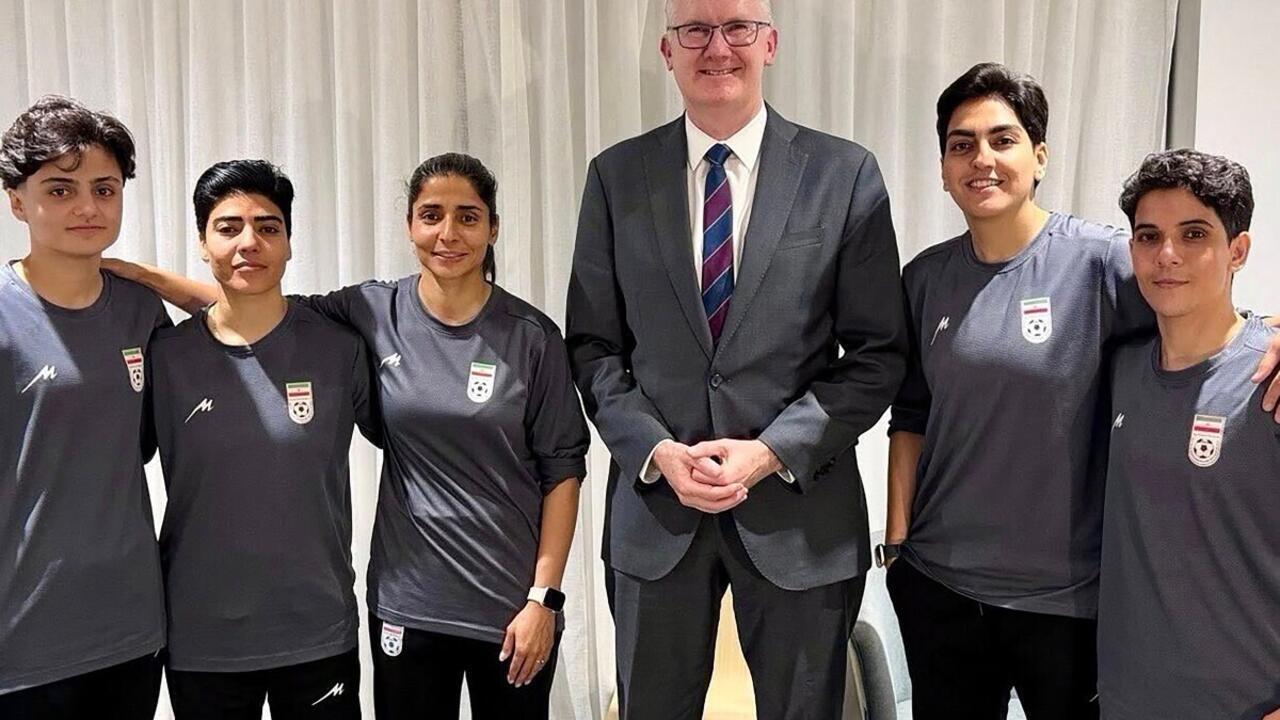
Five Iranian women players defected from Iran's national team. Australia granted asylum to five players and one official.
Protest and Defiance
The Iranian women's national football team became unexpected symbols of resistance when five players and one official sought asylum in Australia following their participation in the Asian Women's Cup. The squad had protested against the Islamic Republic by refusing to sing the national anthem. The protest mirrored actions taken by the Iranian men's team at the 2022 Qatar World Cup following the death of Jina Mahsa Amini and the subsequent 'Woman, Life, Freedom' uprising.
“The women's team's silent protest echoed that of the Iranian men's team at the 2022 Qatar World Cup, following Iranian authorities' repression of the 'Woman, Life, Freedom' uprising after the death in custody of Jina Mahsa Amini.”
This act of defiance led to Iran's state television labeling the players 'wartime traitors,' with one presenter suggesting they should be dealt with 'more severely' upon their return to Iran. The timing was particularly significant as the team had arrived in Australia just days before the missile strikes that killed Ayatollah Ali Khamenei and much of Iran's senior leadership. Their participation in the tournament became fraught with political significance as they were unexpectedly 'the regime's most visible ambassadors.'

Regime Control and Surveillance
The Iranian footballers faced severe repression and surveillance throughout their Australian tour. Multiple independent sources reported a regime-imposed lockdown that extended to various aspects of their daily lives. Players were subjected to threats against their family members.
A large financial guarantee was levied on each squad member by the Iranian government. Players suspected their mobile phones were tapped, with some phones being confiscated entirely. The team was under constant supervision, with officials linked to the Iranian Revolutionary Guard Corps (IRGC) chaperoning the squad.

Players' passports were confiscated to prevent defections. Each player had been required to leave a large financial guarantee with the Iranian government. Family businesses would be 'in the hands of the IRGC until the player returns' as insurance against defection.
Australian Response
Australia's decision to grant asylum to the six Iranians demonstrated a pattern of providing sanctuary to athletes fleeing persecution. Australia had previously offered protection to members of Afghanistan's women's national football team after the Taliban banned women's sports. President Donald Trump had initially criticized the Australian government for perceived inaction regarding the team's safety.
“Australia has in the past offered a safe haven to members of Afghanistan's women's national football team after the Taliban banned all sport for women and girls.”
Trump later congratulated Prime Minister Albanese after the first five women were freed. The Australian government's response highlighted the importance of protecting courageous athletes who stand up against oppressive regimes. The players' protest and subsequent asylum request came during a time of heightened tension in Iran.
This followed widespread public protests against the regime earlier in the year. Open training sessions were removed from the team's schedule during the Asian Cup. No media interviews with players were granted during the tournament.
International Failures and Threats
The situation with the Iranian women's football team revealed systemic failures by international sporting bodies. FIFPRO, the global players' union, criticized the Asian Football Confederation (AFC) and FIFA for doing too little to foresee the risks faced by the Iranian players. By permitting political officials who restrict women's rights to travel with delegations, these organizations provided a platform for abuse beyond Iran's borders.
Iranian athletes have previously told Human Rights Watch how government political 'minders' travel with national teams to monitor their activities. This indicates a pattern of systemic control over Iranian athletes. The case highlighted the broader context of Iranian authorities' ongoing internet shutdown.

Iran's prosecutor general's office warned that 'collaboration with the enemy' would lead to asset confiscation. The office also warned of 'punishments according to the Islamic Penal Code, including execution' for athletes who defected. Many players were left unable to contact their families to check if they were alive during the missile strikes.