Asia · updated 1h ago · 3 min read
Bank of Korea Warns Prolonged Middle East War Could Push Oil Prices Higher, Weigh on South Korea Growth
Oil prices exceed $100 per barrel amid Middle East tensions. Prolonged Middle East war could push oil higher and hinder South Korea's growth.
Cause of the oil-price jump.
5 of 6 outlets skipped it: BOK projects higher inflation and slower growth under a prolonged war.
16outlets compared
Same story, two versions
tap a side to read it in full
SSource: eciks.org
“Market commentary has pointed to renewed attacks and shipping incidents in the Gulf region as a driver of the recent gains.”Read the original ↗
SSource: bloomingbit
“fueled concern over rising tensions in the Middle East, helping drive international oil prices higher.”Read the original ↗
One stresses attacks and incidents, the other foregrounds talk cancellations.
Oil shock and forecasts
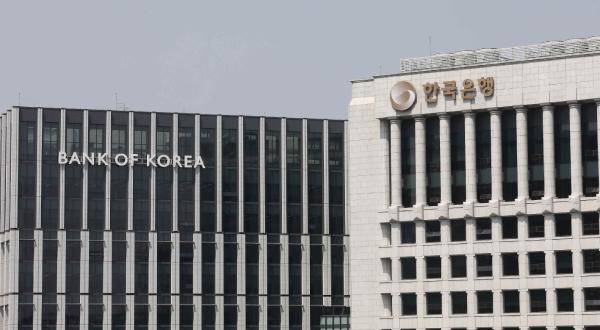
The Bank of Korea said a prolonged conflict in the Middle East could push oil prices higher and weigh on South Korea’s economic growth next year, citing an August economic outlook released on Monday.
“a prolonged conflict in the Middle East could push oil prices higher”
The BOK forecast consumer inflation at 2.8 percent this year and 2.7 percent next year under its prolonged-stalemate scenario, with oil-price assumptions rising to $95 and $85 for Brent crude in the second half of this year and next year.

The BOK said its base-case forecast assumes Brent will average $86 a barrel in the second half of this year and $74 next year, while it warned that oil prices have risen faster than anticipated as Brent surged to around $107 a barrel as of Monday amid escalating tensions between the U.S. and Iran.
The BOK projected growth of 3.3 percent this year and 2.9 percent next year under its base case, but 3.2 percent and 2.6 percent under the prolonged Middle East war scenario.
It also said the government included 1.45 trillion won ($1.08 billion) in its 2027 budget proposal to compensate refiners for losses from the oil price cap system in the fourth quarter of this year, while not yet setting aside funds for compensation under the system in 2027.
Strait of Hormuz fears
International oil prices rose as the cancellation of talks between Iran and Gulf states fueled concern over rising tensions in the Middle East, with fighting continuing in Yemen.
Cointelegraph reported on September 14 that a planned meeting between Iran and Gulf countries to discuss issues related to the Strait of Hormuz had collapsed, heightening concerns over potential disruptions to crude supply.

In parallel, market reports described oil price volatility with WTI traded near $102 a barrel and Brent around $108 on Sept. 14, 2026, as traders pushed both benchmarks above the $100 mark amid persistent tensions.
The Jerusalem Post said the Strait of Hormuz is a vital chokepoint for global oil transportation and that trade volume through the strait has plummeted to 2 million barrels per day due to military activity, down from peak levels that represented nearly one-fifth of global oil exports.
It added that on Wednesday, September 9, 2026, Iran claimed to have attacked 10 vessels near the Strait of Hormuz in response to the U.S. previously sinking five Iranian tankers.
Ripple effects on budgets
As oil prices climbed, AAA spokesman Mark Jenkins said Florida’s statewide gas price average has risen past $4 a gallon for the first time since June 1, as rising oil prices continue to drive up the cost of gasoline.
“Florida’s statewide gas price average has risen past $4 a gallon”
WWSB reported that the U.S. price for crude oil increased nearly 20% over the past two weeks, climbing from $83 per barrel to more than $100 per barrel, and that crude oil accounts for more than half the price consumers pay for gasoline.
In the Middle East, Reuters-cited reporting described Saudi Arabia closing its East–West pipeline after attacks, with the halt threatening to disrupt a quantity equivalent to 4% of global oil supplies.
The Jerusalem Post said surging fuel prices are putting additional pressure on both household and corporate budgets, and it reported that the Dow Jones lost 405 points (0.8%) on Wednesday and closed near 52,381.
It also said the 10-year yield hit its highest level since November 2023 and that, on Wednesday, September 16, the Fed was expected to decide on interest rates with the likelihood of a further rate hike near 60%.