
Bennett and Lapid Announce Alliance to Oust Netanyahu in Israel’s Knesset Elections
Key Takeaways
- Bennett and Lapid merge parties to challenge Netanyahu in 2026 elections.
- They aim to form a major opposition bloc to challenge Netanyahu.
- The move revives the 2021 Bennett-Lapid power-sharing collaboration.
Gaza war backdrop
Israel’s war in Gaza sits behind a new political realignment in Israel, as multiple outlets tie the current moment to the aftermath of Hamas’s 2023 attack on southern Israel and Israel’s retaliatory airstrikes on Gaza.
Sky News says that “A year later, the Middle East was plunged into turmoil following Hamas's 2023 attack on southern Israel,” and that “Israel retaliated immediately and carried out airstrikes on Gaza.”
Sky News also reports that “In mid-December, Gaza's Hamas-run health ministry said thedeath toll in the territory had passed 45,000.”
Al Jazeera’s analysis similarly frames the Bennett-Lapid move as happening in a country “continues to attack its neighbours,” with the war in Gaza and the occupation of Palestinian and Syrian land part of the political environment.
The same Al Jazeera piece adds that “Both politicians have been consistent cheerleaders for Israel’s genocide in Gaza,” even while they have “occasionally taken issue with how it was being prosecuted.”
In that context, the political question for the opposition bloc becomes whether a Bennett-Lapid merger can change Israel’s direction while the war continues to shape public priorities and security narratives.
Opposition merger announced
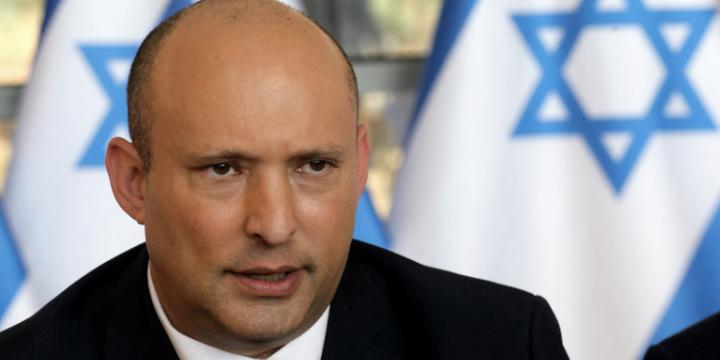
On Sunday, former Israeli prime ministers Naftali Bennett and Yair Lapid announced they would merge their parties in an effort to oust Prime Minister Benjamin Netanyahu, with the Gaza war providing the security and political backdrop for the campaign.
Sky News reports that “Right-wing Naftali Bennett and centrist Yair Lapid issued statements announcing the merger of their parties,” and that Bennett said the new party would be called Together, adding, “After 30 years it is time to part with Netanyahu and open a new chapter for Israel.”
EFE says Bennett and Lapid unveiled “«Together,» a new party formed by the merger of their respective center and center-right factions,” and that the party aims to “oust Benjamin Netanyahu from the government in the general election this autumn.”
Al Jazeera describes the announcement in Herzliya, with Bennett telling reporters, “Tonight, we are uniting and establishing the ‘Together’ party under my leadership, a party that will lead to a great victory, and the opening of a new era for our beloved country.”
The Forward reports that Bennett and Lapid announced they would run in a shared party called Yachad, or Together, and quotes Bennett saying, “The era of division is over. The era of correction has arrived.”
Multiple outlets also connect the move to the 2021 political partnership that briefly ended Netanyahu’s rule, with Sky News noting that the duo “put an end to Netanyahu's successive 12-year tenure in a 2021 election.”
Al Jazeera adds that the 2021 alliance “last toppled Benjamin Netanyahu’s government in 2021,” ending his “12-year hold,” before the coalition collapsed and Netanyahu returned.
Voices on Gaza and security
While the Bennett-Lapid merger is framed as a political reset, Al Jazeera’s analysis argues that it offers little change for Palestinians in Gaza and the West Bank, citing the pair’s positions on the war and on a Palestinian state.
The outlet says, “There is little evidence that the Bennett-Lapid partnership would offer anything different for Palestinians in Gaza and the West Bank,” and it adds that “Both politicians have been consistent cheerleaders for Israel’s genocide in Gaza.”
Al Jazeera quotes a Palestinian legal rights figure, Hassan Jabareen of Adalah, saying, “Look, this [the Netanyahu government] is the most extreme government you can imagine, and it may be – that if international pressure is there – a Bennett-Lapid government might listen to it,’ Hassan Jabareen, the founder of Palestinian legal rights organisation Adalah, told Al Jazeera.”
The same analysis includes Bennett’s past statements about Palestinians, including that in October 2018 he said he would authorize a “shoot-to-kill” policy against Palestinians attempting to cross the boundary between Gaza and Israel, and that when asked whether it would include children he replied, “They are not children – they are terrorists.”
It also reports Bennett’s current stance on coalition composition, stating he “now only wants ‘Zionist’ parties in government, excluding ‘Arab parties’ comprised of Palestinian citizens of Israel – 20 percent of the country’s population.”
In contrast, EFE presents Bennett’s campaign promises as focused on security failures and governance, saying Bennett promised “a state commission of inquiry into the security failures that enabled the October 7, 2023 attack,” and that he would “limit the Prime Minister’s term to eight years.”
EFE also records Lapid’s pitch for unity, quoting him saying, “Israel «needs unity like air to breathe»,” and describing Bennett as “a liberal, decent, and law-abiding right-winger.”
Coverage divergence on seats and framing
Different outlets describe the merger’s electoral math and its political meaning in sharply different ways, even when they report overlapping facts about the Bennett-Lapid plan.
EFE says Channel 12’s latest electoral poll would give the merged parties “a total of 28 seats (21 for Bennett and 7 for Lapid),” which would “surpass[] Netanyahu’s Likud party, but falling short of the 61 seats needed for a majority.”

By contrast, Sky News reports a survey on 23 April by Israel’s N12 News finding Bennett securing “21 of the 120 seats, against 25 for Netanyahu's Likud,” and it says Lapid’s party would secure “only seven seats, down from the 24 it currently holds.”
Anadolu Ajansı, citing Channel 12 and Maariv, reports “Bennett's party alone tied with Likud… at 24 seats each,” and says “the party ‘There Is a Future,’… won 7 seats,” presenting the alliance as “the largest apparent bloc in the Knesset.”
Al Jazeera’s analysis says a poll published by the Jerusalem Post on Monday projected the new bloc would win “four fewer seats than the combined total of both politicians’ former parties if they were running separately,” and that it would have “one seat fewer than Netanyahu’s Likud Party.”
The Times of Israel frames the merger as “the clearest attempt yet to consolidate the opposition bloc ahead of the next election,” while also emphasizing that “the path to unseating Netanyahu” remains “elusive as ever.”
The Forward, meanwhile, focuses on the political symbolism, quoting Bennett’s “The era of division is over. The era of correction has arrived,” and describing how the union “ignited scorn on the right,” including posts by Netanyahu and far-right partners.
Stakes for Israel’s war politics
The merger’s stakes, as described by the sources, extend beyond coalition arithmetic into how Israel’s war posture and security failures are handled politically, including the question of accountability for the October 7, 2023 attack and the future direction of attacks in Gaza.
EFE says Bennett promised “a state commission of inquiry into the security failures that enabled the October 7, 2023 attack,” and it adds that he would “protect «the lands of our country,» vowing not to concede «an inch to the enemy.»”
Al Jazeera’s analysis argues that even if the Netanyahu government is “the most extreme government you can imagine,” a Bennett-Lapid government might still “listen to it” only if “international pressure is there,” and it underscores that the pair’s positions have not offered Palestinians a clear break from the war.
The Forward reports that Netanyahu and far-right partners posted on social media suggesting Yachad would partner with Arab parties or do the bidding of Mahmoud Abbas, while Itamar Ben-Gvir called Bennett and Lapid “an extreme leftist.”
Anadolu Ajansı describes Likud’s response as a “scathing attack” calling the alliance a “new deception to steal the right-wing votes,” and it quotes Itamar Ben-Gvir telling Channel 13 that Bennett “is selling his principles for the second time,” calling the merger “an alliance with the left that threatens the state's identity.”
At the same time, Anadolu Ajansı reports that Army Radio quoted sources close to Gadi Eizenkot praising the unity as a “necessary step to correct the course,” and it says former defense minister Avigdor Lieberman called uniting the ranks “the ‘only way to end the political deadlock and protect the state's institutions from collapse.’”
The Times of Israel adds a further political stake by focusing on whether the alliance can “meaningfully shift the balance of power,” and it quotes Prof. Assaf Shapira saying, “There are a few new players, but basically we are in the same situation, and it’s the same game so far,” while also noting the unresolved question of whether Gadi Eisenkot will join.
More on Gaza Genocide
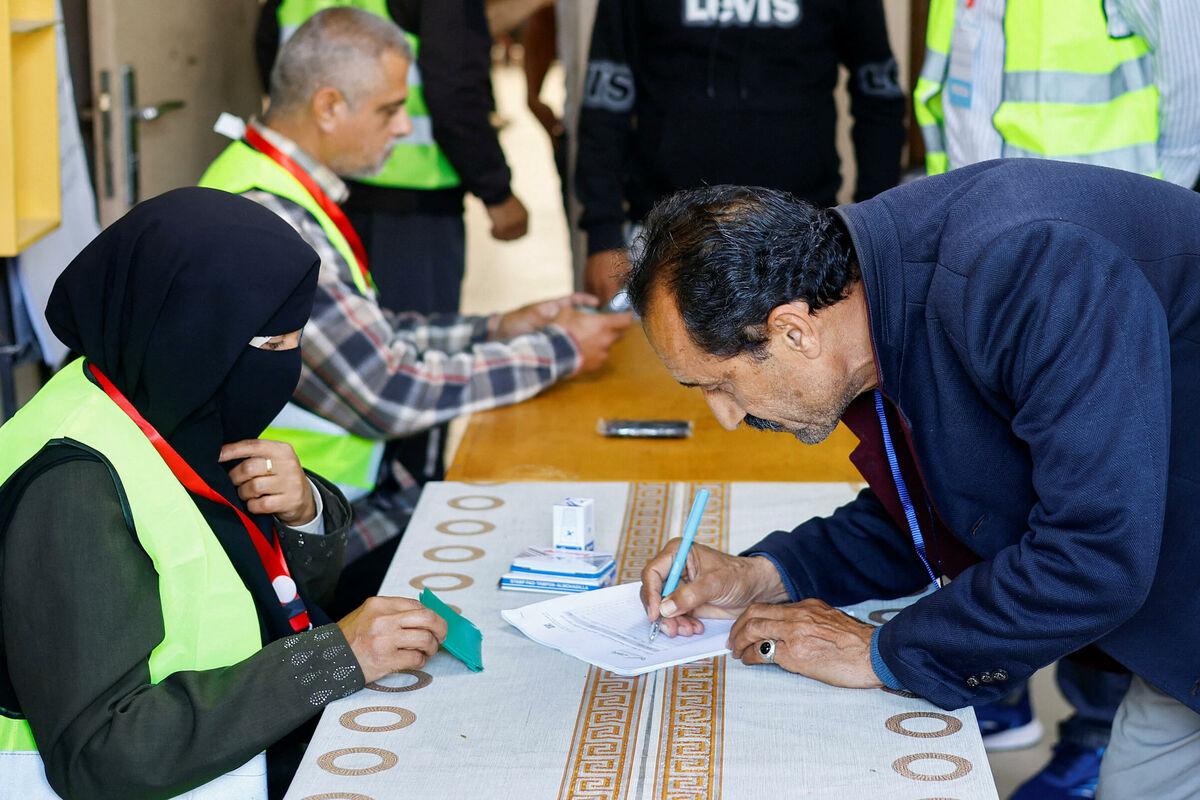
Palestinians Vote In Deir Al-Balah And West Bank Municipal Elections After Hamas Exclusion
20 sources compared
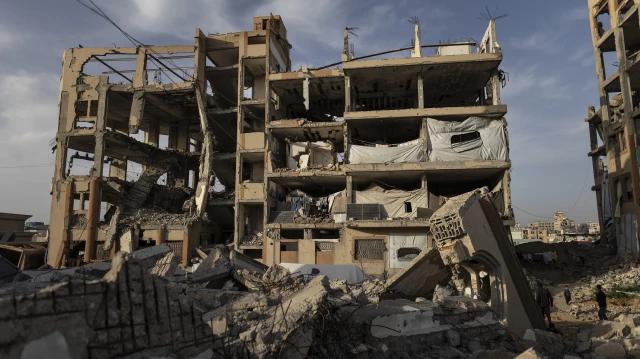
Israeli Attacks Kill At Least Four Palestinians in Gaza Despite Ceasefire
22 sources compared

Israel Prevents Essential Materials as Aid Trucks to Gaza Fall After Iran War
11 sources compared

Israel Strikes Continue as Iran, Hezbollah, and Hamas Remain Degraded Under Conditional Ceasefires
23 sources compared