Gaza Genocide21 May, 20264 min read
Board of Peace Warns Hamas Refusal To Disarm Blocks Gaza Ceasefire Progress
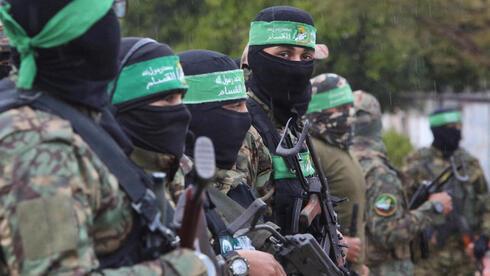
Hamas refuses to disarm, stalling progress on the Board of Peace's Gaza ceasefire plan. Board demands full demilitarisation of Gaza, insisting armed groups surrender unconditionally.
The National was read line by line by the Watchdog: 4.5. See the score →
Ceasefire plan stalls
Nickolay Mladenov, the Board of Peace high representative for Gaza, told the UN Security Council that a "deteriorating status quo" in the territory threatened to become permanent, warning that "Hamas holding military and administrative control over two million people across less than half the territory" was blocking progress. In a written report submitted to the Security Council on May 15, the Board of Peace said Hamas's refusal to disarm was the "principal obstacle" to progress, while CBC reported that more than 800 Palestinians, including over 200 children, have been killed since the ceasefire began, according to Gaza's Ministry of Health. CBC said aid agencies Oxfam, Refugees International and Save the Children US accused Israel of continuing to obstruct the entry of aid into Gaza, with UNICEF's Salim Oweis telling CBC News, "We're not at the point where we need to be," and adding that aid negotiations with Israel have not changed since the Board of Peace was created.
The European Council on Foreign Relations said Trump’s 20-point Gaza plan is at risk of falling apart because of "American and Israeli maximalism" over how, and how quickly, Hamas gives up its weapons, and it described the Board of Peace as conditioning progress on the Gaza Strip’s full demilitarisation. It added that Israel is threatening a new offensive unless Hamas accepts, while Hamas is refusing to budge before Israel fulfills its own commitments under the deal, including allowing "full unimpeded humanitarian access to Gaza."

Competing blame, shifting access
The Guardian reported that Mladenov told the UN Security Council on Thursday that Hamas was the "principal obstacle" to the ceasefire’s continued implementation because it "refused to accept verified decommissioning, relinquish coercive control and allow a genuine civilian transition". Hamas rejected the Bulgarian diplomat’s accusations, and the Guardian quoted its spokesperson Hazem Qassem saying the report "reflects continued adoption of the Israeli position and serves as an attempt to justify further Israeli escalation". The Guardian said Israeli forces have continued airstrikes on Gaza and moved forward from the ceasefire line agreed in October, increasing the area under direct Israeli control from the agreed 53% to at least 60%, while it also reported that more than 850 Palestinians have been killed since the ceasefire was declared in October.
It further reported that Israel has fallen short of its obligation to allow in 600 trucks of humanitarian supplies a day and has refused to relax restrictions on "dual-use" items, which have prevented aid agencies bringing in basic humanitarian supplies such as water pipes or heavy machinery to begin clearing rubble. In a separate account, Sud Ouest quoted Bassem Naïm saying, "Our population expects from these talks that the participants agree to put an end to Israeli excesses and stop all violations," as U.S. envoy Steve Witkoff was to meet in Miami with representatives from Qatar, Egypt, and Turkey.

Phase 2 stakes and next steps
The Times of Israël reported that Mahmoud Abbas called for the removal of "all obstacles" that Israel, he says, has placed and that hinder the implementation of the second phase of the Gaza ceasefire, with his speech read by his Prime Minister Mohammed Mustafa during an African Union summit in Ethiopia. Abbas accused Israel of 'continuing to violate' the ceasefire agreement backed by the United States and said, "To date, since the announcement of the ceasefire, more than 500 Palestinians have been killed [in Gaza]," warning that this threatens the sustainability of the truce and the full implementation of its second phase. The Times of Israël said the second phase provides for the gradual withdrawal of Israeli forces from Gaza and the disarmament of Hamas, with the deployment of an International Stabilization Force (ISF) charged with ensuring security, while it noted that Hamas has repeatedly said dismantling its weapons is a red line.
It also reported that Nickolay Mladenov said "several conditions must be met" before the members of the technocratic committee can enter Palestinian territory, including that "First, Hamas must transfer civil control of the institutions to Gaza," and that there must be a "radical increase in aid to the population" and a framework in place for dismantling weapons. CBC added that the UN has estimated the cost of rebuilding Gaza will top $70 billion (US), and it quoted UNICEF's Salim Oweis saying, "The majority of the Gaza Strip is destroyed," and that rebuilding requires clearing things out first, which he said is not something Gazans are able to do because of resources and the scale of destruction.