Technology and Science03 July, 20263 min read
Browser Wars Shift to AI Agents as Perplexity’s Comet, OpenAI’s Atlas Compete With Chrome and Safari
This article is an automated aggregation of coverage from news outlets. Our editorials offer in-depth analysis curated by the NewsCord team.
AI-enabled browsers become the main battleground, not traditional search. New entrants introduce in-browser AI assistants to challenge Chrome and Safari.
AI agents reshape browsing
Browser competition in 2026 is shifting from search results to which company’s AI can “act on your behalf inside the browser,” with Google Chrome and Apple’s Safari still dominating overall. TechCrunch frames the new battleground as browsers becoming “less like a window onto the web and more like an assistant that gets things done for you,” and it points to Perplexity’s Comet as an AI-powered example. Perplexity’s Comet is described as a chatbot-based search engine that can summarize emails, browse web pages, and perform tasks like sending calendar invites, and it is “currently only available to users with Perplexity’s $200/month Max plan.”
“The fight isn’t just over search results anymore — it’s over which company’s AI gets to act on your behalf inside the browser.”
The same TechCrunch overview also describes OpenAI’s Atlas as letting users ask ChatGPT about search results and browse websites within the chatbot, with an “agent mode” for users to ask ChatGPT to complete tasks on their behalf. In parallel, Opera’s Neon is presented as an AI agentic browser with contextual awareness that can do things like researching, shopping, and writing snippets of code, and it can even perform tasks while the user is offline.
Privacy and open-source options
While AI-first browsers expand, TechCrunch also highlights privacy-focused alternatives like Brave, describing its built-in ad and tracker blocking and a gamified reward system using Basic Attention Token (BAT). TechCrunch adds that DuckDuckGo has enhanced its browser with generative AI features such as a chatbot and an improved scam blocker that detects fake cryptocurrency exchanges, scareware, and fraudulent e-commerce websites. In a separate local Western guide, 01net argues that Firefox stands apart because it is developed by a non-profit foundation headquartered in San Francisco and because “Mozilla, through Firefox, has made user data protection its main selling point.”
That same 01net piece says Firefox offers enhanced anti-tracking protection, blocks third-party cookies, and protects against fingerprinting, and it notes that it uses DNS-over-HTTPS by default. 01net also explains that the browser wars hinge on rendering engines, stating that “there is currently no European rendering engine worthy of the name,” and it lists Blink (Google), WebKit (Apple), and Gecko (Mozilla) as the three predominantly used engines.
New monitoring features and platforms
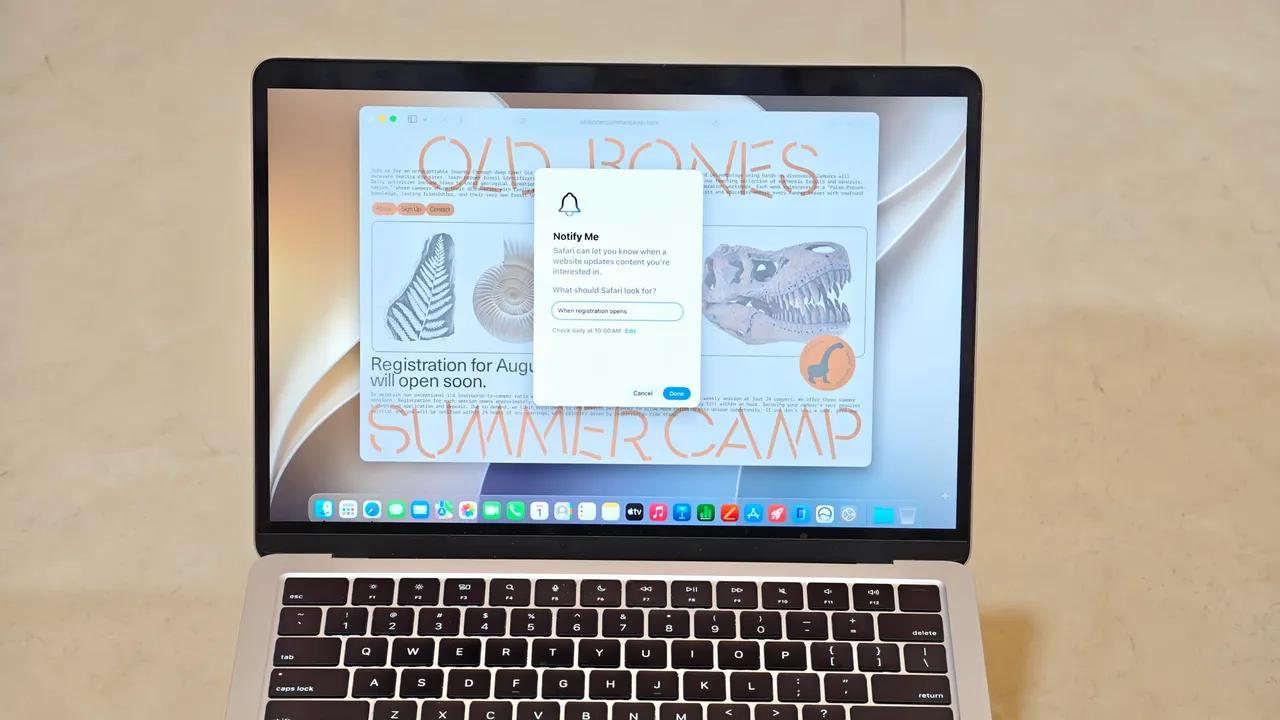
Beyond browser choice, ZDNET describes Safari’s upcoming macOS 27 changes as powered by Apple Intelligence, including a “Notify Me” feature that lets users monitor a webpage for changes like product restocks or price drops. ZDNET also says Apple’s Passwords feature in Safari will “automatically update your compromised passwords to secure versions across multiple websites simultaneously,” tying the browser update to security workflows. In parallel, Ecosistema Startup reports that Apple and Google launched in June 2026 functions that monitor web pages automatically and alert users when they detect relevant changes, using intelligence to filter false positives.
“Notify Me feature on Safari for macOS 27 Golden Gate.”
That same Ecosistema Startup account says Apple integrated “Notify Me” in Safari as part of Apple Intelligence, while Google “apostó por WebMCP,” describing it as an open standard for Chrome 149 that lets web agents interact with pages in a structured way. Separately, Numerama reports that on March 26, 2026 Samsung announced “Samsung Browser for Windows,” aiming to bring its mobile experience to PC and integrate an AI agent layer, with the AI assistant deployed only in South Korea and the United States for now.