Cambridge Scholars Say Declaration of Independence Seeded Arguments Against Slavery
Key Takeaways
- 250th anniversary of the Declaration drives Cambridge scholarship and media discussion.
- Scholars examine the Declaration's legacy and its ongoing relevance.
- July Fourth propaganda frames anniversary discussions about the Declaration.
Declaration’s contested meaning
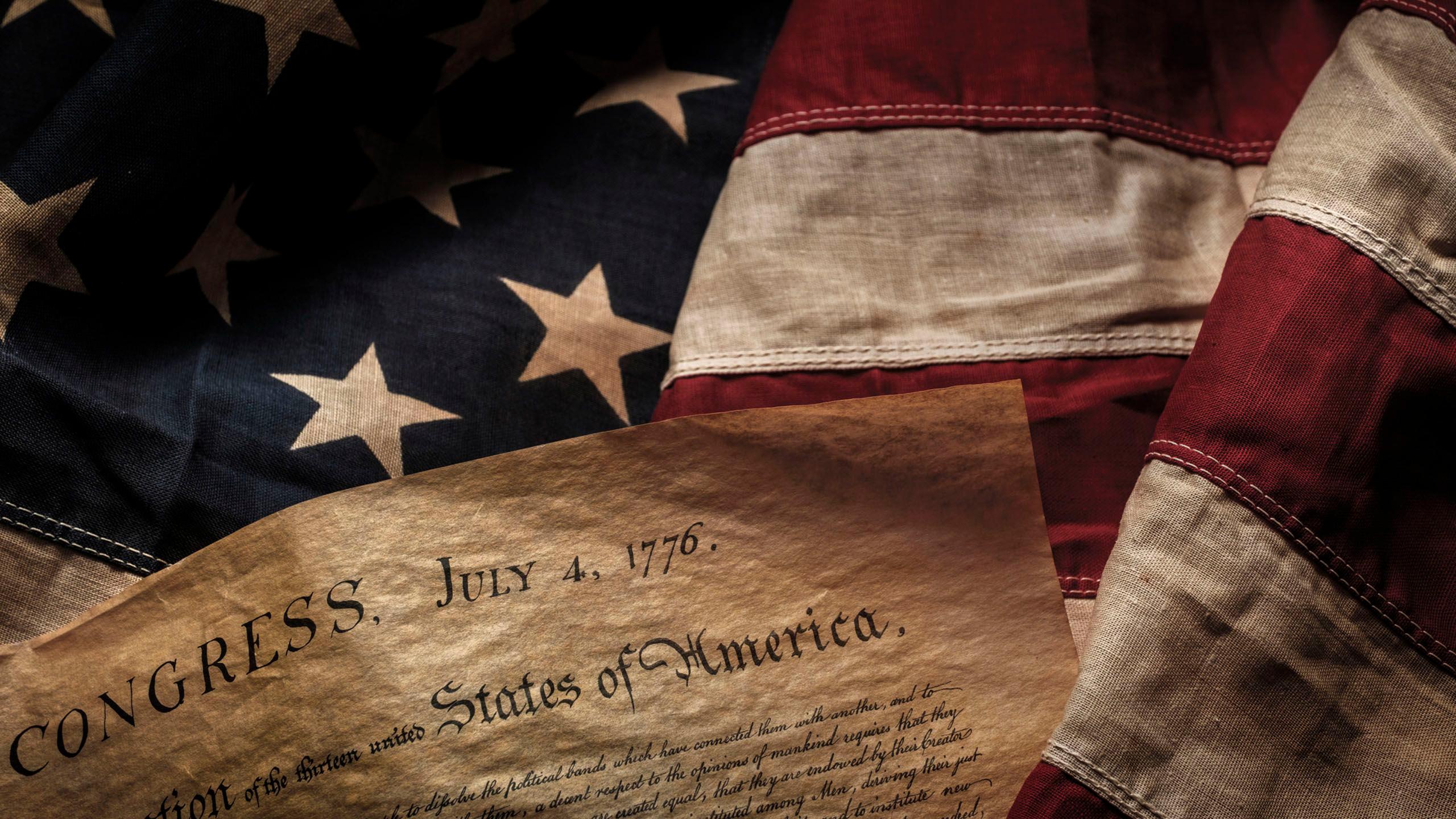
As the United States approaches the 250th anniversary of the Declaration of Independence, Cambridge’s Centre for the United States of America at Cambridge (CUSAC) frames the document as a text that “forged a nation” while also seeding arguments that later reformers used against slavery.
“Ahead of the July Fourth holiday and the 250th anniversary of the Declaration of Independence, we speak with the acclaimed scholar Robin D”
Professor Nicholas Guyatt, Professor of North American History at Jesus College, says the Declaration mattered because it claimed “a right for the colonists of British America to leave the political community,” and he links that rupture to the United States appearing “among the powers of the earth.”

Guyatt also argues that the Declaration seeded the phrase “all men are created equal” and presented it as “self-evident,” while noting that Thomas Jefferson “did not mean them to include the half-million Black people” who were enslaved.
In a different emphasis, Robin D. G. Kelley tells Democracy Now! that “When the drafters developed this declaration, they assumed that human beings were basically white men,” and he describes Black radicals as still finding value in its words.
Kelley adds that Black radicals saw the Declaration as “a ‘justification for rebellion,’” even as he calls out the document’s “hypocrisy.”
Black radicals and rebellion
Democracy Now! connects Kelley’s reading of the Declaration to Frederick Douglass’s critique of Independence Day, including the speech excerpt read by James Earl Jones: “What, to the American slave, is your Fourth of July? I answer: a day that reveals to him, more than all other days of the year, the gross injustice and cruelty.”
Kelley explains that Douglass’s speech targets “the contradictions between a declaration that’s claiming that all men are created equal” and the actual history of the United States, while he also says he reads David Walker’s Appeal to the Colored Citizens of the World, published in 1829.

In that same conversation, Kelley quotes Walker’s warning that “the right of people to basically overthrow their government” applied to a “corrupt government built on slavery,” and he says this insurrectionary logic “kind of came to pass in the form of the Civil War.”
Hyperallergic’s Required Reading places Kelley’s Hammer & Hope essay alongside other American cultural critiques, describing how the Declaration’s significance extends beyond the aims of the American Revolution and becomes “a rhetorical weapon against America’s conceits of liberty and democracy.”
That framing in Hyperallergic also says the Declaration is most powerful when people “toss it back like an undetonated grenade,” naming Denmark Vesey, Nat Turner, Maria Stewart, Dr. Martin Luther King Jr., and Ho Chi Minh of Vietnam.
Legacy, archives, and debate
The Cambridge discussion highlights how the Declaration’s language entered African-American political thought before the end of 1776, with Professor Mia Bay—Paul Mellon Professor of American History at Jesus College—describing a manuscript titled “Liberty Further Extended.”
“As we approach the 250th anniversary of the United States, some of Cambridge's leading experts on US history share their thoughts on the declaration that forged a nation”
Bay describes “Liberty Further Extended” as “a manuscript composed 1776 by Lemuel Haynes,” and she notes that it was “unpublished and unknown until it was discovered in a University archive in 1983 by scholar Ruth Bogin.”
Bay says Haynes inscribed the Declaration’s words on the front page of his antislavery manuscript, writing “We hold these truths to be self-Evident, that all men are created Equal,” and she presents the work as a “black critique of the limits of American independence.”
In Hyperallergic’s Required Reading, Robin D. G. Kelley is described as writing that the Declaration’s significance extends beyond American nationalism and becomes an “exhortation on the right to rebel,” emphasizing how the text can be repurposed by those it “was never meant to represent.”
Together, the sources portray the Declaration’s legacy as both archival and contested, with Cambridge pointing to a 1983 discovery of Haynes’ manuscript and Democracy Now! and Hyperallergic emphasizing rebellion, hypocrisy, and the document’s contested claims.
More on USA

Elbridge Colby Email Outlines U.S. Sanctions, Including Suspending Spain From NATO Over Iran War Support
14 sources compared

NATO Faces A Moment Of Truth As Trump Presidency Widens Transatlantic Fault Line
10 sources compared

Zohran Mamdani Urges New Yorkers to Set AC to 78 Degrees as Heat Wave Hits
13 sources compared

House Democrats Accuse Trump-Linked Fundraisers of Fraud Over America 250 Donation Diversion
30 sources compared