
CBP Launches Online Portal for $166 Billion Tariff Refunds After Supreme Court Ruling
Key Takeaways
- CBP opened a tariff refund portal for $166 billion in duties after Supreme Court ruling.
- Only businesses can apply; consumers are likely to miss out on refunds.
- Refunds expected within 30 to 60 days; initial system had glitches.
Portal Opens for Refunds
The U.S. Customs and Border Protection (CBP) launched a new online tariff refund portal on Monday, beginning the process of returning the money collected from tariffs that the U.S. Supreme Court struck down in February.
“AARP Hearing Center Key takeaways: - The federal refund portal opened Monday, but only businesses can apply”
Multiple outlets tie the refund effort to the International Emergency Economic Powers Act (IEEPA) duties that were ruled unconstitutional, with the BBC describing the portal as the Consolidated Administration and Processing of Entries (Cape) going live on Monday.

The BBC reports that more than 56,000 importers had completed the necessary steps to apply for refunds online when the portal opened, with their claims worth $127bn (£943m).
The Government Executive says CBP’s system went live Monday and that importers and brokers can upload a detailed list of each tariff paid under Trump’s now illegal order to charge duties under IEEPA.
CBP estimates it owes 330,000 importers and expects refunds within 60 to 90 days, while the Government Executive also reports an expectation of within 30 to 60 days based on CBP officials’ remarks.
The process is not item-by-item for all applicants: the BBC says the system will process refunds for importers as one lump sum.
CBP’s guidance also requires specific documentation and entry data, with AARP saying businesses need a list of entry numbers, submitted as a CSV file through the federal ACE Portal at cbp.gov.
The portal’s launch is framed as the first phase of a broader multi-step refund process, with Houston Public Media describing Monday as just the first phase of refunds and noting that not all goods imported under the illegal tariffs immediately qualify.
Who Can Apply, and How
Across the coverage, CBP’s system is described as accessible to businesses and brokers, but closed to individual consumers, with eligibility tied to who paid the customs bill.
AARP says only businesses can apply and specifies that the business that imported the goods, known as the importer of record, or the customs broker who filed on that business’s behalf can file.
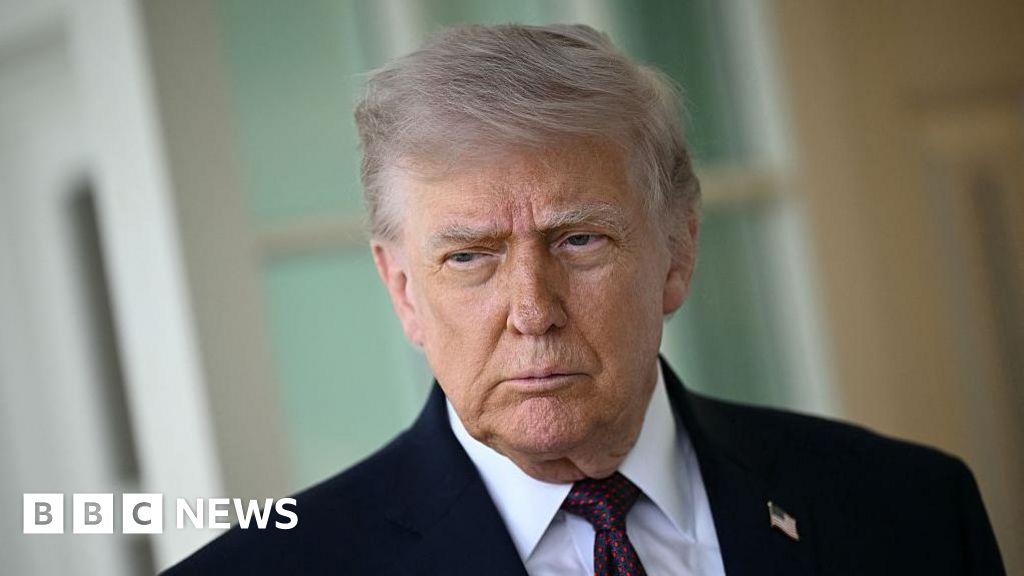
The BBC similarly states that All importers of record whose entries were subject to IEEPA duties are entitled to the benefit from the high court’s ruling, and it adds that the portal processes refunds for importers as one lump sum.
The Government Executive describes the operational mechanics as importers and brokers uploading a detailed list of each tariff paid, and AARP adds that businesses need a list of entry numbers, submitted as a CSV file through the federal ACE Portal at cbp.gov.
AARP also states that Each submission is limited to 9,999 entries, but businesses can submit multiple files, and it says refunds will be paid electronically.
The same AARP report says businesses must have a U.S. bank account on file with CBP before a refund can be issued, and it adds that once a claim is approved, CBP says refunds will take 60 to 90 days to process.
The BBC adds that the system will process refunds for importers as one lump sum rather than making businesses apply item by item, and it notes that CBP said successful applicants can expect refunds as well as any applicable interest to be paid in 60 to 90 days.
Even where consumers face higher prices, the portal’s design keeps them out of direct applications, with WABI reporting that The portal is only open to importers that paid the tariffs, and the Statehouse News Bureau reporting EarthQuaker Devices CEO Julie Robbins said, I get an error code whenever I try to log in.
Mixed Launch Experiences
The portal’s rollout is portrayed as both a milestone and a source of friction, with some businesses reporting smooth access while others encountered errors and delays.
Houston Public Media quotes Sarah Wells, who logged on 10 minutes before the launch at 8 a.m. Eastern Time, saying she found the process smooth and fast when uploading records of levies she’d paid.
By contrast, the Statehouse News Bureau describes EarthQuaker Devices CEO Julie Robbins trying to log in when the portal opened and saying, I'm trying to check it out, but I get an error code whenever I try to log in.
States Newsroom, as relayed by Government Executive, reports that Richard Trent said the portal crashed for five or six businesses he spoke with Monday morning, and he described the experience as uncertainty just keeps popping up.
Government Executive also notes that CBP did not confirm whether the system had crashed but provided a written statement describing CAPE as a new tool, the Consolidated Administration and Processing of Entries (CAPE), to efficiently process refunds, pursuant to court order.
The BBC adds that a coalition of small businesses said the launch was a mixed bag for small businesses, and it quotes Dan Anthony saying, As expected, today's refund portal launch is a mixed bag for small businesses.
The BBC also reports that some businesses saw error messages with little help available for those struggling, and it includes the account of Aaron Powell, founder and chief executive of Bunch Bikes, who said he prepared to file for a refund of around $120,000 and was able to navigate the portal just minutes after it opened.
WABI adds that CBP opened the portal at 8 a.m. and that Checks aren’t going out today, but the process is starting, at least, quoting Sara Albrecht of the Liberty Justice Center.
Consumers and the Refund Gap
A central theme across the reporting is that consumers are unlikely to receive direct refunds because the portal is limited to importers of record who paid IEEPA duties.
AARP says Consumers aren’t likely to benefit from CAPE directly, and it explains that Only the business that officially paid the customs bill is eligible.

The BBC similarly highlights that A major issue with the process has been concerns raised by individual shoppers who faced higher prices as a result of Trump's tariffs yet have no means to claim compensation themselves.
WABI quotes Sara Albrecht saying It’s up to the businesses, and she adds that she had one business that didn’t pass on any prices and another that was so small they couldn’t absorb it.
The BBC reports that officials from the Trump administration do not expect consumers to benefit directly from the refunds, and it cites U.S. Trade Representative Jamieson Greer urging companies that score a refund windfall to give it to workers in the form of bonuses.
The BBC also quotes Treasury Secretary Scott Bessent saying, I got a feeling the American people won't see it, and it notes that the issue is complicated because importers often did not raise prices enough to fully offset tariff costs.
Fortune and AARP both stress that class-action lawsuits are the main route for consumers, with AARP stating Class-action lawsuits are the only direct path for consumers.
The BBC reports that Individuals have begun filing class action lawsuits against companies they claim passed on the cost of Trump's tariffs, and it lists cases against EssilorLuxottica and FedEx, plus a class-action lawsuit against Costco, while also quoting Ron Vachris on passing refunds through lower prices and better values.
Money, Deadlines, and Stakes
The refund system’s scale is repeatedly tied to deadlines, legal structure, and the financial stakes for small businesses, with multiple outlets describing how the timing and eligibility rules could disadvantage smaller importers.
“For many small businesses, tariffs are treated as a fixed cost of doing business”
CBP estimates it owes $166 billion in refunds to more than 330,000 business owners, and WABI says the claims will be validated and paid within an estimated 60 to 90 days.

AARP adds that the government estimates it owes more than $166 billion, plus interest, and it says once a claim is approved, CBP says refunds will take 60 to 90 days to process.
Fortune reports that of more than 330,000 U.S. importers, about 56,497 have applied for refunds, and that claims total about $127 billion, while it also says CBP said refunds are to be distributed 60 to 90 days after they are processed.
The stakes for small businesses are described in financial terms, with Fortune citing a Federal Reserve survey where 42% of small firms called rising costs owing to tariffs a primary financial concern, and it also says a March report from the Center for American Progress found small businesses paid $306,000 in tariffs on average last year.
The Statehouse News Bureau provides a concrete example from Ohio: EarthQuaker Devices CEO Julie Robbins said, By the end of 2025 we had paid more than $60,000 in tariffs, and in 2026 we've already paid $42,000 in tariffs, and she said it essentially is a 30% increase to our cost of raw materials.
Fortune quotes Matthew Seligman warning, Especially given the uncertain legal environment that we’re operating in right now, I am deeply worried that small and medium-sized importers are going to end up losing their refund rights because they haven’t had access to trade counsel to help back them through it.
The reporting ties the refund process to future tariff risk, with the BBC quoting Aaron Powell saying he expects more tariffs expected in July or August.
More on Finance

Trump Administration Launches CAPE Portal To Process Supreme Court Struck-Down Tariff Refunds
33 sources compared

Energy Secretary Chris Wright Says Gas Prices Likely Stay Above $3 Until 2027
12 sources compared

Trump Says U.S. Seized Iranian-Flagged Cargo Ship Bypassing Strait of Hormuz Blockade
24 sources compared

IMF And World Bank Resume Dealings With Venezuela Under Interim President Delcy Rodriguez
10 sources compared