
Trump Says U.S. Seized Iranian-Flagged Cargo Ship Bypassing Strait of Hormuz Blockade
Key Takeaways
- US forces seized Iranian-flagged cargo ship near Strait of Hormuz attempting to bypass blockade.
- Iran vows retaliation after the seizure.
- Oil prices rise following the incident and Hormuz standoff.
Seizure, Talks, and Oil Moves
President Donald Trump said Sunday that the U.S. military seized an Iranian-flagged cargo ship that tried to bypass the American blockade of the vital Strait of Hormuz, hours after he renewed threats of broad attacks on Iran’s infrastructure if no deal is reached in talks expected this week in Pakistan.
“Donald Trump announced on Sunday that a second round of US-Iran talks is to be held in Pakistan on Monday – but Tehran has not confirmed participation, two days before a ceasefire deal expires”
The BBC reported that global oil prices jumped by more than 5% after Trump said the U.S. had intercepted and seized an Iran-flagged cargo ship, with Brent rising by 5.4% to $95.27 (£70.62) a barrel and the U.S. benchmark rising by 5.9% to $88.79.
The BBC also said the increases reversed some of the big falls seen on Friday when Iran had said the Strait of Hormuz would be "completely open" to commercial vessels for the remainder of the ceasefire, but on Saturday Iran said it was closing the strait again and that any ship that approached it would be targeted.
The BBC added that Trump said his representatives will be in Pakistan on Monday for negotiations, and that a White House official said Vice-President JD Vance would lead the U.S. delegation.
DW’s round-up said the ceasefire between US-Israel and Iran is set to expire on Wednesday, and it described the seizure as occurring near the Strait of Hormuz amid a continuing US blockade of Iranian ports and ships.
Al Jazeera reported that Trump announced on Sunday that a second round of US-Iran talks is to be held in Pakistan on Monday, but Tehran had not confirmed participation two days before a ceasefire deal expires.
Market Volatility and Energy Impact
The BBC described how energy markets reacted to shifting signals between the U.S. and Iran, saying oil markets had "gyrate" in response to oscillating social media posts rather than the realities on the ground, quoting analyst Saul Kavonic from financial services firm MST Marquee.
It also quoted Shanti Kelemen, co-chief investment officer at 7 Investment Management, saying there was "a bit of fatigue" in the market given the "chopping and changing" in the situation, and that "the market stopped believing the words, and will look more towards the actions."
The BBC said the Strait of Hormuz remained closed on Sunday, a day after the Islamic Revolution Guard Corps (IRGC) said it was ending a temporary reopening over the US blockade, which it said violated the terms of their ceasefire agreement.
The BBC further reported that the waterway is of key importance as usually about 20% of the world's oil and liquefied natural gas passes through it, and that Asia has been hit particularly hard because the region relies on shipments that usually pass through the Strait of Hormuz for around 90% of its energy needs.
PBS, via Associated Press, reported a different snapshot of the same standoff’s immediate effect, saying oil prices rose in early trading Sunday as a standoff prevented tankers from using the Strait of Hormuz, and that the price of U.S. crude oil increased 6.4% to $87.88 per barrel while Brent climbed 6.5% to $96.25 per barrel.
PBS also said the market reaction followed more than two days of growing hopes and dashed expectations involving the strait, and it described Iran’s Friday decision to fully reopen the passage to commercial traffic as something that had led to crude prices plunging more than 9% when Iran reversed course.
The BBC added that stock markets were mixed on Monday, with Europe’s FTSE 100 opening down 0.4% and Germany’s Dax and France’s Cac 40 falling more than 1%, while Japan’s Nikkei closed up 0.6% and South Korea’s Kospi climbed 0.4%.
In the U.S., PBS reported that Energy Secretary Chris Wright told CNN’s "State of the Union" on Sunday that prices at the pump might not go down that much until next year, saying, "But prices have likely peaked, and they'll start going down."
Diplomacy Meets Retaliation
Al Jazeera framed the seizure as part of a fast-moving diplomacy cycle, saying the capture by US Marines of an Iranian-flagged container ship near the Strait of Hormuz on Sunday further clouded the Islamabad talks as Tehran pledged to retaliate.
It reported that the attack came hours after Trump announced he is sending a team to Islamabad for talks, while once again threatening to knock out Iran’s power plants and bridges if there is no deal, and it said the ceasefire expires on Wednesday.
Al Jazeera also described Iran’s top joint military command, Khatam al-Anbiya, accusing the U.S. of violating the ceasefire by shooting at an Iranian ship in the Gulf of Oman and vowing to retaliate.
DW similarly said Iran’s top joint military command, the Hazrat Khatam al-Anbiya Central Headquarters, vowed to respond swiftly to the U.S. actions, quoting: "We warn that the armed forces of the Islamic Republic of Iran will soon respond and retaliate against this armed piracy by the US military."
DW added that Iranian authorities have accused the U.S. of violating the ceasefire agreement by firing at one of Iran's commercial ships in the Gulf of Oman and that the U.S. naval forces intercepted and seized an Iranian-flagged cargo vessel trying to sail through the waters of the Gulf of Oman in violation of the U.S. blockade.
DW also reported that Iran said it has no intention of joining the new round of talks, citing Iranian state media that said, "There are currently no plans to participate in the next round of Iran-US talks," state broadcaster IRIB reported, in English, on X.
The Washington Post’s account of Trump’s posture tied the seizure to renewed threats, saying Trump renewed his threats of broad attacks on Iran’s infrastructure if no deal is reached in talks expected this week in Pakistan.
In the background of the negotiations, Al Jazeera reported that Pakistan’s Prime Minister Shehbaz Sharif spoke on Sunday with Iranian President Masoud Pezeshkian as he reaffirmed his government’s readiness to mediate the conflict.
What Comes Next for Markets
The PBS report said the fragile, two-week ceasefire between the U.S. and Iran is set to expire on Wednesday, and it tied the standoff’s economic stakes to the possibility that even if a lasting deal emerges, analysts say it could take months for oil shipments to return to normal levels and for fuel prices to go down.
It described how backed-up tanker traffic, shipowners concerned about another sudden escalation, and energy infrastructure damaged during the war could impede production and shipment volumes from returning to pre-war levels.
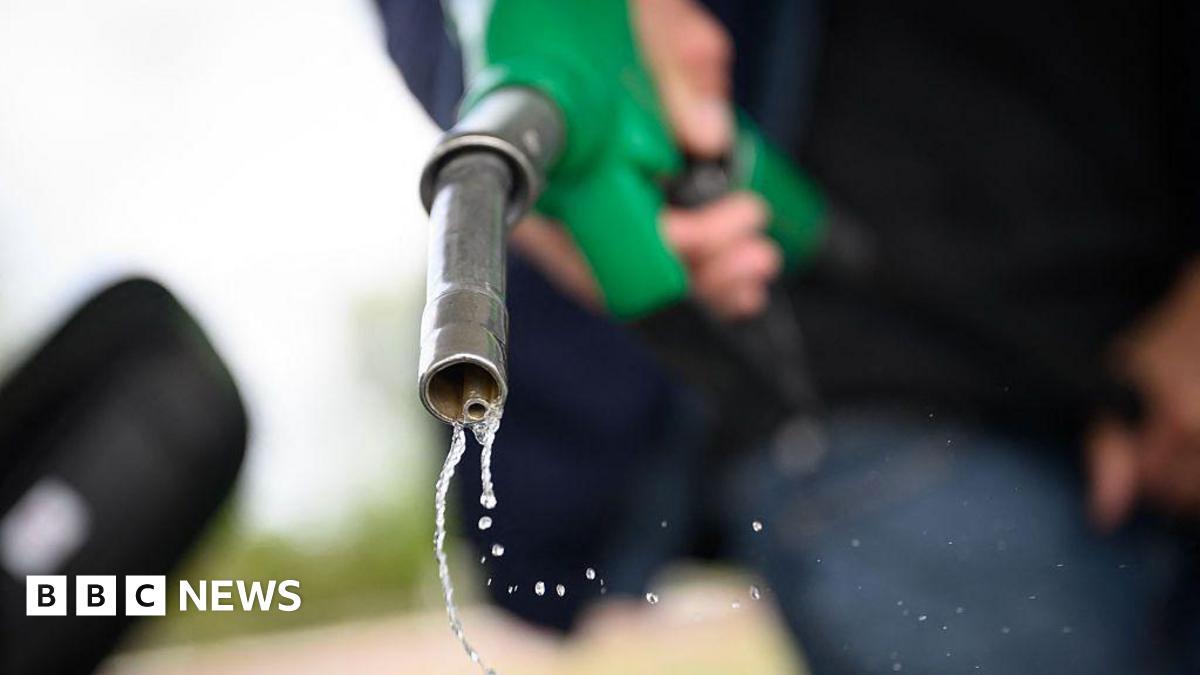
The BBC similarly said the Strait of Hormuz remained closed on Sunday and that Iran would stay closed until the U.S. ended its naval blockade, adding that Trump had said on Friday that the naval blockade would continue until a deal was agreed by the two countries.
The BBC also described how governments ordered employees to work from home, cut the working week, declared national holidays and closed universities early to conserve supplies, and it said some South East Asian countries including Singapore and Thailand called on people to curb their use of air conditioning to save energy.
It further reported that even China, thought to have reserves equivalent to three months of imports, was making adjustments, limiting a fuel price hike as citizens faced with a 20% jump in price, and it said airlines across the region announced measures to deal with soaring jet fuel prices.
The BBC quoted the International Energy Agency’s head warning that Europe has "maybe six weeks of jet fuel left," attributing the warning to Fatih Birol, and it said Birol told AP that there could soon be flight cancellations if supplies remained blocked.
In the UK, the BBC said petrol and diesel prices eased at the end of last week after a series of hikes.
With the standoff continuing into Monday’s trading, the BBC said stock markets were mixed, while PBS reported that oil prices rose in early trading Sunday and highlighted that crude prices had fluctuated dramatically since the U.S. and Israel attacked Iran on Feb. 28, reaching almost $120 on 9 March and previously closing Friday at $82.59 for U.S. oil and $90.38 for Brent.
More on Finance

CBP Launches Online Portal for $166 Billion Tariff Refunds After Supreme Court Ruling
18 sources compared

Trump Administration Launches CAPE Portal To Process Supreme Court Struck-Down Tariff Refunds
33 sources compared

Energy Secretary Chris Wright Says Gas Prices Likely Stay Above $3 Until 2027
12 sources compared

IMF And World Bank Resume Dealings With Venezuela Under Interim President Delcy Rodriguez
10 sources compared