Technology and Science18 October, 20253 min read
Chinese Nobel Laureate Chen Ning Yang Dies at 103 in Beijing
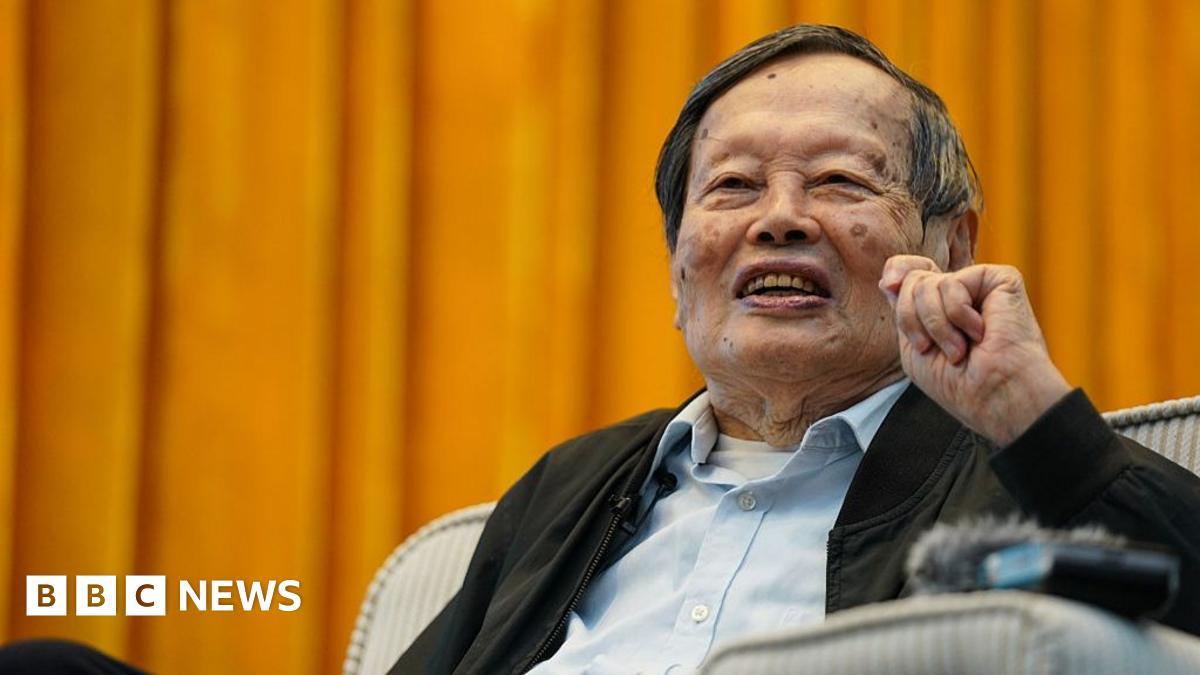
Chen Ning Yang died in Beijing at age 103 due to illness. He won the 1957 Nobel Prize in Physics for parity violation discovery.
11 outlets told this the same way.
Life and Legacy of Chen Ning Yang
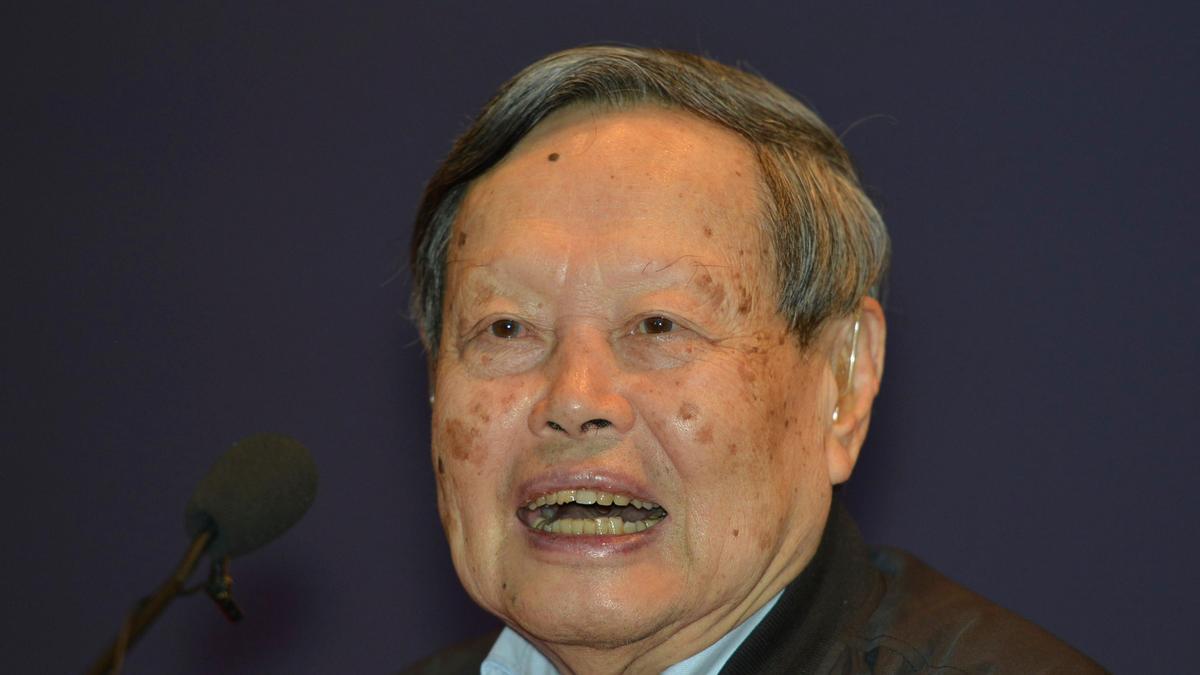
Chen Ning Yang, also known as Yang Chen-Ning, was a Nobel Prize–winning physicist. He is renowned for overturning parity conservation in weak interactions and for pioneering the Yang–Mills framework. Yang passed away in Beijing at the age of 103.
“Professor Yang Chen-Ning... passed away at the age of 103 on October 18, 2025, in Beijing. His death was announced by Tsinghua University.”
The Straits Times reported his death date as October 18, 2025, and noted that Tsinghua University announced the news. Digital Journal attributed the announcement to Chinese state media. Several outlets highlighted his education in the United States and his later renunciation of American citizenship in 2015.
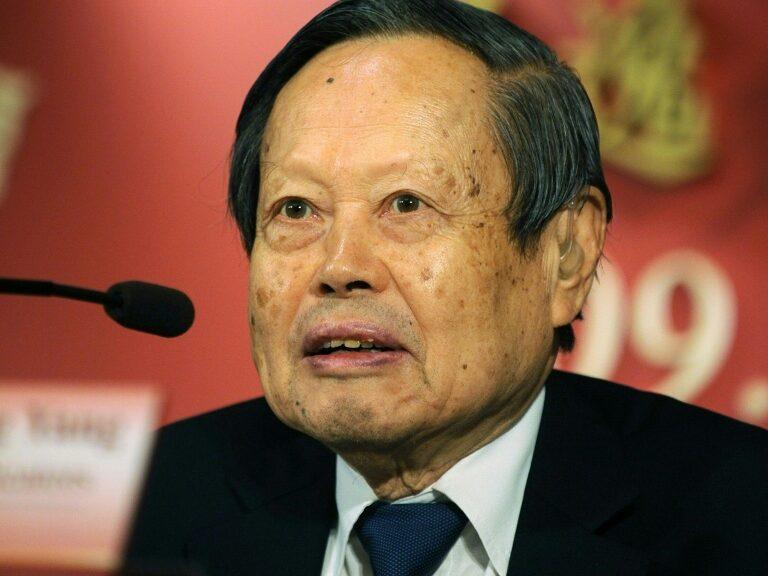
The Independent mentioned that he expressed gratitude to the United States even as he gave up his passport. Newsdrum.in and Digital Journal emphasized his origins in Anhui and his long academic career in the US.
His Nobel Prize, which he shared with Tsung-Dao Lee in 1957, is frequently mentioned. His foundational role in the development of gauge theories is also widely recognized.
Yang's Scientific Contributions
Across outlets, Yang’s scientific legacy centers on two pillars: the 1957 Nobel Prize for demonstrating parity non-conservation in weak interactions with Tsung-Dao Lee, and the Yang–Mills theory that became the backbone of modern particle physics. Digital Journal describes Yang–Mills as a framework that explains interactions of force-carrying particles. Dimsum Daily calls it a foundational framework and stresses how parity violation challenged fundamental assumptions.
China Daily Asia goes further, stating the theory underpins the Standard Model and noting he became the first Chinese Nobel laureate. Newsdrum.in and other brief notices reiterate his status as a Nobel laureate and his passing in Beijing at 103.
Yang's Academic Journey
Sources trace Yang’s academic path from China to the United States and then back to Greater China. The Independent and ETV Bharat detail his master’s at Tsinghua and his 1946 move to the University of Chicago, where Enrico Fermi influenced his doctoral work. China Daily Asia supplies timeline precision on his appointments at the Institute for Advanced Study, where he became a member in 1949, a permanent member in 1952, and a professor in 1955.
“After completing his undergraduate degree, he earned a master’s from Tsinghua University and pursued a doctorate at the University of Chicago in 1946, where he was influenced by Nobel laureate Enrico Fermi.”
In 1966, he moved to SUNY Stony Brook as Albert Einstein Professor, a position he held until 1999. Dimsum Daily adds that he founded the Institute for Theoretical Physics at Stony Brook.
The Independent and ETV Bharat note his distinguished role at the Chinese University of Hong Kong from 1986. He later served as a professor at Tsinghua University from 1999.
Yang's Citizenship and Personal Life
Several sources recount Yang’s citizenship journey and elements of his personal life. The Independent and ETV Bharat note that while he became an American citizen, the decision was painful and disapproved of by his father. They add that he renounced his American citizenship in 2015 while expressing gratitude to the U.S.
The Straits Times emphasizes that he not only renounced U.S. citizenship to become Chinese again in 2015 but also encouraged other scientists to do the same. Digital Journal confirms the 2015 renunciation and uniquely mentions his marriages to Chih Li Tu and later Weng Fan.

Academic Honors and Legacy
Obituaries and profiles emphasize his continued ties with Tsinghua University and a global recognition that spanned memberships and honorary degrees. China Daily Asia catalogs numerous honors, stating he was a foreign member of more than ten science academies and held over twenty honorary doctorates worldwide. Digital Journal highlights his later teaching at Tsinghua and contributions to talent development and international academic exchange.
“He was a foreign member of over ten science academies and received honorary doctorates from more than twenty universities worldwide.”
The Independent and ETV Bharat specify he served as a professor at Tsinghua from 1999. Brief notices like newsdrum.in confirm his passing and background, though none of the sourced reports specify a cause of death. One listed source, The Hindu, is unrelated to his passing and instead is a platform notice about commenting rules.