CIA Arms Kurdish Resistance With Drones To Support Uprising In Iran
Key Takeaways
- CIA began arming Kurdish resistance to support Iranian resistance
- Iranian Kurds have taken combat positions but have not yet begun fighting
- American and Israeli goals and strategy remain opaque
CIA arms Kurdish forces
Multiple reports — cited by CNN and summarized by the Irregular Warfare Initiative — indicate that the Central Intelligence Agency has begun arming Kurdish resistance forces as a ground support element for an uprising inside Iran, with the situation described as fluid and early-stage.
“CNN reported on March 3rd that the Central Intelligence Agency had begun arming the Kurdish resistance as a ground force to support Iranian resistance”
The Initiative quotes CNN’s March 3 report that the CIA had started to arm Kurdish resistance and notes that Iranian Kurds have begun taking combat positions but, according to the same reporting, have not yet begun fighting despite Iranian attacks on Kurdish bases.
The Initiative emphasizes that the available reporting is provisional and the broader campaign remains unsettled.
Strategic objectives explained
The Irregular Warfare Initiative frames the reported U.S. and Israeli approach as strategically targeted against Iranian security services and leadership, with the dual objectives of enabling domestic opposition to supplant the regime or altering Iran’s bargaining position in nuclear negotiations.
The Initiative explicitly states that American and Israeli goals remain opaque but interprets the arming of Kurdish elements as consistent with an approach aimed at political decapitation or at least changing the regime’s strategic calculus.
This situates the support for Kurdish forces within a broader geopolitical strategy rather than a purely humanitarian or defensive rationale.
Drones and training recommended
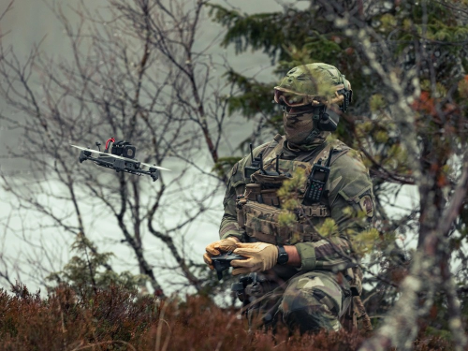
The Initiative recommends supplying unmanned systems—drones—for close air support, long-range strikes, logistics, and reconnaissance, along with training and operational guidance based on global lessons, arguing these capabilities would give Kurdish resistance forces persistent ISR, strike capacity, and logistical sustainment.
“CNN reported on March 3rd that the Central Intelligence Agency had begun arming the Kurdish resistance as a ground force to support Iranian resistance”
It describes unmanned systems as a force multiplier that could intimidate and disrupt regime security apparatuses and provide visible evidence of the Iranian regime’s vulnerabilities.
The paper suggests that training and guidance from U.S. and Israeli partners would enhance the resistance’s effectiveness and survivability.
Commercial drones as tools
The Initiative highlights the practicality and affordability of commercial drones as suitable tools for irregular forces, noting a DJI Mavic 3 can be bought for about $2,000 and adapted to carry small explosives and be launched from improvised platforms; it also points to Ukraine’s expanding drone industry and Gulf financing and commercial networks as potential sources of technology, funding, and logistics.
By citing these market and regional resource connections, the analysis argues that support to Kurdish forces could be materially sustained without traditional state aviation assets.
This framing underscores the asymmetric, low-cost nature of modern unmanned warfare.
Ambiguity and risks noted
The report acknowledges significant ambiguity and risk: it repeatedly notes that U.S. and Israeli goals are opaque, that Kurdish forces had not definitively engaged in combat at the time of reporting, and that the situation is fluid.
“CNN reported on March 3rd that the Central Intelligence Agency had begun arming the Kurdish resistance as a ground force to support Iranian resistance”
The Initiative’s recommendations presuppose willingness by external states to provide training, equipment, and financial networks and do not detail legal, diplomatic, or escalation costs; the analysis therefore leaves open major uncertainties about implementation, timelines, and the potential for wider regional escalation.
Readers should treat the account as a policy prescription grounded in one source’s synthesis rather than a settled factual record.
More on Iran
Ayatollah Mojtaba Khamenei Vows Iran Will Protect Nuclear And Missile Capabilities
10 sources compared

Pentagon Tells House Armed Services Iran War Costs $25 Billion So Far
10 sources compared
Brad Cooper Briefs Donald Trump on New U.S. Military Options Against Iran Thursday
15 sources compared

UN Rights Chief Volker Türk Says Iran Executed At Least 21, Detained Over 4,000
22 sources compared