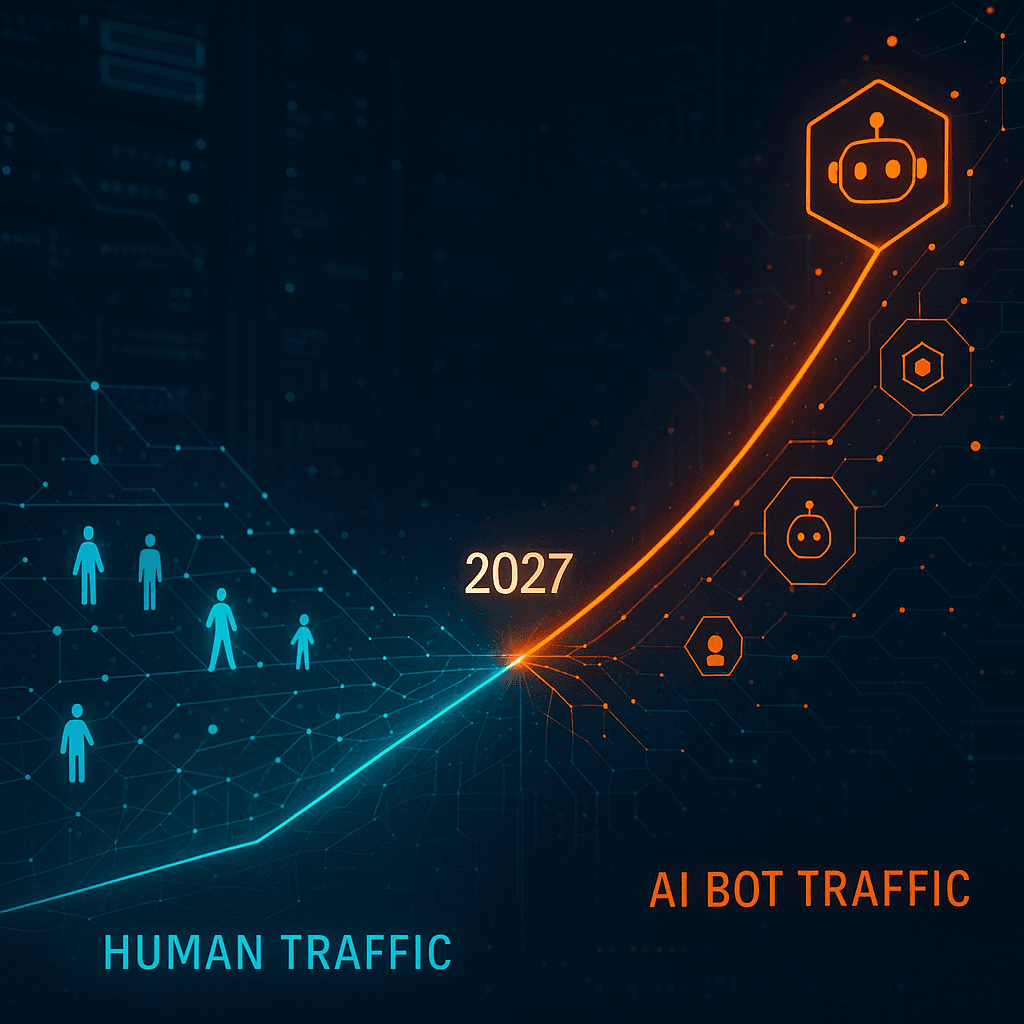
Cloudflare CEO Matthew Prince warns online bot traffic will surpass human traffic by 2027.
Key Takeaways
- Bots will exceed human web traffic by 2027.
- Generative AI growth drives automated bot traffic rise.
- Automated bot traffic reshapes how requests hit the internet.
Bot Traffic Prediction
Cloudflare CEO Matthew Prince has issued a stark warning that AI-driven bot traffic will surpass human visitors on the internet by 2027.
“Bot activity is on track to eclipse human browsing within the next year, according to Cloudflare CEO Matthew Prince, who says the rapid rise of AI agents is remaking how requests hit the internet”
Speaking at SXSW in Austin, Prince predicted that this shift will occur within less than a year, a timeline that has caught even seasoned tech observers off guard.
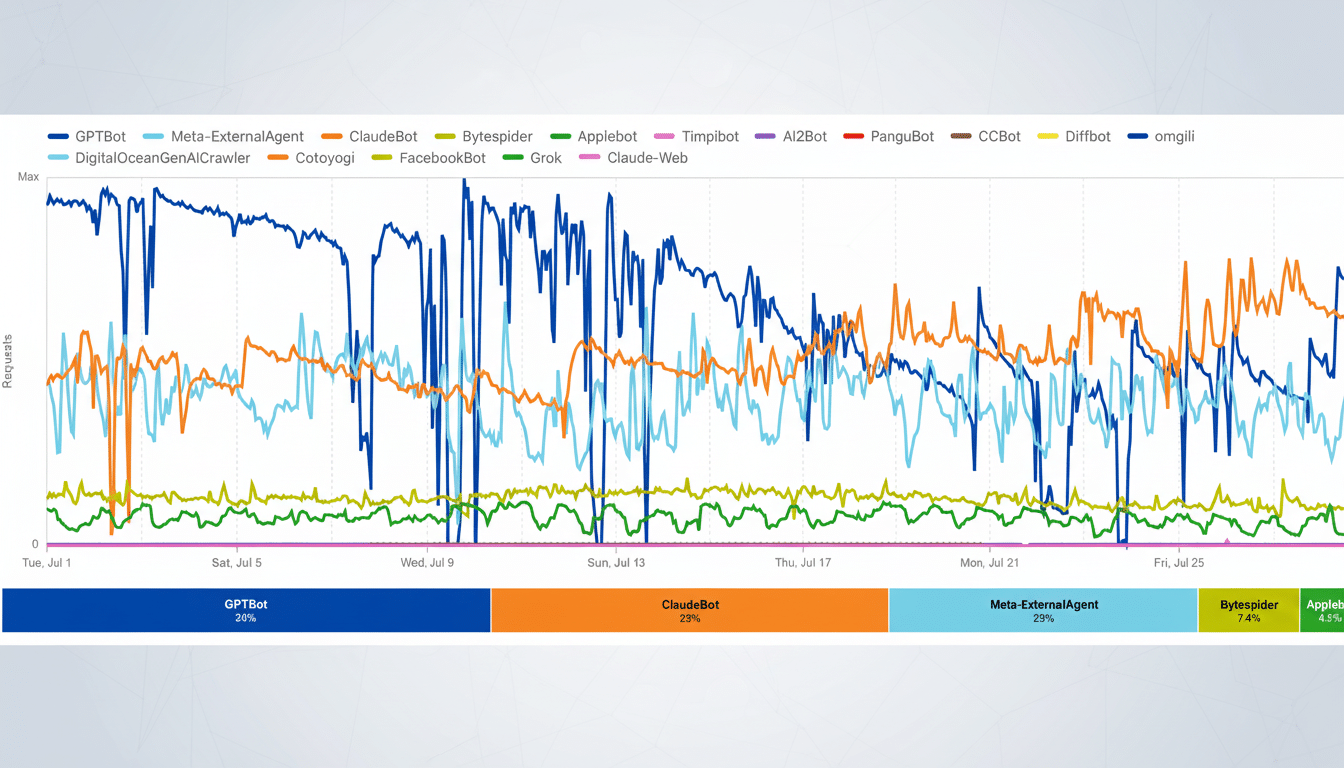
The prediction represents a significant milestone in the evolution of internet usage, as generative AI agents now hammer servers at unprecedented rates.
This forecast carries particular weight coming from Prince, who is not known for making wild predictions, lending credibility to his assessment.
Prince's warning signals that we are witnessing a fundamental platform shift in how information is consumed and accessed online.
Technical Transformation
The technical reality behind this prediction stems from generative AI fundamentally shifting the web from human-driven to machine-driven retrieval.
Unlike traditional human browsing where users might open a handful of tabs, AI agents fan out across thousands of sources to synthesize answers.

This 'fan-out effect' multiplies requests exponentially, even when the underlying user intent is single-threaded.
Independent measurements from Imperva's Bad Bot Report confirm this trend, showing malicious automation rose to 32% of all web traffic in 2023.
Whereas a person might compare models on a few trusted sites, an AI shopping assistant can launch concurrent fetches across thousands of product pages.
Infrastructure Challenges
This unprecedented surge in automated traffic creates significant infrastructure challenges that threaten to overwhelm existing digital infrastructure.
“The internet is about to flip”
Prince pointed out that during Covid, internet traffic increased so quickly that some parts of the internet were nearly buckling under the strain.
However, the current AI-driven growth presents a more gradual but relentless challenge compared to the COVID spike.
Prince warned that internet traffic 'grow and grow and grow, and we don't see anything that's going to slow it down or stop it.'
For companies managing digital infrastructure, this represents an urgent wake-up call about capacity, security, and what 'traffic' even means anymore.
Cloudflare Solutions
As a company positioned at the forefront of this transformation, Cloudflare is actively developing solutions to address the looming bot traffic crisis.
Cloudflare's scale gives it a unique advantage to view the internet's ongoing evolution and the challenges facing the generative AI era.
The company offers a content delivery network, security and DDoS protections, and 'Always Online' technology for cached website versions.
Prince argues that the web will need 'on-demand sandboxes' for agents—ephemeral, isolated compute that can spin up in milliseconds.
Cloudflare also provides businesses with tools to block the AI bot traffic they don't want, giving companies control over automated interactions.
Platform Shift
Beyond the technical and infrastructure implications, Prince views this bot traffic surge as a fundamental platform shift comparable to desktop to mobile.
“Bots are taking over the web, according to Cloudflare CEO Matthew Prince”
Prince stated: 'I think the thing that people don't appreciate about AI is it's a platform shift,' recalling earlier web transitions.
He emphasized that 'AI is another platform shift … the way that you're going to consume information is completely different.'
This perspective suggests we are experiencing a complete reimagining of how humans and machines interact with the internet.
The rise of AI agents as 'clients' rather than just visitors represents a profound departure from the original human-centric design of the web.
More on Technology and Science

Hawaii's Worst Flooding in 20 Years Threatens Dam, Prompts Evacuations as More Rain Looms
11 sources compared

Hawaii Deploys National Guard as Worst Flooding in 20 Years Swamps Oahu
68 sources compared

Heatwave shatters March records as Southwest bakes under extreme temperatures
48 sources compared
Record heat blankets the US Southwest as March logs hottest temperature in Arizona
10 sources compared