
CNRS Says European Union Prepares European Ocean Act Under Public Consultation
Key Takeaways
- EU plans a European Ocean Act to sustainably structure ocean planning and observation.
- CNRS advocates an integrated, anticipatory framework grounded in long-term scientific knowledge.
- Act development follows UNOC-3 context for ocean governance.
Ocean policy meets science
The CNRS says the European Union is preparing to propose a European Ocean Act to sustainably structure the planning and observation of the oceans, and it frames the effort as an integrated, anticipatory framework grounded in long-term scientific knowledge.
“Team Newsletters Home Public Administration Finance Agriculture Energy Mining Transport Telecom Communications Training News Coastal protection: the World Bank announces a $240 million program for Benin and Mauritania Coastal protection: the World Bank announces a $240 million program for Benin and Mauritania Created on: March 22, 2026 18:21 (Agence Ecofin) - At the heart of West African economic dynamics, coastal zones concentrate a large share of productive activities and populations”
CNRS links that legislative push to UNOC-3 in Nice in June 2025, where the president of the European Commission, Ursula von der Leyen, announced the European Ocean Pact.

CNRS says the Pact now structures the EU's maritime action around six priorities, including "Protect and restore the health of the ocean" and "Consolidate ocean diplomacy as well as international ocean governance."
CNRS adds that the Commission is preparing the European Ocean Act as a flagship legislative initiative under public consultation, accompanied by an impact assessment, and it aims to modernize maritime spatial planning and establish a legal basis for integrated European governance of ocean observation.
In its response to the consultation, CNRS argues that the Ocean Act should place marine and coastal socio-ecological systems at the heart of the framework and fully take into account land-sea interactions and cumulative impacts of human activities.
Coastal resilience funding
The World Bank Group announced the launch of the WACA+ program in Mauritania, saying it is strengthening a regional partnership dedicated to protecting coastal areas and developing the blue economy in West Africa.
In its initial phase covering Benin and Mauritania, the program was approved for up to $212 million, and the World Bank Group said it aims to reduce the vulnerability of coastal communities while protecting infrastructure and ecosystems against erosion, floods and sea level rise.
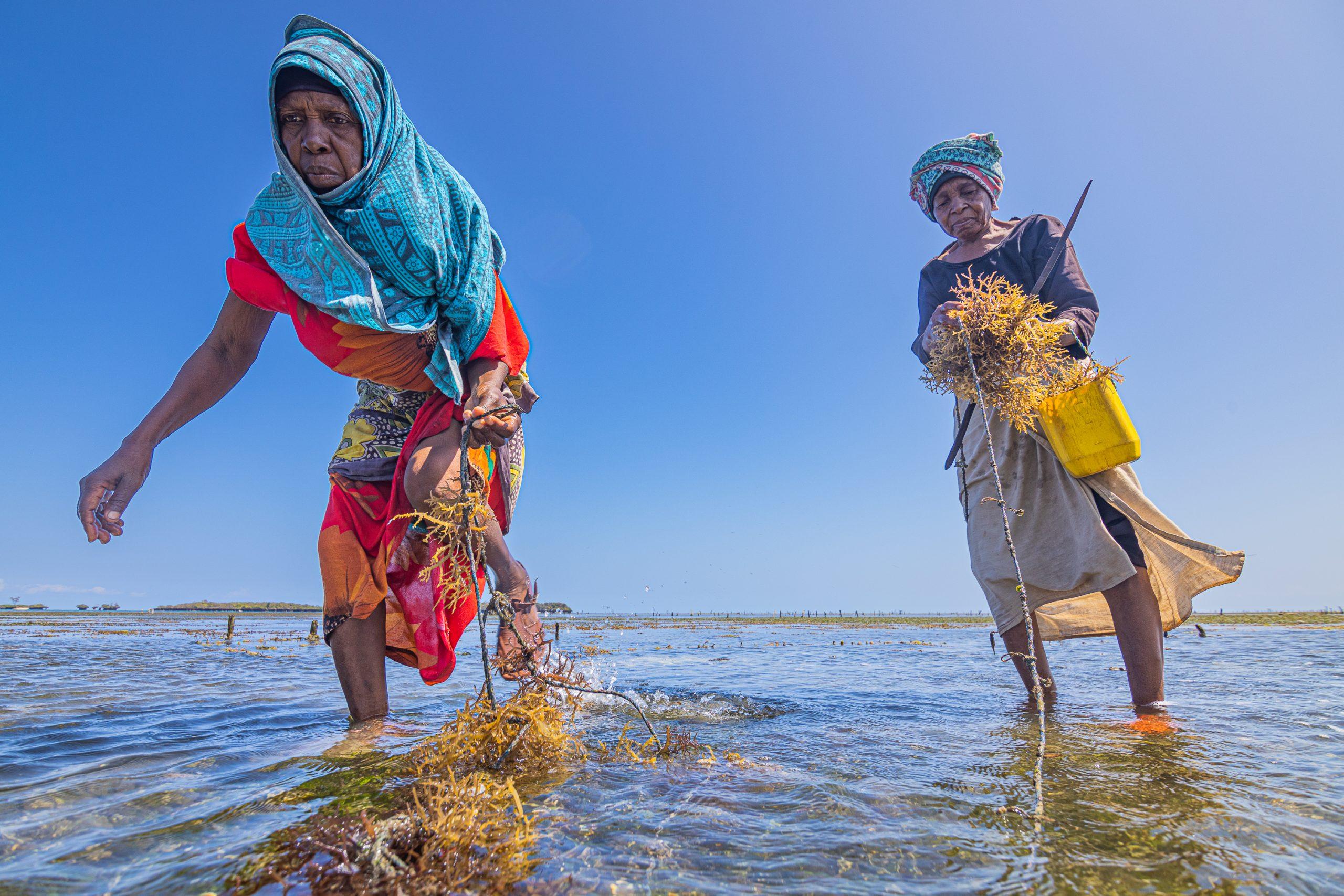
The World Bank Group said WACA+ should contribute to the protection of more than 530,000 people living in exposed coastal areas and to the creation of about 13,000 jobs in sectors including fishing, aquaculture, tourism, port logistics and coastal ecosystem restoration.
Agence Ecofin, meanwhile, described the World Bank Group approval as financing of up to $240 million and said the program foresees investments in coastal protection infrastructure and ecosystem restoration, notably up to 3,000 hectares of mangroves and wetlands.
Agence Ecofin also said the interventions in Mauritania will focus on strengthening the dune barrier protecting Nouakchott to reduce flood risks in densely populated neighborhoods.
Who benefits from the blue economy
Climate Home News reports that civil society groups warn that the push to expand the “blue economy” may reproduce familiar inequalities unless coastal communities have a greater say in how projects are designed, financed and governed.
“Editing: Sebastián Rodríguez As governments and institutionspledged billionsfor offshore wind, cleaner shipping and marine protection at last month’sOur Ocean Conferencein Mombasa, countries are increasingly turning to the ocean as a source of jobs and climate action”
Neville van Rooy from The Green Connection in South Africa told delegates at the Mombasa conference held on the shores of the Indian Ocean, "Communities need to be taken seriously," and he added that inclusivity should be at the centre of development pathways.
The same article says the value of the blue economy doubled from $1.3 trillion in 1995 to $2.6 trillion in 2020 and is projected to quadruple by 2050, citing the Organisation for Economic Co-operation and Development (OECD).
It also reports that governments and institutions announced 320 commitments worth $6.4 billion at the Our Ocean Conference in Mombasa, with 86 commitments worth $2.86 billion going to sustainable blue economy projects.
Cynthia Barzuna, global deputy director of the Ocean Program at the World Resources Institute, said, "Once communities are involved in the planning, bring in their knowledge, and participate in designing, developing and implementing a sustainable ocean plan, it puts us on the right path."
More on Technology and Science

OpenAI Sunsets ChatGPT Atlas Browser, Pivots to ChatGPT Desktop App With ChatGPT Work
13 sources compared

FTC And Five States Reach 10-Year Right-To-Repair Settlement With Deere & Company
10 sources compared

Microsoft Fixes 165 Vulnerabilities, Including Exploited SharePoint Zero-Day CVE-2026-32201
13 sources compared

Meta Disables Ray-Ban Meta Camera After Users Tamper With Capture LED
18 sources compared