Full story
Resignation After Exam Leak
India’s education minister Dharmendra Pradhan resigned on Saturday after youth-led protests by the Cockroach Janta Party (CJP) over an exam paper leak scandal, and the government later announced Pralhad Joshi would be replacing him as education minister.
“I have sent my resignation letter to the Prime Minister," Pradhan said in a statement published on the social network X”
A press release from Rashtrapati Bhavan said that “The President of India, as advised by the Prime Minister, has accepted the resignation of Shri Dharmendra Pradhan from the Union Council of Ministers, with immediate effect,” and directed that “Shri Pralhad Joshi, Cabinet Minister, be assigned the charge of the Ministry of Education.”

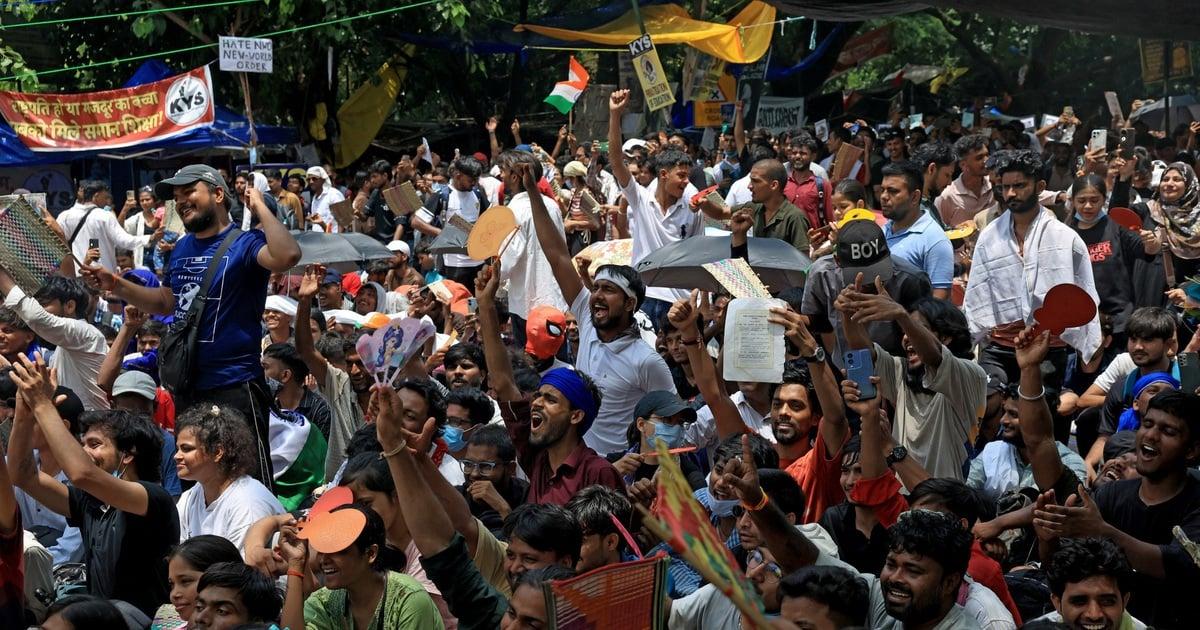
The protests centered on demands for education reforms and compensation for affected students, and Abhijeet Dipke, founder of the CJP, told reporters “We have done it,” as crowds gathered at the Jantar Mantar protest site in New Delhi.
The CBC reported that Pradhan wrote on X, “Considering the situation that has arisen at Jantar Mantar and across the country, so that anti-national forces do not take advantage of this situation … I have sent my resignation letter to the prime minister,” and said police had fired tear gas to scatter protesters hours earlier.
The NPR account said the protests began in early June, with students holding Pradhan responsible for leaks in nationwide exams, and described the resignation as meeting a key demand as demonstrations spread beyond New Delhi to more than a dozen cities.
Victory, but Demands Continue
After Pradhan’s resignation, the CJP called off its nationwide protests, with NBC News quoting the movement’s confirmation that all its major demands “have been accepted by the government.”
NBC News also reported that ministers JP Nadda and Jitendra Singh said all police cases against protesters would be dropped and that the government will pay compensation to families of students who died by suicide after the alleged paper leaks, while the government will consider the CJP’s proposals for reforms to exams.
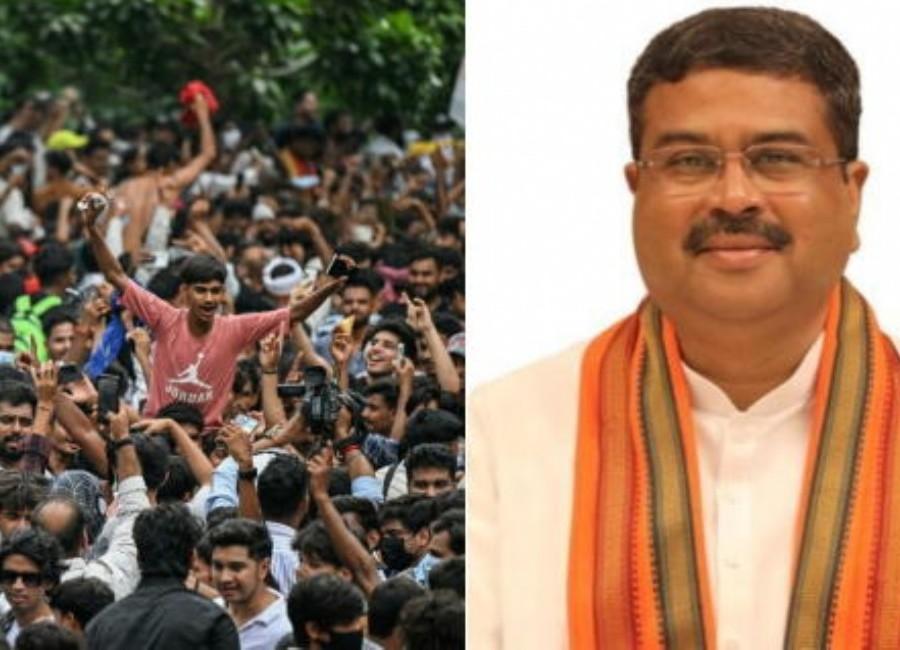
At the Jantar Mantar protest site, Abhijeet Dipke told the crowd “We have done it,” and the Al Jazeera report said he read the names of students who had died by suicide due to exam paper leaks and cancellations that have impacted millions across India.
The Guardian described Pradhan’s resignation as “just the beginning” for systemic education reform and democratic rights, and it quoted Dipke warning, “Do not make this mistake,” as he cautioned against making a hero of him.
NPR quoted protest leader Saurav Das calling on demonstrators to go home and saying the protests would end “in good faith,” while also describing the anger as tied to exam leaks and to police suppression of protests marching toward Parliament.
What’s at Stake Next
The resignation triggered a shift in how the government and protesters framed accountability, with Pradhan’s post on X emphasizing that he was stepping down to prevent “anti-national forces” from exploiting the situation, while the movement tied its demands to exam leak fallout and police actions.
“New Delhi, India – It all started with a question: “What if all cockroaches came together”
The CBC reported that Pradhan wrote, “I deeply respect the aspirations, feelings, and legitimate expectations of the country's youth,” and it described how the leak of the high-profile medical college entrance test paper in May led to the cancellation of results and a government-ordered retest affecting two million young people.
The Guardian said the protests had led to more than a dozen students taking their own lives and described the core demand as Pradhan’s resignation over an exam leak scandal that “has devastated the lives of millions of students.”
NPR added that the protests posed the most serious challenge to Prime Minister Narendra Modi’s 12-year rule, and it quoted protester Tluanga Ralte saying, “Young generation is here. This is win for the constitution,” as celebrations continued near the main protest site in New Delhi.
As the government moved to manage the unrest, Reuters journalists at the site reported that at least 1,000 police officials stood nearby guarding the area, and the CBC said federal authorities restricted access to the internet and to 18 metro stations in the capital to limit the protest.