Full story
Colombia quake toll climbs
A 7.4-magnitude earthquake struck Colombia at 7:34 a.m. local time on Monday near San José del Palmar in the northwest of the country, and the death toll has risen to 265 as rescue workers continued searching through rubble for possible survivors.
“the death toll from a powerful earthquake that struck Colombia on Monday has risen to 265”
President Abelardo de la Espriella said at least 3,494 people were injured and 496 remain missing, while the National Unit for Disaster Risk Management (UNGRD) reported 9,215 homes destroyed and 45,457 damaged.

The quake’s impact was described as extensive across western Colombia, with cities such as Cali, Pereira, and Manizales severely affected, and the BBC said the magnitude 7.4 quake struck at 07:34 (12:34 GMT) at a depth of 103km (64 miles) in Chocó province.
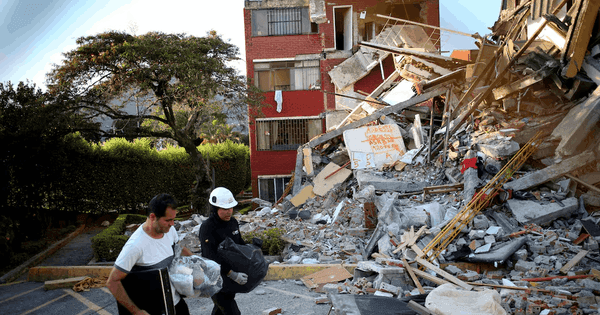
In the hardest-hit areas, officials said the earthquake caused 140 buildings to collapse completely and more than 53,800 people have been affected, as the official number of missing persons was 496.
The BBC reported that the epicentre was near the village of San José del Palmar in Chocó province, while local mayor León Fabio Marín Moncada said there had miraculously been no deaths or injuries despite roads in and out being damaged.
Race to rescue survivors
As rescue efforts continued into the critical 72-hour window, Cali Mayor Alejandro Eder told reporters, "We are in a race against time to save lives," warning that less than a day was left in the window during which there are far greater chances of finding quake survivors.
Eder said rescue workers needed silence and order to detect survivors under the mountains of rubble, while the BBC reported that the death toll was likely to rise with more feared trapped under collapsed buildings.

In Cali, the BBC said many deaths were concentrated and at least 900 people were injured, and it also reported that at least 85 died in Cali according to Asocapitales.
In Pereira, the BBC reported 66 people died, and it quoted Angélica Ávila saying, "Everyone was screaming... I saw dust coming out of the neighbouring buildings, and bricks were falling off the walls," as the quake hit Manizales.
The BBC also described how the earthquake was felt across a huge area stretching for hundreds of miles across western Colombia, with tremors felt as far away as neighbouring Venezuela, Ecuador and Panama.
Aid, emergency powers, and risks
Colombia’s government declared a national disaster situation and created special powers to react to the emergency, with the BBC saying the president Abelardo de la Espriella declared a national disaster situation, creating special powers to react to the emergency, including to reallocate budgets.
“the EU's Copernicus satellite was being used in the rescue operation”
The BBC also reported that world leaders offered support, including EU chief Ursula von der Leyen saying the EU’s Copernicus satellite was being used in the rescue operation, while the Vatican said Pope Leo XIV was "deeply saddened" by the earthquake.
In parallel, the United States announced $15.5 million in emergency relief, and the CBS News report said De la Espriella vowed a concerted rescue effort after declaring a state of emergency.
The CNN account described a rescue in Cali at La Torres del Limonar, where Brian Osorio Zuluaga heard a faint sound from the debris and said, "Yes, I’m here. I’m with a baby," as volunteers moved rubble despite warnings about a possible gas leak.
Despite rescues, the sources emphasized the continuing danger of aftershocks and the narrowing window for survivors, with the BBC noting deep earthquakes can release energy that is damaging to buildings and can produce fewer but potentially stronger aftershocks.