.jpg&w=3840&q=75)
US Embargo Triggers Cuba's Second Nationwide Blackout Amid Fuel Crisis
Key Takeaways
- Second nationwide blackout in a week worsened by US oil blockade and fuel shortages.
- More than 10 million Cubans affected by the power outage.
- Authorities activated restoration protocols and are working to restore the grid.
Blackout Incident
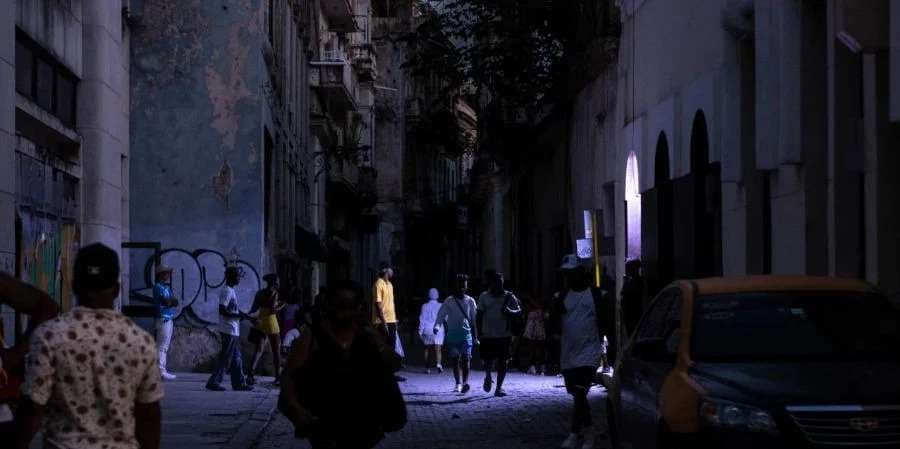
Cuba plunged into darkness for the second time in less than a week on March 21, 2026, as its national power grid collapsed for the third time this month.
“sanctions, Cuba has long struggled to import fuel, and combined with an aging grid, the energy crisis has continued to worsen”
The blackout left over 10 million residents without electricity across the island.

The incident originated from an unexpected failure at Unit 6 of the Nuevitas thermoelectric plant in Camagüey province.
This malfunction triggered a cascading effect throughout the national electrical system.
The Cuban Electric Union initially announced the total blackout without specifying the cause.
Authorities later explained how the failure caused 'a cascading effect in the machines that were online.'
Emergency measures included activating 'micro-islands' of generating units for vital services.
The restoration process was slow and laborious, potentially taking days for full recovery.
US Oil Blockade
The power failures are directly linked to a U.S.-imposed oil blockade by President Donald Trump.
Trump imposed the blockade following the removal of Venezuelan President Nicolás Maduro in January 2026.

Trump signed an executive order on January 29 accusing Cuba of 'extraordinary actions that harm and threaten the United States.'
The order launched new tariffs on goods from countries that sell oil to Cuba.
Cuba has not received oil from foreign suppliers for three months.
The country currently produces only about 40 percent of its fuel needs.
Trump threatened punitive tariffs against countries selling oil to Cuba.
Mexico halted its oil shipments while continuing humanitarian aid.
The U.S. temporarily lifted Russian oil sanctions but excluded Cuba, North Korea, and Crimea.
Venezuela Impact
Venezuela's role as Cuba's primary oil supplier has been fundamentally disrupted since Maduro's removal.
“Power outages, whether nationwide or regional, have become relatively common in the last two years due to breakdowns in the aging infrastructure”
Venezuela had been Cuba's most important benefactor, providing oil on favorable terms.
The U.S. military operation removed Maduro in an early morning raid on January 3.
This halted critical petroleum shipments without warning.
The loss created an immediate crisis for Cuba's power generation system.
Mexico also halted its oil shipments, worsening the situation.
Cuba relies heavily on imported fuel for its aging thermoelectric plants.
President Díaz-Canel acknowledged no foreign oil supplies for three months.
He attributes this to the U.S. embargo rather than domestic economic issues.
Human Impact
The repeated blackouts have had devastating consequences for Cuban citizens.
Residents face daily outages of up to 15 hours in Havana.

Some regions experience consecutive days without electricity.
Power failures have forced hospitals to cancel surgeries.
Work hours have been disrupted, preventing normal economic activity.
Cooking has become difficult without consistent electricity.
Food is spoiling in powerless refrigerators.
Water supplies have been interrupted in many areas.
In Havana, residents protested by banging pots and pans.
In Morón, protesters attacked and set fire to the Communist Party headquarters.
A mother reported her refrigerator broke due to voltage fluctuations.
Many residents feel hopeless about their living conditions.
Political Tensions
The energy crisis has intensified political tensions between the U.S. and Cuba.
“Cuba suffered this Saturday a new national blackout due to a total disconnection of the National Electric System (SEN) at 6:38 p”
Trump has made provocative statements about taking control of the island.

The U.S. president suggested he could have 'the honor of taking Cuba'.
Trump floated the possibility of a 'friendly takeover' of Cuba.
He reportedly wants Díaz-Canel removed as a condition for lifting the embargo.
Díaz-Canel warned that 'any external aggressor will encounter an unbreakable resistance'.
Cuba has announced a 'preparation plan to raise our people's readiness for defense'.
Cuban Deputy Foreign Minister Carlos Fernandez de Cossio stated that Cuba's political system is not negotiable.
The two governments have held initial bilateral talks.
The progress of these talks remains unclear amid the deepening standoff.
Infrastructure Crisis
Cuba faces profound long-term challenges with its aging energy infrastructure.
The power grid relies on eight aging thermoelectric plants, some over 40 years old.
These plants suffer frequent breakdowns and require constant maintenance.
Engineers struggle to keep the system operational due to lack of spare parts.
The government lacks hard currency for modernization efforts.
Cuba has been forced to burn heavy crude oil that accelerates machinery wear.
Independent estimates place repair costs at $8-10 billion.
The economy has contracted by more than 15% since 2020.
Recovery is complicated by lack of diesel and fuel oil for generators.
The U.S. blockade makes restarting thermoelectric plants extremely difficult.
More on South America
U.S. Oil Embargo Triggers Cuba's Second Nationwide Blackout
71 sources compared
Colombia’s Petro Accuses Ecuador of Bombing Near Border
11 sources compared
President Trump Offers Missiles to Latin America to Destroy Cartels
54 sources compared

US Restores Diplomatic Relations With Venezuela Months After Trump-Ordered Raid Captured Maduro
68 sources compared