Full story
Death sentences in Damascus
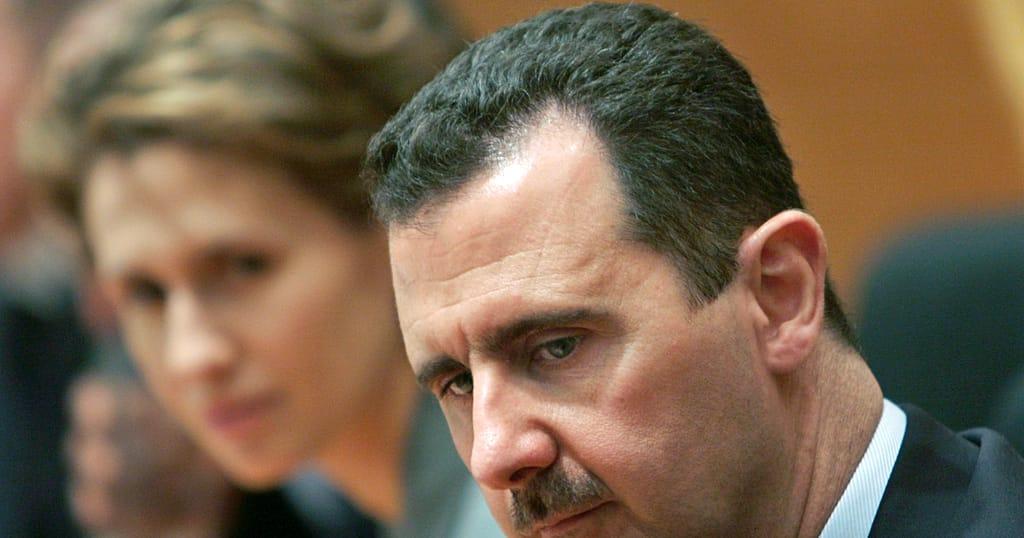
On Tuesday, August 11, 2026, the Fourth Criminal Court in Damascus sentenced former President Bashar al-Assad to death in absentia for crimes committed during Syria’s 14-year civil war, and it also sentenced his brother Maher al-Assad and cousin Atef Najib to death.
“Earlier Tuesday, the Fourth Criminal Court in Damascus sentenced Brig. Gen. Atef Najib, the former head of the Political Security branch in the southern province of Daraa, to death.”
The court found Najib guilty of his role in suppressing the 2011 uprising, and it tied the case to the protests in Daraa that began on March 18, 2011, after children were arrested for anti-regime graffiti.
In the same verdict, the court sentenced Brig. Gen. Atef Najib to death and handed down death sentences in absentia to Bashar al-Assad and Maher al-Assad, along with six other former security and military officials who remain at large.
The ruling described guilt in terms that included “crimes against humanity,” intentional killing, torture, and arbitrary detention, and it was presented as the first major verdict against figures of the Assad regime since the fall of his authority.
Crowds gathered outside the Damascus courthouse after the sentence, with Syrians holding pictures of victims and expressing joy over the verdict, as reported by BBC.
Officials hail, critics question
Syrian officials framed the verdicts as an assertion of justice and a rejection of impunity, with Interior Minister Anas Khattab saying, "Today, justice has prevailed for the victims of crimes and violations committed against Syrians," according to SANA.
Information Minister Khaled Zaarour also described the sentences against the “leaders of the former regime” as “another victory for Syrians and a definitive confirmation that there is no impunity,” according to SANA.
In contrast, the Associated Press reported that the trials were rushed and exposed flaws in Syria's justice system, while the Syria Justice and Accountability Center highlighted issues such as inadequate defense and witness testimony that failed to connect Najib to the crimes.
The Al-Jazeera Net account of the Attorney General in Damascus, Judge Hossam Khattab, said the judiciary managed sessions with “a high degree of precision and neutrality,” and that the court relied on “a system of material evidence and documented criminal facts.”
The same Al-Jazeera Net report also described a Syrian Ministry of Justice response to Amnesty International, saying the reports “do not accurately reflect the nature of the judicial procedures followed in these cases.”
Transitional justice and enforcement
The verdicts were presented as part of Syria’s transitional justice process after the capture of Damascus by opposition factions on Dec. 8, 2024, ending 61 years of Baath Party rule.
“Residents of Daraa later gathered at the Omari Mosque in the Daraa al-Balad neighborhood to celebrate the sentences”
Residents of Daraa later gathered at the Omari Mosque in the Daraa al-Balad neighborhood to celebrate the sentences against Najib and other former officials, with participants holding signs reading "Truth has prevailed and falsehood has perished" and "Daraa, birthplace of the revolution, has prevailed again," according to SANA.
For enforcement, Al-Jazeera Net reported that Mustafa Al-Qasim, Deputy Minister of Justice, disclosed the formation of a specialized fugitives-handling committee to coordinate with the International Interpol Office to pursue fugitives and deliver them to justice.
The same report said the Attorney General described the trial as conducted “in accordance with the safeguards and legal standards in place,” while also noting that the death penalty is prescribed by Syrian law and applied only by court ruling.
Even as officials described the ruling as a milestone, the verdicts were also described as largely symbolic in the sense that Assad and Maher remain out of reach in Russia, where Assad fled with his family and was granted asylum.