Full story
Trump revives Hormuz toll
President Donald Trump declared the U.S. would resume a blockade of ships traveling to and from Iranian ports and coasts in the Strait of Hormuz and would become the "Guardian of the Hormuz Strait," applying a 20% fee to all transported cargo to cover safety and security costs.
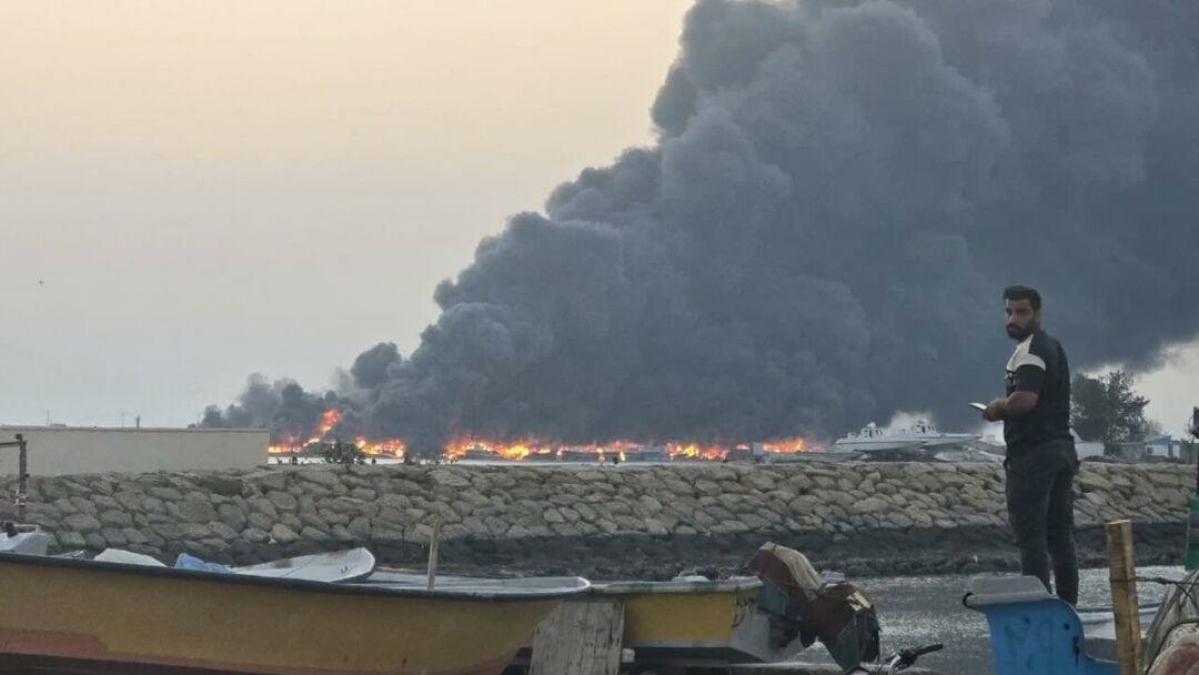
The announcement came as the U.S. Central Command said "Three unmanned surface vessels Corsair" attacked an Iranian naval base in Bandar Abbas, and the Strait of Hormuz is described as adjacent to the Iranian Navy headquarters there.

The Straits Times said the U.S. restarted a naval blockade overnight and launched air strikes after Iran fired missiles at a US base, escalating conflict around the Strait of Hormuz.
The dispute also centered on who controls passage and fees, with the U.S. proposing a 20 per cent fee while Iran sought to establish its control over the strait and a system for collecting fees.
In response to Trump’s proposal, Iranian Foreign Minister Abbas Araghchi quipped on X that "Whoever provides secure and safe passage of commercial vessels through the Strait of Hormuz should be compensated for this service."
Legal fights and shifting claims
The 조선일보 piece warned that Trump’s 20% "safety guarantee cost" pushes the maritime order of "freedom of navigation" to the brink of collapse, citing the United Nations Convention on the Law of the Sea and that it explicitly prohibits the imposition of tolls.
It also quoted U.S. Secretary of State Marco Rubio saying, "No country can collect tolls or fees on international waterways. That is international law," while Vice President JD Vance said, "Tolls should not be imposed on international waterways."

The Straits Times framed the escalation as a truce collapse, saying the U.S. imposed a 20% fee on cargo passing through the strait and that Iran targeted oil tankers in the Strait, killing one crew member.
Yezid Sayigh, described as a senior fellow at the Carnegie Middle East Center, said, "I doubt the two sides will resume a full war," while also noting "there is also a distinct possibility that the Iranians will overplay their hand."
The Straits Times reported that Trump said on July 13 on Truth Social that the strait was open and would remain open, with or without Iran, and that he was reinstating the Iranian blockade while charging a 20 per cent fee.
What’s at stake next
The Council on Foreign Relations said the ceasefire unraveled as Iran attacked merchant ships trying to transit the Strait of Hormuz near the Oman coast, and the United States struck back by bombing Iranian military bases and at least two bridges.
It added that after Iran declared the strait was closed, Trump struck back on Monday by declaring that the U.S. blockade of Iranian oil was back on and that the United States (as "THE GUARDIAN OF THE STRAIT") would impose a 20 percent toll on cargo passing through the waterway.
The Straits Times reported that the strikes pushed up oil prices to four-week highs and raised fears of a rise in inflation across the world, with Brent crude futures gaining 5 per cent to hit US$87.49 per barrel.
It also said regional talks were ongoing but that there was still a risk of fighting spinning out of control, while noting that the war has proved unpopular in the US where petrol prices have risen since the start of the conflict.
The Quds News Network said the escalation threatens to derail the ceasefire and reported that the latest escalation came about a week after renewed confrontations over control of the Strait of Hormuz, through which about a fifth of the world’s oil and LNG exports pass.