Iran23 April, 20269 min read
Donald Trump Orders U.S. Military To Shoot Iranian Mine-Laying Vessels In Strait Of Hormuz
Trump ordered U.S. Navy to shoot and kill Iranian mine-laying boats in Hormuz. Iran seized two ships and fired on others in the Strait of Hormuz.

BBC was read line by line by the Watchdog: 4.9. See the score →
Hormuz standoff escalates
The Iran-related crisis described across multiple outlets centers on the Strait of Hormuz, where the U.S. and Iran trade seizures, attacks, and mine-related threats while a ceasefire remains in place.
El Mundo reports that Iran “fires at three ships in the Strait of Hormuz,” while the United States maintains the blockade and diplomacy stalls, and it adds that Iran “seized two ships in the Strait of Hormuz while strengthening its control over this strategic sea lane.”

Reuters and NBC News both describe the U.S. response as a direct order from President Donald Trump to use force against Iranian mine-laying vessels, with NBC News stating Trump ordered the U.S. military to “shoot and kill” any Iranian boats laying mines in the strait.
The Guardian similarly frames the confrontation as a contest over control, noting Trump claimed the U.S. has “total control over the strait of Hormuz” even as Iran seized two container ships.
Multiple reports tie the standoff to the economic leverage of the waterway, with Al Jazeera stating that the strait is where “about 20 percent of global oil and liquefied natural gas (LNG) supplies are shipped during peacetime.”
In parallel, the U.S. also escalates enforcement beyond mines: NBC News says the U.S. boarded “another tanker involved in smuggling Iranian oil,” and AP reports the U.S. seized another tanker associated with smuggling Iranian oil, the Majestic X, in the Indian Ocean.
El Mundo adds that Trump ordered his military to “shoot and destroy” any vessel, “no matter how small,” that attempts to mine the Strait of Hormuz, and it notes that the U.S. President said the Strait is under U.S. control.
Together, the accounts depict a maritime standoff where both sides are acting inside the same narrow shipping corridor while the ceasefire’s status remains contested.
Ceasefire, blockade, and mines
The standoff is occurring while the U.S.-Iran ceasefire is described as extended but without a clear end date, and the dispute over whether the Strait can be reopened hinges on alleged ceasefire breaches. BBC reports that Iran’s chief negotiator in talks with the U.S. said it is “not possible” for the Strait of Hormuz to be opened due to “the blatant violations of the ceasefire” by the U.S. and Israel, including the U.S. naval blockade of Iranian ports that he said amounts to taking the global economy “hostage.” BBC also says White House Press Secretary Karoline Leavitt later clarified that Trump’s extension is open-ended, with “no new deadline,” and it quotes Leavitt saying Trump is “satisfied” with the ongoing U.S. naval blockade and “understands Iran is in a very weak position.”
Al Jazeera describes the legal and operational conflict as a struggle over who controls transit, stating that after the war began on February 28, “Tehran… closed the passage to all vessels,” and on March 4 the IRGC said it was “in full control of the strait.” Al Jazeera further states that “since the US imposed its naval blockade on April 13, its military has controlled which ships can pass from the Arabian Sea into the Gulf through the Strait of Hormuz,” leaving maritime traffic “trapped” between rival militaries controlling entry and exit points. The Guardian adds a mine-clearing timeline element, saying a U.S. report warned it could take “six months to clear the strait of mines,” and it notes the Pentagon briefing described the report as “inaccurate” while not providing specific objections.
El Mundo and NBC News both emphasize Trump’s mine-related posture, with El Mundo saying Trump ordered “shoot and destroy” for any vessel attempting to mine the strait and NBC News adding that Trump said the U.S. would intensify efforts to clear mines that have “helped choke off global shipping.” Euronews quotes Trump saying “There is to be no hesitation” and that mine-sweepers are clearing the Strait “right now,” ordered to continue “at a tripled up level!” In this framework, the ceasefire’s survival depends less on a single diplomatic moment and more on whether each side treats blockade and mine activity as compatible with the truce.
Competing narratives and officials
The reporting also highlights how officials and outlets frame the same events through sharply different lenses, with U.S. leaders emphasizing control, speed, and enforcement while Iranian officials emphasize blockade breaches and ceasefire violations.
“I have all the time in the World, but Iran doesn't - The clock is ticking!”
In a Truth Social post, the Guardian says Trump declared, “We have total control over the strait of Hormuz. No ship can enter or leave without the approval of the United States navy,” adding that it is “Sealed up Tight,” until Iran can make a deal.
NBC News presents Trump’s posture as one of time and leverage, saying Trump insisted there is “no time pressure” in talks with Iran and “no time frame” on ending the war after he extended the ceasefire.
Euronews adds a more pointed message from Trump, quoting him: “I have all the time in the World, but Iran doesn't - The clock is ticking!” and it repeats Trump’s claim that “the Blockade is airtight and strong.”
On the Iranian side, BBC reports that Iran’s president Masoud Pezeshkian said Iran remains open to negotiations but that “breach of commitments, blockade and threats are main obstacles to genuine negotiations.”
BBC also quotes Iran’s chief negotiator Mohammad Bagher Ghalibaf describing U.S. naval blockade of Iranian ports as taking the global economy “hostage,” and it says he cited “warmongering” by Israel “on all fronts.”
Al Jazeera adds that Iran accused the U.S. of “piracy” after the U.S. fired on and then captured the Iranian-flagged container ship Touska close to the Strait of Hormuz.
The Guardian describes the U.S. mine-clearing warning as a point of contention, saying a Pentagon spokesperson described the report as “inaccurate” but did not provide specific objections, while still discussing how mines and blockades compound the impact on global oil prices.
Even within the U.S. government, CBS News reports that CENTCOM said it directed a total of 31 vessels to turn around or return to port as part of the blockade, while also noting that the U.S. continues enforcing the blockade during the ceasefire.
Taken together, the accounts show a conflict where each side’s public language—“total control,” “Sealed up Tight,” “hostage,” and “breach of commitments”—is used to justify actions at sea while negotiations remain stalled.
Global stakes and economic shock
The sources repeatedly connect the Hormuz standoff to global economic risk, describing how the blockade and mine threats translate into higher energy prices and broader costs. Al Jazeera says the strait is where “about 20 percent of global oil and liquefied natural gas (LNG) supplies are shipped during peacetime,” and it describes how rival militaries controlling entry and exit points leaves maritime traffic trapped. CNBC reports that Brent oil has risen above $100 per barrel again as tanker traffic through the strait remains at a near standstill, and it adds that two cargo vessels, but no tankers, have crossed the strait so far Thursday according to LSEG ship tracking data.
AP reports that the standoff has effectively choked off nearly all exports through the strait with “no end in sight,” and it says the conflict has already sent gas prices skyrocketing far beyond the region and raised the cost of food and a wide array of other products. AP also cites European energy commissioner Dan Jørgensen warning Wednesday that the disruption is costing Europe around 500 million euros ($600 million) each day, and it notes Brent crude “nosed over $100 per barrel,” marking a 35% increase from prewar levels. El Mundo similarly warns that the Hormuz bottleneck threatens the next global harvest and says about 45 million people could fall into famine if the conflict lasts longer.
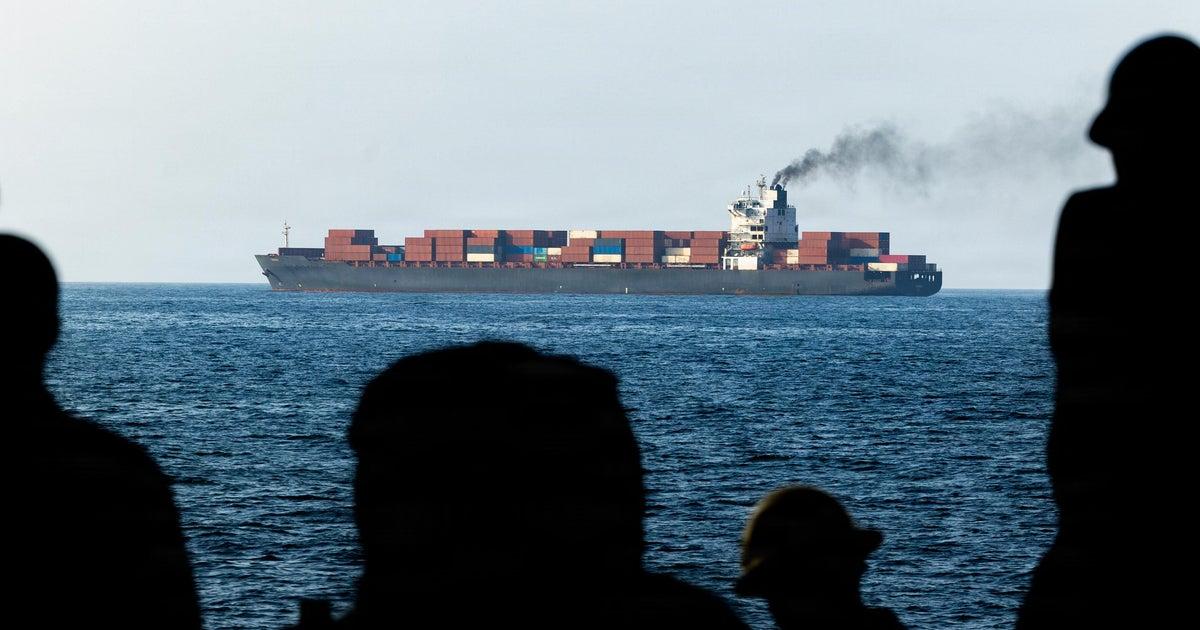
Euronews adds that Trump said the disruption is battering the world economy and quotes him saying “the clock is ticking,” while also repeating that the blockade is “airtight and strong.” The Guardian adds that the Pentagon warning suggested the impact could linger long after any peace deal was agreed, and it discusses a mine-clearing estimate of up to six months.
PBS/Associated Press content adds an analytical framing that Iran’s leverage over the Strait of Hormuz gives it power during a shaky ceasefire because the longer the standoff persists, “the more the global economy will suffer,” and it quotes Max Boot saying it is “really a question now of which country, the U.S. or Iran, has a greater pain tolerance.” Across these accounts, the stakes are not limited to shipping lanes but extend to energy security and food security, with the sources tying those risks to the duration and intensity of the maritime blockade and mine threats.
What comes next
Looking ahead, the sources describe a near-term diplomatic window that remains uncertain while military enforcement continues, and they also show how the ceasefire extension for Israel and Lebanon intersects with the Iran war timeline. NBC News says Trump announced the ceasefire between Israel and Lebanon will be extended by three weeks, and it adds that Trump said he would like Netanyahu and Lebanese President Joseph Aoun to meet at the White House during the three-week period. El Mundo likewise reports that Trump announced that the ceasefire between Israel and Lebanon “will be extended for three weeks,” and it says he met with envoys from Israel and Lebanon while stating there are “great possibilities” of achieving a peace agreement this year between Israel and Lebanon.
“I have all the time in the World, but Iran doesn't - The clock is ticking!”
In the Iran track, NBC News and Euronews both emphasize that Trump is refusing to set a deadline for ending the war, with NBC News stating Trump said there is “no time pressure” and “no time frame,” and Euronews quoting Trump: “I have all the time in the World, but Iran doesn't - The clock is ticking!” BBC adds that Leavitt said Trump has not set a “firm deadline” for Iran to send its latest proposal and that “I think President Trump ultimately will dictate the timeline.” Meanwhile, the U.S. continues maritime enforcement: AP says the Pentagon statement pledged to “continue global maritime enforcement to disrupt illicit networks and interdict vessels providing material support to Iran, wherever they operate,” and it reports the Majestic X seizure in the Indian Ocean.

CBS News reports that CENTCOM has directed a total of 31 vessels to turn around or return to port as part of the blockade, and it also notes that the Navy plays a key role in the war with Iran. The Guardian adds that the Pentagon warning suggested mine impacts could linger long after any peace deal was agreed, and it also notes Trump’s claim of total control even as mines and blockades persist.
Al Jazeera provides a longer escalation timeline, stating that on March 4 the IRGC said it was “in full control of the strait,” and that after April 13 the U.S. blockade controlled which ships could pass, meaning the operational status quo is already embedded in the maritime system. Taken together, the sources portray a future where the ceasefire extension may create a diplomatic pause, but the mine and blockade posture remains central to how both sides test leverage at sea.