
Donald Trump Says US Will Not Lift Hormuz Blockade Until Deal With Iran
Key Takeaways
- Trump says US will not lift Hormuz blockade until Iran agrees to a deal.
- Iran closes Strait of Hormuz again in response to US blockade.
- Iran has not decided to participate in Islamabad talks.
Blockade and the deadline
President Donald Trump said the United States will not lift its blockade on Iranian ports until a deal is reached with Tehran, as a temporary US-Iran ceasefire set to end on Wednesday approaches.
In a post on his social media platform Truth Social, Trump wrote that the blockade is "absolutely destroying Iran" and added that his country was winning the conflict "by a lot".

The BBC reported that the blockade began a week ago and that US forces have directed 27 vessels to turn around or return to an Iranian port, according to US Central Command (Centcom).
The BBC also said the US intercepted and seized an Iranian-flagged cargo ship for the first time in the conflict after it tried to get through the blockade on Sunday, with videos shared by Centcom said to show the ship being warned before troops abseiled onto the vessel.
Tehran deemed the seizure an "act of piracy" and a violation of the fragile ceasefire, while Trump said Iran had "decided to fire bullets" and called it a "total violation" to the ceasefire agreement.
The BBC further reported that Iran has maintained its own blockade on the Strait of Hormuz for nearly two months, briefly reopening it on Saturday before quickly closing it again after reports of vessels in or near the strait, including a tanker, being targeted by Tehran.
In parallel, the BBC said there are indications a second round of peace talks between the US and Iran will go ahead in Pakistan, with tightened security in Pakistan's capital in anticipation of a meeting.
Ceasefire talks in Islamabad
As the ceasefire deadline nears, multiple outlets described uncertainty over whether Iran will attend a second round of peace talks in Pakistan, with US officials preparing to travel to Islamabad.
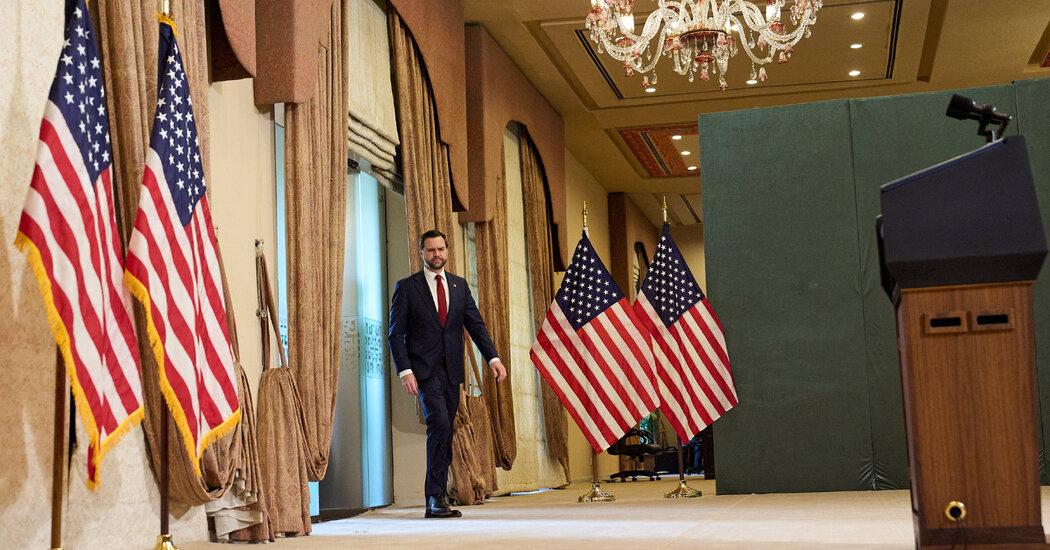
The BBC said US Vice President JD Vance, set to lead the US delegation, has not yet left Washington, and that Iran says it has not decided whether to attend, with an Iranian foreign ministry spokesperson later saying, "so far" Tehran had "no plans" to attend.

The BBC reported that Vance is expected to be joined by special envoy Steve Witkoff and Trump's son-in-law and adviser, Jared Kushner, as in the previous round of talks, and that in Islamabad there are signs of preparation including guests at the city's Serena Hotel being told to leave and police announcing the closure of key roads due to the arrival of foreign delegations.
Reuters was cited by the BBC for a senior government official saying Pakistan was confident it could get Iran to attend the talks, while the BBC’s Chief International Correspondent Lyse Doucet in Tehran said, "If JD Vance is going to be in Islamabad, it will be really hard for the Iranians to not show up."
The BBC also said the US delegation would be leaving "soon" according to sources told to the BBC on Monday afternoon, while officials told the New York Times that they would depart on Tuesday.
Euronews reported that Trump refused to lift the Hormuz blockade until an Iran deal was agreed and said Iran had said earlier it would not send a delegation to participate in the second round of talks in Islamabad set to take place on Monday.
CBS News similarly said sources told CBS News that Vice President JD Vance, special envoy Steve Witkoff and presidential son-in-law Jared Kushner will travel to Islamabad for the talks, while Iran state media said Tehran does not plan to be involved due to the US blockade of Iranian ports.
Hormuz closes again
While diplomacy over a second round of talks played out, Iran and the US continued to exchange actions affecting the Strait of Hormuz, with Iran closing the waterway again over the US blockade of its ports.
Al Jazeera reported that Iran said it has closed the Strait of Hormuz again, calling the decision a response to a continued blockade of its ports by the United States, and said the Iranian military on Saturday said control of the strategic waterway, through which 20 percent of globally traded oil transits, has “returned to its previous state”.
Al Jazeera said reports indicated Iranian gunboats fired at a merchant vessel as it attempted to cross, and that the closure came hours after it was reopened with more than a dozen commercial ships passing through after a US-mediated 10-day ceasefire deal between Israel and Lebanon.
The Islamic Revolutionary Guard Corps (IRGC) said in a statement cited by Iranian state media that the ongoing US blockade represented “acts of piracy and maritime theft”, and that control over Hormuz is “under the strict management and control of the armed forces”.
Al Jazeera quoted the IRGC saying, “Until the US restores full freedom of navigation for vessels travelling from Iran to their destinations and back, the status of the Strait of Hormuz will remain tightly controlled and in its previous condition,” and said by 10:30 GMT on Saturday at least eight oil and gas tankers had crossed while at least as many ships appeared to have turned back.
The New York Times described the back-and-forth as adding to fear and confusion, saying Iran’s Revolutionary Guards declared it was closing the Strait of Hormuz shortly after two Indian-flagged ships reported coming under fire while they were trying to pass through.
NPR reported that Iran said it had reinstated control of the Strait of Hormuz, reversing course on its decision to reopen until the United States completely lifts its blockade of Iranian ports, and quoted Trump warning that the US would have to start dropping bombs again if there is no deal.
Ship seizure and retaliation
The immediate flashpoint behind the renewed pressure on both sides was the US attack and seizure of an Iranian-flagged cargo vessel near the Strait of Hormuz, which multiple outlets linked to Tehran’s vow to respond and to the fragile ceasefire’s instability.
Euronews said the decision not to lift the blockade came after Iran said earlier it would not send a delegation to participate in the second round of high-stakes peace talks in Islamabad set to take place on Monday, and it tied that decision to the US attack and seizure of an Iranian-flagged cargo vessel it said had tried to evade its naval blockade near the Strait of Hormuz on Sunday.

Euronews reported that Tehran’s joint military command vowed to respond, throwing the fate of a fragile ceasefire into question days before it expires, and said Iran described the armed boarding as an "act of piracy" and a violation of the fragile truce.
Euronews also quoted Trump saying a US Navy guided missile destroyer in the Gulf of Oman warned the Iranian-flagged ship, the Touska, to halt and then "stopped them right in their tracks by blowing a hole in the engine room."
It added that US Marines had custody of the US-sanctioned vessel and were "seeing what’s on board!" and that the US Central Command said the destroyer had issued "repeated warnings over a six-hour period."
CBS News described the same blockade sticking point and said Iran said it would retaliate, with the state-run Tasnim news agency reporting that Iran had sent drones in the direction of U.S. military ships after its vessel was seized.
BBC reported that Tehran deemed the seizure an "act of piracy" and a violation of the fragile ceasefire, while Trump said Iran had "decided to fire bullets" and called it a "total violation" to the ceasefire agreement.
Energy markets and next steps
The escalating blockade and Hormuz closures were tied in the reporting to immediate market impacts and to the political stakes of whether diplomacy can avert renewed war.
“- Published The US will not lift its blockade on Iranian ports until a deal has been reached with Tehran, US President Donald Trump has said, amid continuing uncertainty over whether fresh talks to end the war will take place”
Euronews said traffic seized up in the Strait of Hormuz as both Tehran and Washington impose separate blockades, and it reported that the development sent oil prices spiralling, deepening an already dire global energy price crisis, one of the worst in decades.

Euronews provided figures, saying Brent crude opened trading at $95 (€80) a barrel early on Monday, a hike from its price, which hovered between $91-92 (€77-78) during the majority of the ceasefire.
It also said the move heightened uncertainty over the fate of the war, which Trump had claimed repeatedly over the last few days was "close to over," but now brings his earlier statement on new talks with Iran in Pakistan to question.
NPR described the broader economic concern by saying the latest announcement from Iran that it had again closed the strait reignited concerns about how shipments would get through the narrow waterway, through which about 20% of the world's crude oil and natural gas typically passes.
NPR also said oil prices tumbled and stock markets rallied on the announcement the strait was open for commercial ships, and that the latest announcement reignited concerns about shipments.
France 24 reported that Trump reiterated he would not lift sanctions on Iran's ports unless an agreement is reached, while Iran accused the United States of not being serious about the diplomatic path and of violating the ceasefire that's been in place for two weeks.
More on Iran
Trump Warns U.S. Will Resume Bombing If Iran Talks Fail Before Ceasefire Deadline
11 sources compared

Reuters/Ipsos Poll Finds 36% Approve Trump’s Job Performance Amid Iran War And Pope Feud
10 sources compared

Iran’s Judiciary Chief Mohseni-Eje’i Warns US-Israeli War Coalition May Strike Again
11 sources compared

Trump Says U.S. Expects a Great Deal With Iran, Won’t Extend Ceasefire Deadline
25 sources compared