Full story
Trump, IRGC, and Britain
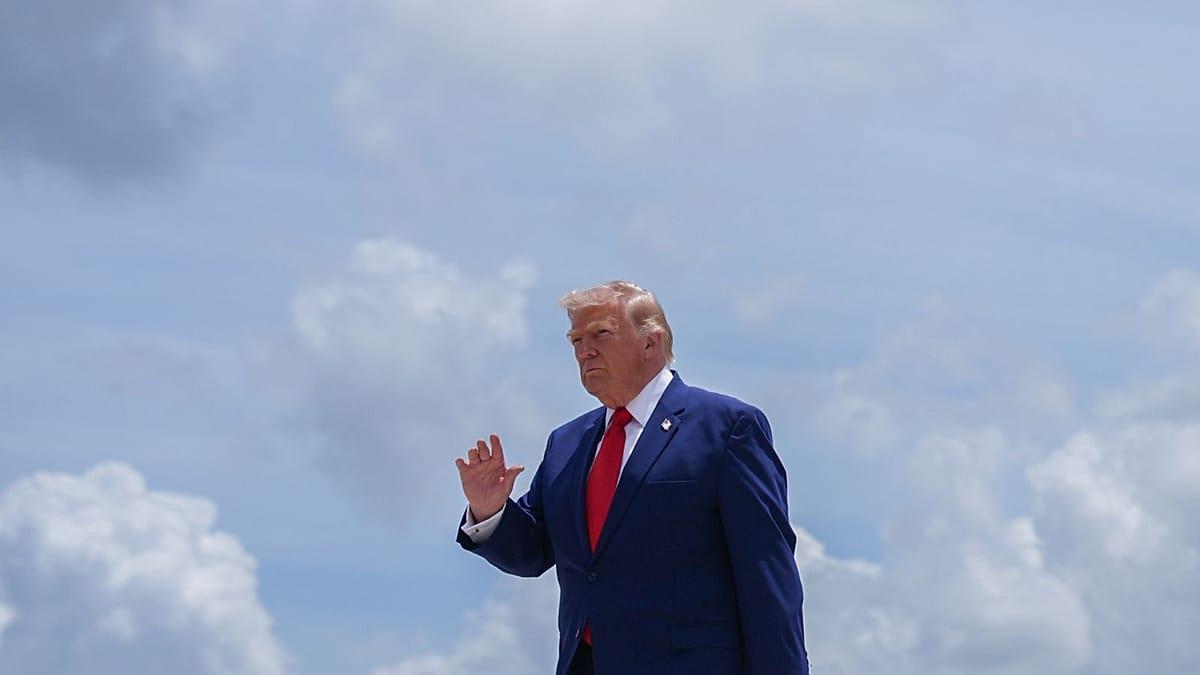
The U.S. President Donald Trump threatened Iran and Yemen’s Houthi terrorists with “major military punishment” if the Iran-backed group carries out another attack on commercial shipping, while the Islamic Revolutionary Guard Corps warned Britain over allowing U.S. bombers to fly from British bases for operations against Iran.
“The United States launched a 12th consecutive night of strikes against targets in Iran, as Tehran threatened to launch more of its own attacks across the Gulf region, warning that “no infrastructure will be safe” unless its own security is guaranteed”
In a Truth Social post, Trump said the Houthis had “started up again” by firing at two Saudi Arabian ships and wrote, “If they do this again, the U.S. will hold Iran responsible,” describing the Houthis as Tehran’s “surrogate and/or proxy.”

The IRGC said Britain would bear responsibility for enabling American military operations if its territory or bases were used by U.S. aircraft targeting Iran, as Washington continued strikes against Iranian military targets and sought to restore commercial shipping through key regional waterways.
The Reuters account also tied the escalation to renewed Houthi attacks on Saudi shipping and raised concerns over disruption to the Bab el-Mandeb Strait, a route connecting the Red Sea with the Gulf of Aden.
In parallel, the Reuters report said Trump stated the Civil Nuclear Deal between the United States Department of Energy and Saudi Arabia would permit only peaceful, nonmilitary nuclear facilities and would not allow uranium enrichment.
Strikes, retaliation, and “no infrastructure”
The United States launched a 12th consecutive night of strikes against targets in Iran, as Tehran warned that “no infrastructure will be safe” unless its security is guaranteed.
CENTCOM said the strikes were launched “to further degrade Iran’s ability to threaten civilian mariners and commercial vessels transiting regional waters,” while Iranian media reported attacks in Bushehr, Ahvaz, Jask, Andimeshk and Sirik in southern Iran.

The IRGC claimed responsibility for additional strikes on U.S. military targets in Kuwait, saying it had “attacked and destroyed a large warehouse of military equipment, a Patriot missile defence system, and a hangar of American MQ9 drones” at Ali al-Salem airbase.
Iran’s Foreign Minister Abbas Araghchi said Tehran would retaliate “an eye for an eye” against any future attacks, and the Iranian Ministry of Health said U.S. attacks since late last month have killed 53 people, including three children, and injured at least 590 others.
The BBC also reported that judicial and security authorities had not yet issued explanations about details of cases involving Yashar Dar al-Shifa, Astareh (Maryam) Ansari, and Bahar Sahraian, whose bail releases were described as occurring in the past two days.
Bigger strike talk and legal stakes
Multiple outlets described Trump as studying or preparing a wider escalation, with Axios-referenced reporting saying he was close to deciding to resume a wide military operation against Iran that would be “bigger and broader” than the “Epic Rage” operation.
“Yashar Dar al-Shifa, a social science researcher, Astareh (Maryam) Ansari, and Bahar Sahraian, two lawyers, were released on bail in the past two days from Tehran's Fashavieh Prison and Shiraz's Adelabad Prison; meanwhile judicial and security authorities have not yet issued explanations about details of some of these cases”
The Iran-focused reporting also said Trump told Axios that Israel could join within two minutes if it wished, while adding that the United States “does not need anyone” to launch a new operation against Iran and that Israeli participation would most likely provoke Iranian retaliation.
In the same reporting stream, Reuters-cited details said Iran had sent IRGC commanders and military advisers, along with equipment related to missiles and drones, to areas under Houthi control in Yemen, including a Mahan Air flight on July 13 carrying between 10 and 21 IRGC personnel and due to land in Sanaa but diverted to the port of Hudaydah after Sanaa airport was attacked.
Separately, an international law scholar Reza Naseri wrote on Telegram that under the IAEA’s legal framework “a threat to attack a nuclear facility militarily is, in and of itself, illegal,” arguing that the prohibition applies from the moment a credible threat is raised.
Naseri’s analysis said the IAEA General Conference has emphasized that an attack on peaceful nuclear facilities—and threats to carry out such attacks—violates the United Nations Charter, international law, and the Agency’s Statute, and he questioned why the Security Council did not convene an emergency meeting in response to Trump’s threat.