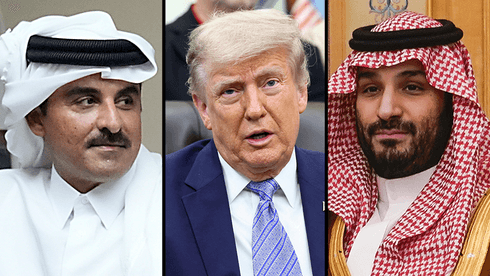
Donald Trump Demands Saudi Arabia And Pakistan Join Abraham Accords In Iran Deal
Key Takeaways
- Trump says Iran deal should include Saudi Arabia and Pakistan joining Abraham Accords.
- Several additional countries should join the Abraham Accords, expanding regional normalization.
- GOP reaction is split: Graham praises expansion; some lawmakers warn against concessions.
Trump ties Iran deal
President Donald Trump said Monday that any agreement to end the Iran war should include a requirement for several additional countries, including Saudi Arabia and Pakistan, to join the Abraham Accords, the U.S.-brokered agreements aimed at normalizing relations with Israel.
“Since reports of a possible deal with Iran started to emerge, pro-Israel advocates in the United States have been warning President Donald Trump against signing the agreement”
Trump said negotiations are “proceeding nicely” and tied any eventual agreement to expanded participation in the 2020 accords, pointing to Saudi Arabia and Qatar as countries that should “immediately” sign on.

The proposal came as the emerging Iran deal faced criticism from fellow Republicans who favor a harder line on Iran, and it could add new diplomatic complications to the negotiations.
In a social media post, Trump wrote that “after all the work done by the United States to try and pull this very complex puzzle together, it should be mandatory that all of these Countries, at a minimum, simultaneously, sign onto the Abraham Accords.”
Graham praises, critics
Sen. Lindsey Graham, a vocal proponent of the war, had warned that ending the conflict to reopen the Strait of Hormuz would be a “nightmare” for Israel, but two days later he praised Trump’s diplomatic manoeuvre as “simply brilliant.”
Graham wrote on X that “With Saudi Arabia and others like Pakistan making peace with Israel, the region will know a level of stability never dreamed of before President Trump,” and he added that normalisation “will eventually lead to regional integration.”
The Hill described Graham’s enthusiasm as coming just two days after he warned Trump against accepting a premature deal with the Iranian regime that could shift the balance of power in Tehran’s favor and become a “nightmare for Israel” over time.
In the same period, Trump said Sunday he told U.S. officials “not to rush into a deal,” while later on Monday he defended the potential deal and urged allies in the Gulf region to sign onto the Abraham Accords.
What’s at stake next
The proposal also raised questions about whether it is workable for the countries on Trump’s list, with Masood Khan, Pakistan’s former ambassador to the United States, saying it remains to be seen how workable the proposal might be.
“In short: US President Donald Trump has called on Arab nations, including Saudi Arabia and Qatar, to sign the Abraham Accords as part of a peace agreement with Iran”
Khan said “the diplomatic track is still working, and I believe Pakistan is very much at the center of it, supported by regional countries,” while noting that the invocation of the Abraham Accords gives “an altogether new dimension” to the diplomatic and mediatory processes.
AP reported that Trump pointed to Saudi Arabia and Qatar as countries that should “immediately” sign on, alongside Pakistan, Turkey, Egypt and Jordan, while Bahrain and the United Arab Emirates became the first countries to join in 2020.
The Hill said the pressure comes as the U.S. and Iran are reportedly close to a deal to extend the ceasefire in the region and reopen the Strait of Hormuz, with the potential agreement also including addressing Tehran’s nuclear program and potential sanctions relief.
More on USA

Trump Honors Fallen U.S. Troops at Arlington, Says Iran Will Never Have a Nuclear Weapon
20 sources compared

Nasire Best Killed After Opening Fire at Secret Service Checkpoint Near White House
42 sources compared

Secret Service Engages Suspect, FBI Supports Response After Gunshots Near White House
16 sources compared

Mahmoud Khalil Appeals to U.S. Supreme Court After Third Circuit Rejects Deportation Review
15 sources compared