Full story
Hormuz control dispute
Iran’s military said it remains in control of the Strait of Hormuz and called U.S. President Donald Trump’s claim that the United States dominates the route “lies,” with Lieutenant Colonel Ebrahim Zolfaghari saying, “No ship, without Iran’s permission and supervision, is able to travel safely through the Strait of Hormuz.”
“No ship, without Iran’s permission and supervision, is able to travel safely through the Strait of Hormuz”
Trump, meanwhile, wrote on Truth Social that “The United States has total control of the Strait of Hormuz. I think we’ll keep it for ourselves!” as the war that began on February 28 entered a stalemated phase.
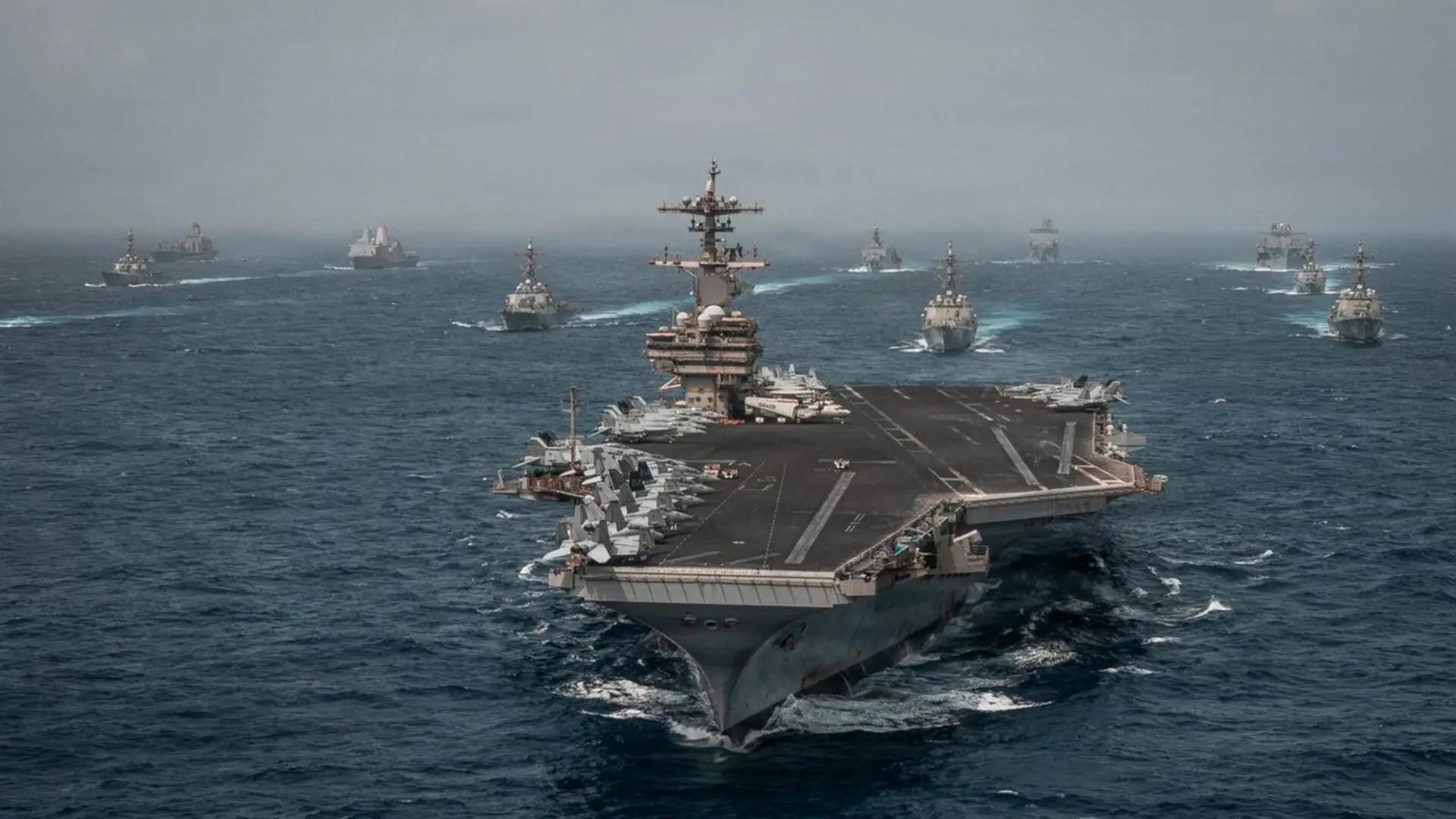
The dispute is tied to shipping levels, with the Reuters report saying that before the war about 120 vessels crossed Hormuz daily, while in recent days about 14 ships have done so, according to Kpler.
Iran also said it closed the passage through Hormuz in mid-July after new U.S. bombings against southern Iranian territory, and it demanded the United States end the war, lift the blockade on its ports and vessels, and allow it to sell its oil in international markets in exchange for reopening the Strait.
No talks, competing demands
Trump said there are no conversations “in progress or scheduled” with Iran to end the war, stating, “There are no conversations or dialogues ongoing, nor scheduled, with the Islamic Republic of Iran.”
Iran’s Foreign Minister Abbas Araghchi said talks with Washington are not underway, despite Trump’s repeated claims, and NBC News reported that Tehran’s conditions for reopening the Strait include a permanent end to the war and further threats against Iran, an end to the U.S. blockade, the withdrawal of American military forces, the lifting of sanctions and the return of Iranian assets.
In parallel, the Aajil report said Iran’s Basij commander Hussein Taib told Fars News Agency that the Strait is “under Iran's control and management,” adding that “Hormuz today is under the administration and control of the Islamic Republic.”
The same NBC News account said Democrats criticized the administration’s handling of the conflict, with Connecticut Sen. Chris Murphy arguing the United States has become weaker and that the price of reopening the Strait continues to increase, while the administration rejected that assessment.
What’s at stake next
The standoff over Hormuz is now bound to the fate of the June memorandum of understanding, with 20Minutos reporting that Trump said there are no talks and that the naval blockade remains fully in effect while the Strait of Hormuz is open and operational.
“The Strait of Hormuz will not open unless the United States fulfills the commitments in the memorandum of understanding”
Aajil also reported that Speaker of the Iranian Parliament Mohammad Bagher Qalibaf said the Strait of Hormuz will not open unless the United States fulfills the commitments in the memorandum of understanding, described as temporary, including lifting the blockade, unfreezing Iranian funds, lifting oil sanctions, ending threats and military actions on all fronts.
In the ABC account of the dispute, Iran’s PGSA said, “The Strait of Hormuz remains blocked and will not reopen until Iran’s conditions are accepted,” while Trump insisted, “Right now we have total control of the Strait of Hormuz. They (the Iranians) do not control it. We have total control. It’s ours,” in a press exchange.
The ABC report tied the immediate stakes to energy prices and U.S. politics, noting that consumers saw the price of the galón of gasoline rise above four dollars and that the issue is politically sensitive for Trump and his Republican allies ahead of November elections.