
Eid ul Fitr 2026 alert in the UAE, Kuwait, Qatar: No open grounds, prayers only inside mosques as Gulf countries announce new guidelines amid Iran vs US-Israel war
Key Takeaways
- Eid prayers held exclusively inside mosques; outdoor grounds suspended nationwide.
- Announcement by the General Authority of Islamic Affairs, Endowments and Zakat.
- Measures announced amid Iran–US–Israel war tensions.
UAE indoor Eid prayers
As the UAE prepares to welcome Eid ul Fitr 2026, authorities have introduced a significant change to one of the most visible rituals of the Islamic calendar.
“As the UAE prepares to welcome Eid ul Fitr 2026, authorities have introduced a significant change to one of the most visible and spiritually unifying rituals of the Islamic calendar”
Eid prayers will be held exclusively inside mosques this year, with outdoor prayer grounds suspended nationwide.
The announcement, made by the General Authority of Islamic Affairs, Endowments and Zakat, comes at a time of heightened regional sensitivity and reflects a broader shift in how public religious gatherings are being managed across the Gulf.
The move aims to ensure public safety and smoother organisation of large congregations, particularly during a period of regional uncertainty.
The change applies across all emirates and removes the familiar outdoor grounds for Eid prayers.
Timing and moon sighting
Eid prayers in the UAE are typically held shortly after sunrise, usually between 5:45am and 6:30am depending on location, immediately followed by sermons and greetings.
The moon-sighting committee will convene on the 29th of Ramadan.
If the crescent is spotted, Eid will fall on Thursday, March 19.
If not, Ramadan will complete 30 days, placing Eid on Friday, March 20.
Astronomical predictions currently suggest the latter is more likely, adding another layer of complexity, especially with the possibility of Eid coinciding with Friday Jummah prayers.
Kuwait and Qatar follow suit
Kuwait has implemented a similar directive, with the Ministry of Awqaf and Islamic Affairs announcing that Eid Al Fitr prayers will be held exclusively inside mosques where Friday prayers take place, effectively ruling out open-air prayer grounds for 2026.
“As the UAE prepares to welcome Eid ul Fitr 2026, authorities have introduced a significant change to one of the most visible and spiritually unifying rituals of the Islamic calendar”
This marks a notable shift from traditional large scale outdoor congregations, signalling a move toward controlled indoor worship environments across the country.
Authorities have also streamlined locations by limiting prayers to designated mosques, ensuring better organisation and easier crowd management during the early morning rush.
Adding to the structured approach, Kuwait has even fixed a precise prayer timing of around 6:08 am, reinforcing a tightly coordinated nationwide plan.
With over a thousand mosques prepared for Ramadan 2026 and Eid ul Fitr gatherings, the country is leaning on its existing infrastructure to accommodate worshippers while avoiding the unpredictability of large outdoor assemblies.
Qatar has also issued clear instructions that Eid ul Fitr prayers will be conducted only inside approved mosques, with no provision for open grounds or temporary prayer areas this year.
The Ministry of Endowments and Islamic Affairs has standardised the venues, limiting prayers to mosques that regularly host Friday congregations, a move aimed at ensuring uniformity and tighter supervision across the country.
Authorities have further emphasised strict adherence to guidelines within mosques, including organised entry, shorter sermon durations and regulated congregation flow.
Regional safety and guidance
Across the Middle East Eid 2026 is unfolding against a backdrop of ongoing geopolitical tensions amid Iran vs US-Israel war, heightened security alerts and increased monitoring of public gatherings.
The decision in the UAE, Kuwait, and Qatar is not isolated but part of a regional pattern prioritising safety, security and logistical efficiency amid heightened tensions.
The UAE has long positioned itself as a country that balances religious observance with structured governance, and this latest directive reflects that approach, with worship fully facilitated but within regulated frameworks.
Public safety is prioritised alongside religious freedom, and coordination between emirates ensures uniformity.
This indicates a regional pattern where authorities are prioritising safety and logistical efficiency amid heightened tensions.
Worshippers are urged to arrive early, follow official instructions, avoid gathering outside mosques in large numbers, and stay updated through official announcements.
More on Asia

Drone strike at Dubai International Airport shuts down flights; attacker unconfirmed.
50 sources compared
Iran Strikes Italian Military Base in Erbil, Forcing Troops Into Bunkers
28 sources compared
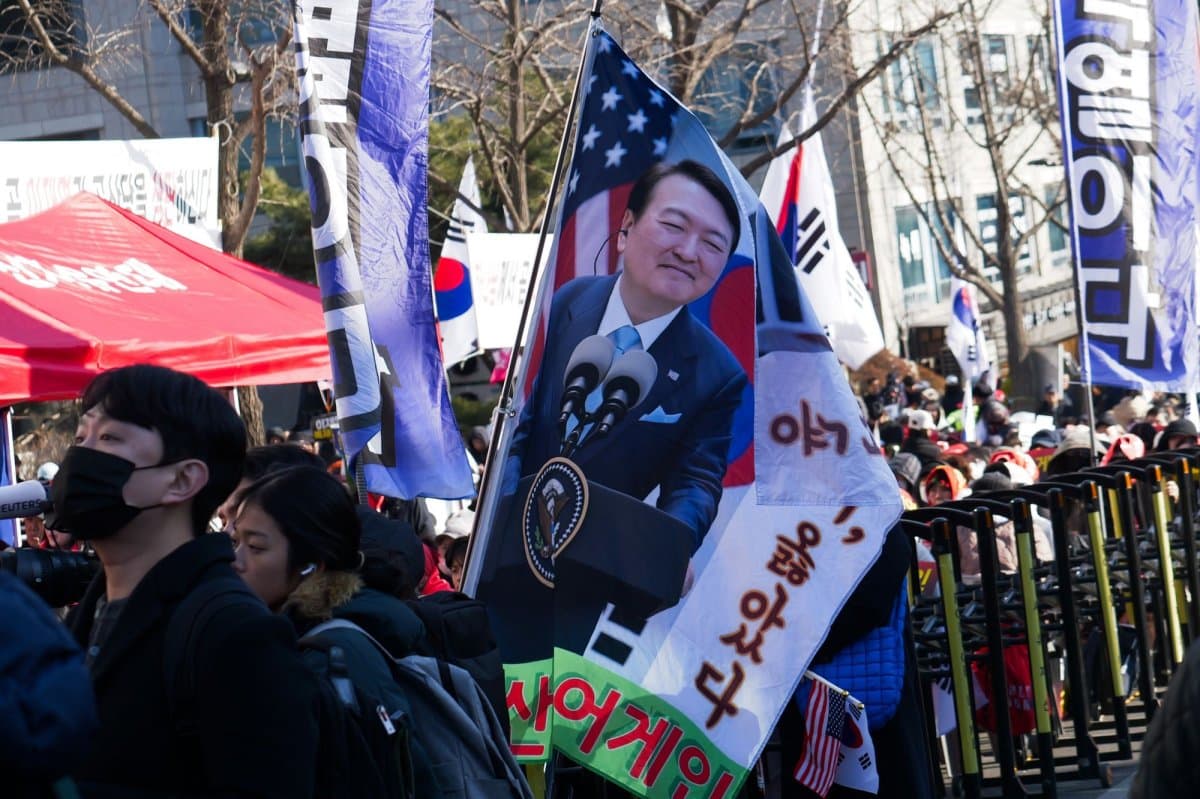
Former South Korean president Yoon Suk-yeol appeals life sentence for leading insurrection
14 sources compared

Diet Re-elects Sanae Takaichi as Prime Minister of Japan After LDP Landslide
14 sources compared