West Bankupdated 33m ago3 min read
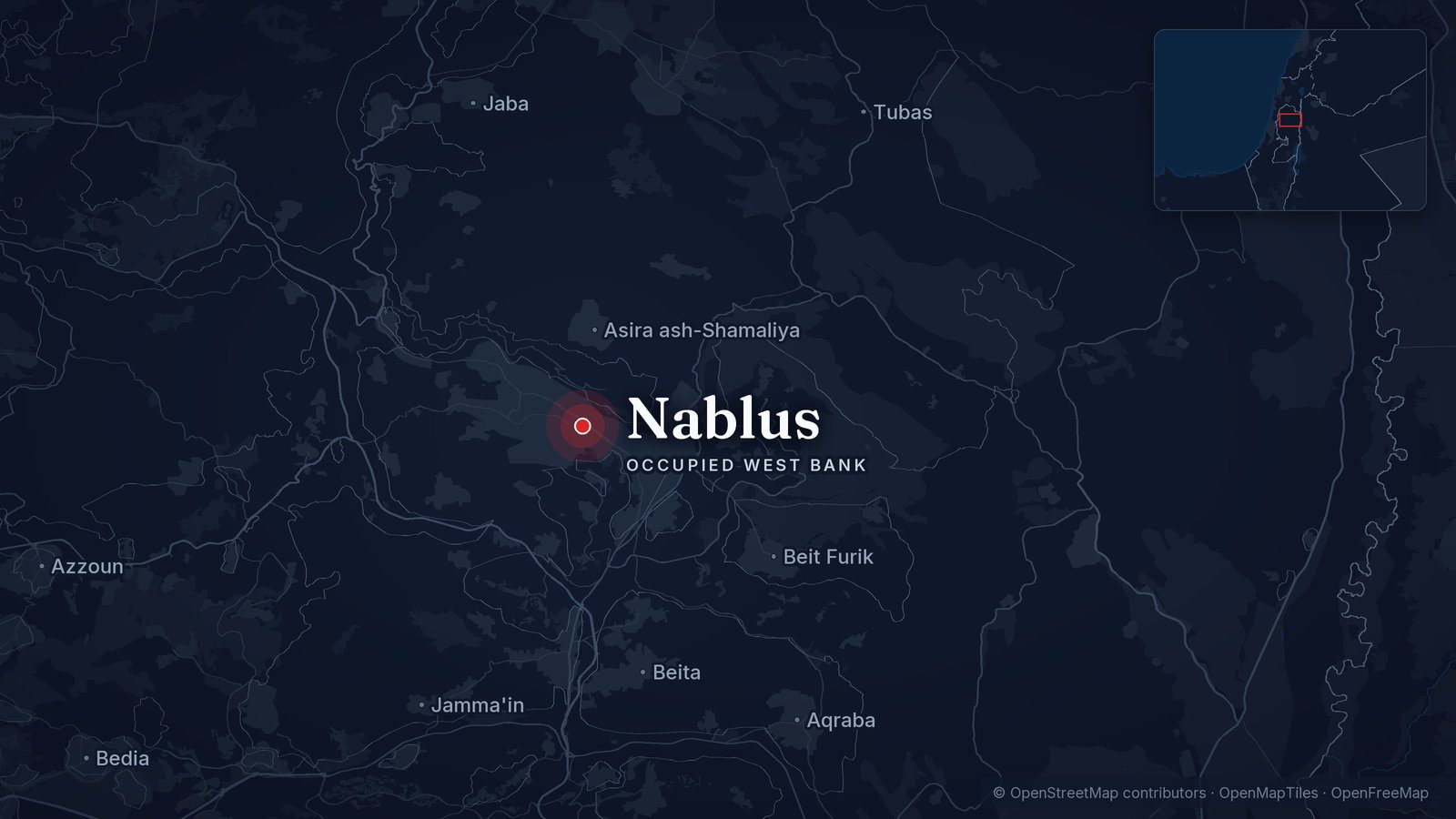
MapEl País Reports Palestinian Ambulances Become Direct Target in West Bank
4 Western Mainstream2 Israeli2 Other2 Other source typesMap: © OpenStreetMap contributors, ODbL · Cropped for layout
This article is an automated aggregation of coverage from news outlets. Our editorials offer in-depth analysis curated by the NewsCord team.
Palestinian ambulance crews faced a drastic rise in attacks and obstacles in the West Bank. Mohammed Musa, a medic, was shot and killed while aiding victims near Nablus in 2024.
Save coverage image
10 outlets in this story. Read their headlines below.
CBC was read line by line by the Watchdog: 6.0. See the score →
Ambulances targeted in West Bank
Physicians for Human Rights Israel said Palestinian emergency medical teams in the West Bank face a “dangerous escalation” since October 7, 2023, and El País reported that the NGO concluded ambulances and paramedics have become a “direct target.” Mohammed Musa, a 52-year-old Palestinian volunteer paramedic, was shot and killed while driving an ambulance to aid people injured in an attack by Israeli settlers near the West Bank city of Nablus, and Bashar Qaryouti recalled five attempts on his life when he responded to emergencies.
Yumaa Omran, an ambulance driver and paramedic in Huwara with 35 years of experience, recalled being ordered to stop, having a soldier pick up a stone and strike the ambulance, and waiting 45 minutes while he feared the patient might die.
The report author Imran Anati told El País that “We are not talking about delays at checkpoints, but about preventing aid to the injured,” and the same account said the report was based on 25 testimonies from medical staff in the Nablus area.
The World Health Organization registered 233 attacks in the West Bank against the health sector, including 165 incidents affecting medical transportation, only in 2025, and cases of violence and mobility obstacles rose from 93 in 2022 to 422 in 2024.
Testimonies, threats, and barriers
Bashar Qaryouti said he always says goodbye to his family before getting into the ambulance in Qariut, after a group of radical settlers attempted to burn it alive inside. Qaryouti said, “When I go out on a mission, I think I will not return home,” and El País described a separate account in which a woman lost her fetus inside the ambulance because of obstructions at the Awarta checkpoint. Yusef Diriyah, an ambulance driver and paramedic in Aqraba, recalled soldiers stopping him in Qusra after seeing he carried a patient bleeding, and it included Diriyah’s quote that “He’s going to die,” followed by a soldier’s response, “That’s not my problem.”
Qamar Mahmoud said a pregnant neighbor lost her baby and nearly bled to death while stopped at an Israeli checkpoint unable to reach the hospital, and it quoted mayor Salah Jaber saying the trip to the regional hospital in nearby Nablus “Today, it takes you more than an hour.” NPR also quoted Milena Ansari saying, “But the change nowadays is that the paramedics are now an actual target,” and it added that Ansari’s group said incidents affecting healthcare surged more than 350% between 2022 and 2024.
What the escalation means next
PHRI’s report described a rise in incidents affecting the health sector in the West Bank from 93 in 2022 to 422 in 2024, and it said the World Health Organization recorded 233 attacks on health care in 2025, including 165 incidents affecting medical transport. Imran Anati said, “It is no longer just the road to the hospital that is blocked - the people trying to save lives are being targeted,” and it said the report was based on in-depth interviews with 25 paramedics, medics, and emergency medical volunteers. A Nablus paramedic said, “I have a person’s life on the line, and I’m unable to get them to the hospital,” and it described other accounts of being held up at checkpoints and being forced to plan routes around delays.
“It is no longer just the road to the hospital that is blocked - the people trying to save lives are being targeted.”
Qaryouti described barriers that sealed Palestinian localities with locks, and it reported that sometimes patients or their families had to transfer them across an Israeli barrier to reach ambulances. The NGO concluded the pattern extends beyond Gaza and Lebanon, and it said the report author Imran Anati emphasized that “these are not isolated incidents,” at a press conference in Aqraba.