Gaza Genocide20 April, 20268 min read
Eli Cohen Says Netanyahu Government Links West Bank Settlements to Electricity and Water Networks
This article is an automated aggregation of coverage from news outlets. Our editorials offer in-depth analysis curated by the NewsCord team.
Israeli government is effectively applying annexation in the West Bank. New settlements will be connected to electricity and water networks.
Cohen’s sovereignty on X
Israeli Energy Minister Eli Cohen said on Monday that Benjamin Netanyahu’s government is “actually implementing the annexation in the West Bank” by linking new settlements to electricity and water networks, a move Cohen framed as an explicit challenge to international opposition. Writing on the US-based social media platform X, Cohen said what is happening now is “the application of sovereignty on the ground,” using a term Israeli official circles use to refer to annexation despite the United States’ public claims of rejecting the step. Cohen, described in multiple reports as a member of the Security Cabinet and a senior figure in the Likud party, said he reached an agreement with Yossi Dagan, head of the council of settlements in the north of the West Bank, to connect settlements to utilities.
“We are actually implementing the annexation in the West Bank and linking the settlements to the electricity and water networks.”
The settlements Cohen named were “Homesh”, “Sanour”, “Rehavam”, and “Eybal” (spelled “Ebal” in one report), with the agreement presented as settlement escalation through infrastructure. The Anadolu Ajansı report placed the announcement in Jerusalem / Istanbul and described Cohen’s statement as “effectively applying annexation on the ground in the occupied West Bank.” In the same reporting, Cohen’s “applying sovereignty in practice” language was repeated as the core justification for the policy shift.

Escalation since December 2022
Cohen’s announcement sits inside a broader escalation timeline described across the reports, with the settlement activity linked to Netanyahu’s time in office beginning in December 2022. Multiple articles say Netanyahu’s government “accelerated settlement activity in the West Bank and East Jerusalem” after taking office in December 2022, and they describe East Jerusalem and the West Bank as occupied territories classified as such by the United Nations. The Anadolu Ajansı report says the escalation has intensified “since Israel’s genocidal war in Gaza began in October 2023,” and it ties that Gaza war to increased violence in the West Bank.
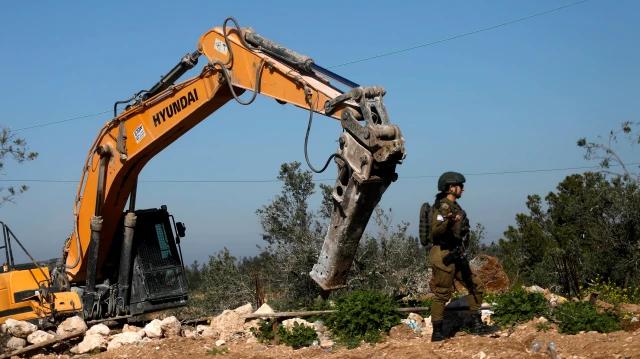
In the same framing, the reports cite Palestinian sources for casualty and arrest figures, including “at least 1,150 Palestinians” killed, “about 11,750” injured, and “nearly 22,000” arrested. The Al-Jazeera Net and Yeni Safak English reports also describe settlement expansion as part of a wider pattern that includes “demolishing facilities” and “expanding settlements,” with Palestinians warning these steps pave the way for officially declaring annexation. The Al-Jazeera Net article adds that “about 750,000 settlers live in hundreds of settlements in the West Bank,” including “250,000 in East Jerusalem,” and it says these settlers carry out “daily systematic assaults aimed at the forcible displacement of Palestinians.”

Yeni Safak English similarly states “Approximately 750,000 Israeli settlers live in hundreds of illegal settlements across the occupied West Bank,” including “around 250,000 in East Jerusalem,” and it describes violence as rising through “home demolitions, infrastructure destruction, and settlement expansion.” Together, the reports present Cohen’s utility-linking agreement as a concrete mechanism within a longer settlement and governance escalation narrative.
Voices: legal and political
The reports also include direct voices that interpret the utility-linking announcement and the broader governance direction as intensifying annexation and apartheid. In Middle East Eye’s account of a separate but related governance shift, human rights lawyer Michael Sfard said the transfer of West Bank administration from the army to a far-right minister amounts to a “de jure annexation,” describing it as “It’s a radical change in the governance of the West Bank and the occupied Palestinian territories in general. […] It’s an intensification of apartheid that puts Israel even more in conflict with international law, which prohibits the acquisition of sovereignty by force.” Sfard told Middle East Eye that “The Israeli government will now directly enjoy administrative powers over the occupied territories,” and he added that “The officials who hold these powers will be appointed by Smotrich, the new governor of the West Bank, and, to a large extent, the military commander will be bypassed.”
Palestinian Authority condemnation is quoted through Wesam Ahmad of Al-Haq, who said: “The formal annexation, which the international community has always regarded as a red line, has been crossed,” and he warned that “The on-the-ground feeling is that no matter how many words of condemnation, the international community will not take the steps needed to hold Israel to account.” The same Middle East Eye report includes a pro-settler framing from Naomi Linder Kahn, director of Regavim, who described the decision as “a very good step in the right direction” and said her organization wants “full Israeli civil authority over Area C, nothing more, nothing less.”
Middle East Eye also quotes Nimer Sultany, professor of law, saying: “[The agreement] removes the legal smoke screen of ‘temporary military occupation’ that has until now obscured Zionist expansionism.” While Cohen’s utility plan is the immediate trigger in the first set of reports, these voices show how different actors are reading the annexation trajectory as either a governance intensification or a violation of international law.
Different frames across outlets
The same underlying claim—Israeli moves in the occupied West Bank that are described as annexation—appears with different emphases and terminology across the outlets. Al-Jazeera Net and Yeni Safak English both foreground Cohen’s admission and present it as a direct defiance of international opposition, with Al-Jazeera Net explicitly stating Cohen said the government is “effectively applying 'the annexation' on the ground in the occupied West Bank.” Yeni Safak English similarly says Cohen acknowledged the government is effectively applying “annexation” and that new illegal settlements will be connected to water and electricity networks, while also describing the move as accelerating settlement expansion under Prime Minister Netanyahu.
Anadolu Ajansı frames the same announcement as “effectively applying annexation on the ground,” and it specifies that Cohen reached an agreement with Samaria Regional Council head Yossi Dagan to connect “Homesh, Sa-Nur, Rehavam and Ebal” to electricity and water networks. By contrast, Middle East Eye’s framing centers on a governance transfer decided by Prime Minister Benjamin Netanyahu, Defense Minister Yoav Galant, and Finance Minister Bezalel Smotrich, describing it as a “de jure annexation” and focusing on administrative powers over civilian matters in the occupied West Bank. Middle East Eye also explicitly quotes Michael Sfard’s language about bypassing the military commander and describes the shift from military governance to a civil political administration.

The Conversation’s framing shifts again, asking “Who would the annexation of the West Bank by Israel benefit?” and describing how Israel’s annexation would primarily concern “Zone C,” which it says accounts for “60 percent of the West Bank.” It also states that “In Zone C, the Israeli human rights organization B’Tselem counts between 200,000 and 300,000 Palestinians and nearly 325,000 settlers,” and it discusses legal status questions for “nearly 2.6 million people.” Across these accounts, the utility-linking announcement is either the headline admission of annexation (Al-Jazeera Net, Yeni Safak English, Anadolu Ajansı, ZAD Al-Urdun) or one element in a broader debate about governance, legal status, and who benefits (Middle East Eye, The Conversation).
Stakes: rights, governance, and next steps
The stakes described in the sources extend beyond the named settlements and utilities, centering on governance authority, legal status, and the prospects for a Palestinian state. Al-Jazeera Net and ZAD Al-Urdun both say Palestinians warn that these measures, including “demolishing facilities” and “expanding settlements,” pave the way for officially declaring annexation of the West Bank, thereby undermining the chances of establishing an independent Palestinian state in accordance with international resolutions. The Conversation frames the potential annexation as a shift that would “endorse its de facto control of the Jordan Valley” and “bury further the two-state solution,” while also raising the question of whether Palestinians under Israeli control would obtain “full political rights, equal to those of their Jewish fellow citizens.”
It states that the law “Israel, the Nation-State of the Jewish People” was adopted on “July 19, 2018” by the Knesset and that it laid groundwork by dividing citizens into Jews and non-Jews, with Article 7 stating the state regards “the development of Jewish settlement as a national goal.” The Conversation also ties annexation’s political logic to an “alliance between Donald Trump and Benjamin Netanyahu,” and it says the announcement of annexation was made in “March 2020” during the election campaign to secure Likud leader Benjamin Netanyahu’s success against “General Benny Gantz.” Middle East Eye describes a governance transfer that would give Smotrich broad powers over civilian matters, including “planning and construction of settlements” and the power to appoint officials within the Civil Administration, and it says this would shift from military governance to a civil political administration.
In that same report, Michael Sfard argues the transfer makes Smotrich the “governor of the West Bank” and that it would bypass the military commander, while Wesam Ahmad of Al-Haq says the international community’s response has been insufficient and that “we cannot rely on international law to protect us because there is no political will to enforce it.” The sources also quantify the scale of the populations and settlements at issue, with Middle East Eye stating “More than 600,000 settlers live in more than 200 settlements in East Jerusalem and in the occupied West Bank,” and The Conversation describing “nearly 2.6 million people” who would come under Israeli control. Taken together, the reports portray Cohen’s utility-linking agreement as part of a trajectory that, depending on how governance and rights are handled, could reshape political status and the feasibility of a two-state outcome.