RDNA Finds Gaza Needs More Than $71 Billion Over Next Decade for Recovery
Key Takeaways
- RDNA estimates Gaza needs $71.4B for recovery over 10 years, $26.3B in 18 months.
- Human development in Gaza set back 77 years.
- Two years of war underpin $71.4B recovery needs, per RDNA.
RDNA recovery price tag
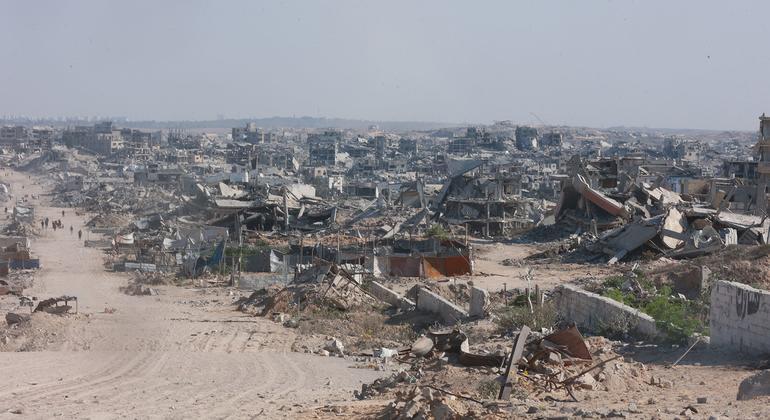
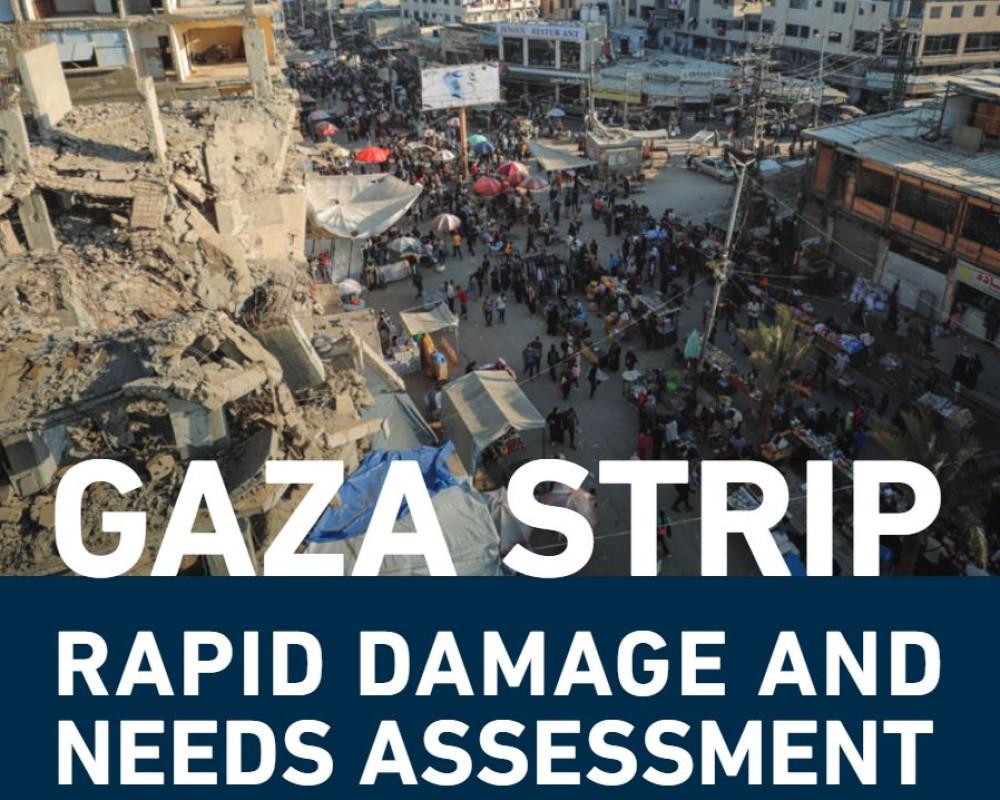
A final Gaza Rapid Damage and Needs Assessment (RDNA) released on Monday estimates that Gaza needs more than $71 billion over the next decade for recovery and reconstruction after Israel’s war on the territory.
“Home News Business Energy Opinion Lifestyle Sports Video Podcast Home News Business Energy Opinion Lifestyle Sports Video Podcast Close the sidebar Home News Middle East A boy stands at the site of an Israeli strike on a tent sheltering displaced people, in Nuseirat, central Gaza Strip March 9, 2026”
The assessment says recovery and reconstruction needs are estimated at around $71.4 billion, with $26.3 billion required in the first 18 months “to restore essential service, rebuild critical infrastructure, and support economic recovery.”

The joint statement quoted in multiple reports puts physical infrastructure damages at $35.2 billion and economic and social losses at $22.7 billion.
The RDNA describes the conflict’s impact on human development as “catastrophic,” estimating that progress has been set back by 77 years.
It also estimates that 371,888 housing units have been destroyed or damaged, more than 50% of hospitals are nonfunctional, and nearly all schools have been destroyed or damaged.
The assessment further says Gaza’s economy has contracted by 84%, while around 1.9 million people have been displaced, often multiple times, and more than 60% of the population has lost their homes.
The UN and the EU frame the RDNA as an analytical basis for early recovery planning and reconstruction, and multiple outlets stress that recovery and reconstruction must run in parallel with humanitarian action.
What the war has done
The RDNA’s reconstruction figures are presented alongside a detailed description of the damage and the scale of displacement and service collapse in Gaza.
Al Jazeera reports that the UN said Israeli bombardment has generated more than 61 million tonnes of rubble, leaving entire communities “entombed.”

It says 371,888 housing units have been destroyed or damaged, more than 50% of hospitals in the territory are nonfunctional, and nearly all schools have been destroyed or damaged.
The assessment also says Gaza’s economy has contracted by 84% and that 1.9 million people have been displaced, often multiple times, with more than 60% of the population having lost their homes.
In the same reporting, Al Jazeera says Gaza is under a fragile “ceasefire” agreed in October, while also citing the Israeli military is accused of repeatedly breaching it.
The UN News outlet similarly ties the RDNA to the war’s human toll, saying that over two years of conflict has resulted in more than 71,000 Palestinian fatalities and over 171,000 injured, “according to local authorities.”
It adds that many are still missing under the rubble.
Ceasefire, violations, and deaths
Several outlets connect the RDNA’s reconstruction timeline to the ceasefire period and to reported violations and killings during that time.
Al Jazeera says Gaza is under a fragile “ceasefire” agreed in October, and it reports that the agreement followed two years of devastating conflict sparked by the October 7, 2023, Hamas-led attacks on southern Israel.
It also says the Israeli military is accused of repeatedly breaching the ceasefire, and that Gaza’s Government Media Office said Israel has committed 2,400 violations of the “ceasefire”.
Al Jazeera reports that at least 777 people have been killed since the “ceasefire” took effect, according to the ministry, with 32 killings occurring since the start of April alone.
It adds that the victims include Al Jazeera journalist Mohammed Wishah, who was killed in a drone strike west of Gaza City on April 8.
The UN News outlet describes the need for “a sustained ceasefire and adequate security” as an enabling condition for recovery and reconstruction.
Across the coverage, the RDNA’s reconstruction requirements are therefore presented as dependent on whether the ceasefire and access conditions hold.
Enabling conditions and governance
Beyond the money figures, the RDNA coverage emphasizes that reconstruction depends on a set of enabling conditions, including security, access, movement, and governance arrangements.
UN News lists the conditions as “a sustained ceasefire and adequate security,” “unimpeded humanitarian access and immediate restoration of essential services,” and “free movement of people, goods, and reconstruction materials, within and between Gaza and the West Bank.”
It also calls for “clear, accountable governance,” including “defined mandates” and “establishment of the conditions for the transitional administrative bodies in coordination with the Palestinian Authority (PA).”
The outlet says the assessment is framed in line with Security Council adopted resolution 2803 (2025) and describes the Board of Peace led by President Trump as a transitional administration mechanism for redevelopment.
Al Jazeera similarly says both the UN and the EU called for Gaza’s reconstruction to be “Palestinian-led” and based on “approaches that actively support the transition of governance to the Palestinian Authority.”
The Straits Times and Al Arabiya repeat that the UN and the EU stressed “a set of enabling conditions” and warn that without them “neither recovery nor reconstruction can succeed.”
Across outlets, the same governance and access requirements appear as the practical bridge between the RDNA’s reconstruction budget and any attempt to implement it.
Funding gaps and political stakes
The RDNA’s reconstruction needs are also presented in the context of funding pledges and political frameworks for rebuilding Gaza.
“- More than two years of war causing catastrophic humanitarian crisis: EU-UN assessment GENEVA: More than $71 billion will be needed over the next decade for recovery and reconstruction in war-ravaged Gaza, according to an EU-UN assessment published on Monday”
Antiwar reports that “roughly $17 billion in pledged funding has been announced through the so-called “Board of Peace” launched by US President Donald Trump,” and it says only a “tiny fraction” of that already inadequate $17 billion has been received, citing Reuters earlier this month.
It also describes Trump’s ideas for rebuilding Gaza as including “kicking Palestinians out” and turning the strip into what he called the “Riviera of the Middle East.”
UN News, meanwhile, describes the Board of Peace as part of the framework in Security Council resolution 2803 (2025), saying it “welcomed establishment of the Board of Peace led by President Trump” and authorized a mechanism to set up a temporary International Stabilisation Force (ISF).
Al Jazeera focuses on the political implications of the RDNA’s insistence on Palestinian-led reconstruction, saying it is “a clear rebuke” to earlier hints from Donald Trump about clearing and rebuilding Gaza as a resort.
The stakes described in the RDNA coverage are therefore not only physical rebuilding but also the governance transition and the ability to move people, goods, and reconstruction materials.
In the UN News framing, the assessment provides the foundation for early recovery planning and reconstruction while stressing it must “run in parallel with humanitarian action” to ensure a transition from emergency relief toward reconstruction at scale.
More on Gaza Genocide

Israel Detains Jerusalem Grand Mufti Sheikh Muhammad Hussein, Bans Him From Al-Aqsa for One Week
15 sources compared
Israeli Security Forces Kill Four Bani Odeh Family Members Near Tubas in West Bank
14 sources compared
Haley Stevens And Abdul El-Sayed Clash In Michigan Senate Debate Over Israel And Gaza Policy
12 sources compared
Settlers Attack Hawara, Injuring 13 Palestinians South of Nablus
13 sources compared