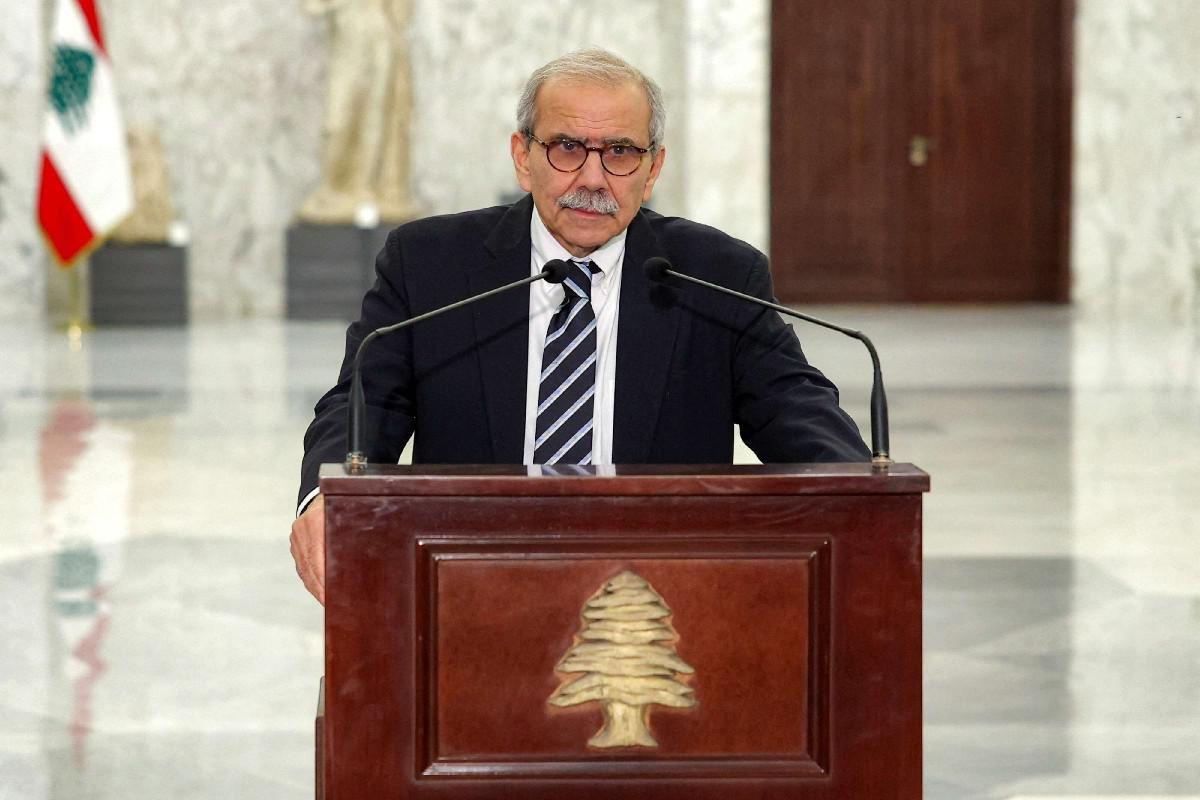
Emmanuel Macron and Nawaf Salam Urge Negotiations to Shore Up Lebanon Ceasefire
Key Takeaways
- Macron and Salam urged negotiations in Paris to shore up a fragile Lebanon ceasefire.
- They urged Israel to respect Lebanon's territorial integrity and renounce its territorial ambitions.
- Disarm Hezbollah and strengthen the Lebanese army as part of the ceasefire agenda.
Macron, Salam push talks
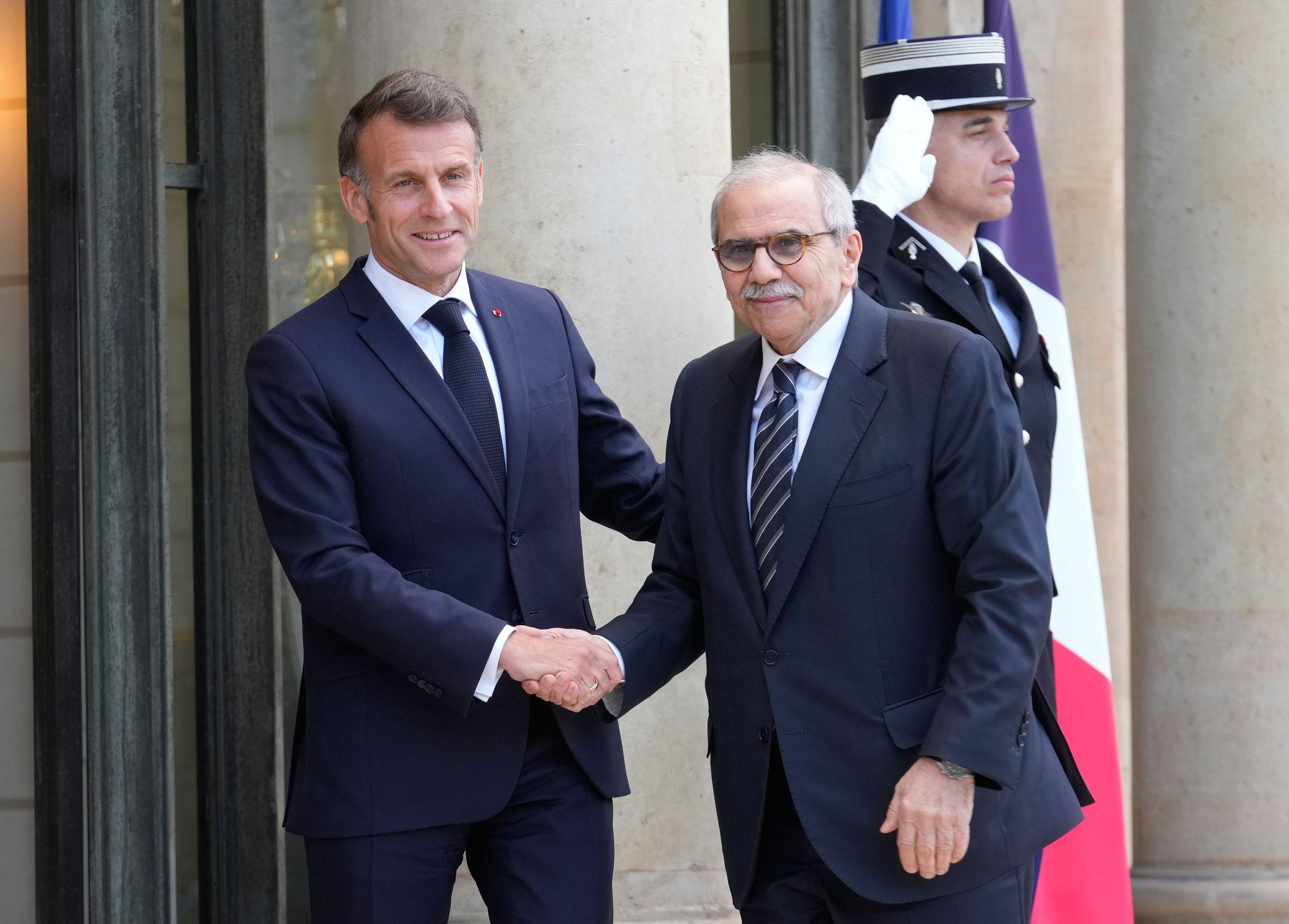
French President Emmanuel Macron and Lebanese Lebanese Prime Minister Nawaf Salam urged negotiations to shore up a fragile ceasefire in Lebanon during talks in Paris, with Macron saying, “We should allow time for negotiations and not let the war resume.”
“Wednesday, 22/04/2026 ArEnFrEs [](http://almanar”
The appeal came as the ceasefire was set to expire Wednesday and as Pakistan prepared to host a new round of talks between the United States and Iran, according to the AP report datelined PARIS.

Macron framed consolidation of the truce as an immediate priority, adding that broader regional stability “can only be achieved through an Israeli withdrawal from Lebanese territory and the disarmament of Hezbollah.”
Salam told reporters that Lebanon remains committed to direct negotiations with Israel, insisting, “We are continuing along this path, convinced that diplomacy is not a sign of weakness but a responsible act.”
Salam also said, “there can be no lasting stability without a complete Israeli withdrawal” from Lebanese territory, tying the diplomatic track to territorial demands.
The meeting at the Elysee presidential palace followed UNIFIL coming under attack from small arms fire on Saturday, leaving one French peacekeeper dead and three others wounded, two of them seriously, as the AP described.
Macron said France is ready to maintain its military on the ground alongside international partners in a potential follow-up force that could take over from UNIFIL, and he linked the mission’s timeline to a UN Security Council vote in August and a term that expires at the end of the year.
Truce expansion and funding
While the AP described Macron and Salam urging negotiations to shore up a fragile ceasefire, Al-Manar TV Lebanon reported Macron’s position in a different framing, saying, “The truce in Lebanon must be expanded to allow sustainable stability.”
In the same Al-Manar account, the report situates Macron’s statement within a broader stream of regional headlines, including references to “Lebanon ceasefire” and “Lebanon Israel Iran Hezbollah,” but it still centers on the claim that the truce must be expanded.

The financial dimension of the stabilization push appeared in صووت الإمارات, which said Nawaf Salam announced during his official visit to Paris that Lebanon urgently requires financial support estimated at €500 million to address worsening humanitarian and economic repercussions.
That report said Salam emphasized that restoring the state’s initiative requires international backing to empower legitimate institutions, and it described stabilizing Lebanon as the government’s top priority.
It also tied the urgency to “the challenges facing the temporary ceasefire agreement and mounting field pressures,” placing the diplomatic effort alongside battlefield dynamics.
The same صووت الإمارات report described the truce as having entered its fifth day, with both sides trading accusations of violations, and it named specific locations where the Israeli army alleged Hezbollah launched missiles and drones in “Rabb Thalathin,” while Israeli occupation forces continued shelling “Houla” and “Yohmor al-Shqif” and conducting residential demolitions.
It further stated that “continued intensive drone surveillance has raised the death toll since last March to 2,454 martyrs,” making the humanitarian accounting a central element of the stabilization argument.
UNIFIL attack and Hezbollah denials
The AP report tied the Paris diplomacy to immediate security incidents, describing that the UNIFIL peacekeeping force in southern Lebanon came under attack from small arms fire on Saturday, leaving one French peacekeeper dead and three others wounded, two of them seriously.
It said both Macron and the UNIFIL force blamed Hezbollah, which denied involvement, and it quoted Macron’s stance that France was ready to maintain its military on the ground alongside international partners in a potential follow-up force that could take over from UNIFIL.
The AP also placed the UNIFIL mission’s end date in the context of a UN Security Council vote in August, saying the peacekeeper mission’s term expires at the end of the year.
In the same AP account, the report described how momentum for ceasefire efforts shifted after a U.S.-Iran truce announcement and Pakistan-brokered talks between the two sides.
It noted that Lebanon and Israel held their first direct talks in decades last week in Washington after more than a month of fighting between Israel and Hezbollah.
The AP further said Hezbollah began firing missiles into Israel in early March, just two days after the U.S. and Israel launched the war on Iran, and it described Israel’s response as heavy bombardment and a ground invasion.
The AP also reported that Hezbollah opposed those talks and was not involved, while the U.S. announced a ceasefire between Israel and Hezbollah on Thursday, describing it as a result of Israel-Lebanon talks.
Divergent regional framing
The sources present different emphases on what the ceasefire means and what must happen next.
The AP report, for instance, centered on Macron and Salam urging negotiations and on Macron’s conditions that stability requires “an Israeli withdrawal from Lebanese territory and the disarmament of Hezbollah,” while Salam insisted “there can be no lasting stability without a complete Israeli withdrawal” from Lebanese territory.
Devdiscourse echoed the same core diplomatic thrust, stating that Macron and Salam “jointly called for renewed peace negotiations to stabilize the fragile ceasefire in Lebanon during their meeting in Paris,” and it described Macron emphasizing that consolidating peace requires Israel's withdrawal and Hezbollah's disarmament.
By contrast, Al-Manar TV Lebanon framed Macron’s message as a need to expand the truce for “sustainable stability,” without the same explicit linkage to disarmament in the excerpt provided.
صووت الإمارات, meanwhile, foregrounded a quantified stabilization requirement, saying Lebanon needs €500 million, and it tied the truce’s fragility to “mounting field pressures” and named alleged violations in “Rabb Thalathin,” “Houla” and “Yohmor al-Shqif.”
It also asserted that “continued intensive drone surveillance has raised the death toll since last March to 2,454 martyrs,” which is not present in the AP excerpt.
The AP report did include a death toll context indirectly through the UNIFIL casualties—one French peacekeeper dead and three others wounded—but it did not provide the 2,454 figure.
What comes next
Looking ahead, the AP report described a chain of diplomatic steps and deadlines that could determine whether the ceasefire holds.
It said Macron and Salam’s appeal came as Pakistan was preparing to host a new round of talks between the United States and Iran, and it reported that U.S.-Iran talks looked increasingly uncertain late Tuesday after U.S. Vice President JD Vance, expected to lead the U.S. negotiator, called off a trip to Pakistan and Iran said it hadn’t decided whether to participate.
The AP also said that Lebanon and Israel are to hold a new meeting in Washington later this week, placing direct talks on a near-term schedule.
It further reported that Lebanon and Israel held their first direct talks in decades last week in Washington after more than a month of fighting between Israel and Hezbollah, indicating that the diplomatic channel had only recently reopened.
In parallel, the AP described Lebanon’s President Joseph Aoun later proposed direct negotiations with Israel—“the first in decades”—in exchange for a halt in hostilities, an offer initially rejected, and it said momentum shifted after a U.S.-Iran truce announcement and Pakistan-brokered talks.
The AP also reported that Iran insisted any ceasefire agreement must extend to Lebanon and warned it would not reopen the strategic Strait of Hormuz otherwise, linking Lebanon’s ceasefire to a broader regional bargaining position.
Meanwhile, صووت الإمارات concluded that stabilizing Lebanon remains dependent on the ability of diplomatic efforts in Paris to halt hostilities and prevent the collapse of the agreement.
More on Lebanon
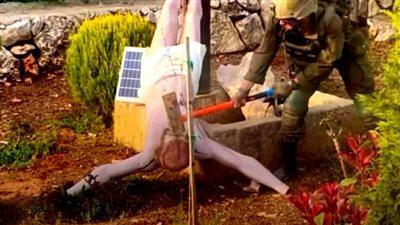
Israel Jails Soldiers After Sledgehammer Vandalism of Jesus Statue in Debl, Lebanon
29 sources compared
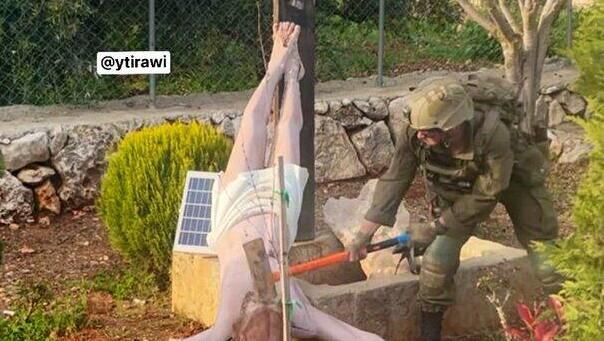
IDF Punishes Israeli Soldiers After Sledgehammer Vandalism of Jesus Statue in Debel, Lebanon
38 sources compared

Israeli Forces Destroy Civilian Infrastructure in Southern Lebanon, Detonate Imam Moussa Al-Sadr Sports Complex
17 sources compared

Israeli Soldier Vandalizes Jesus Statue in Debel, Lebanon, Netanyahu Orders Criminal Probe
12 sources compared