USA15 July, 20263 min read
FCC Votes Aug. 6 To End 39% TV Ownership Cap Proposed by Brendan Carr
This article is an automated aggregation of coverage from news outlets. Our editorials offer in-depth analysis curated by the NewsCord team.
FCC to vote August 6 to repeal the 39% national TV ownership cap. Cap replaced with case-by-case review, allowing deals that exceed 39% if in public interest.

FCC vote on TV cap
The Federal Communications Commission will vote Aug. 6 on a proposal by Chairman Brendan Carr to end the rule that allows companies to own no more than two TV stations in a single market and to lift the national coverage cap that limits station owners to 39% of the U.S. population.
Carr said the agency will consider a “case by case” review on station merger and acquisition deals that would result in exceeding the current limits, and he wrote that the FCC’s “new proposal would allow the FCC to approve deals that exceed the 39% cap, but only if doing so would promote the public interest.”
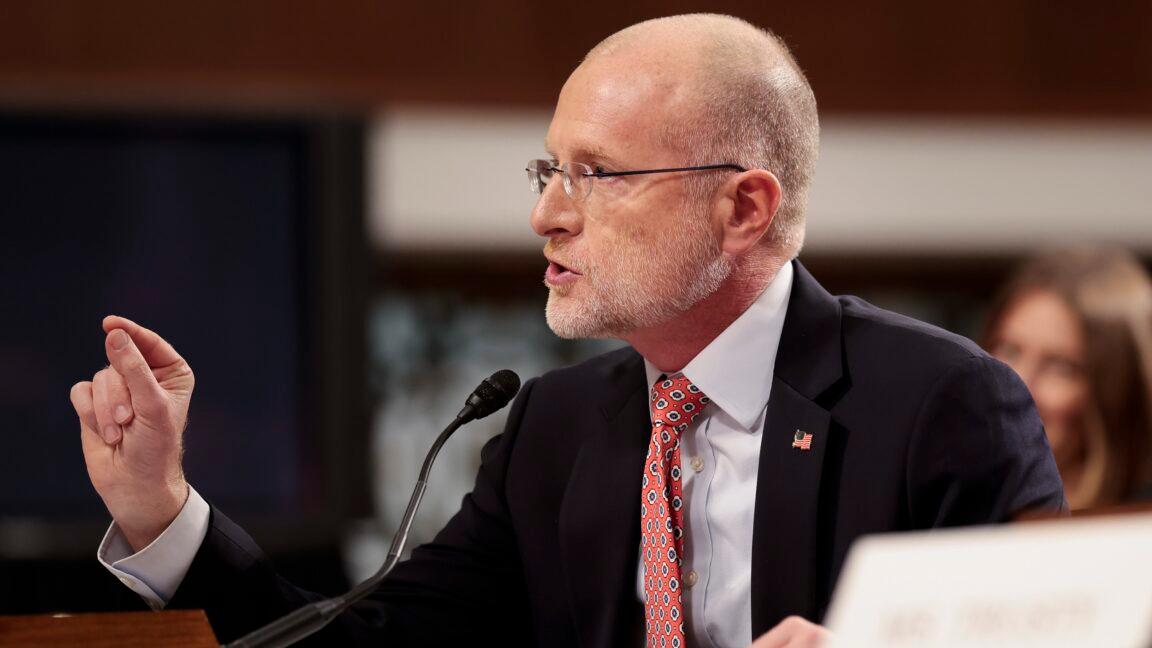
The FCC’s two Republicans and one Democrat commission will take up the change after Carr announced it in an op-ed for Breitbart, and the Los Angeles Times reported that the 39% threshold was set in 2004 when streaming video was still a nascent business.
The Los Angeles Times also tied the proposal to a broader debate over consolidation, noting that consumer groups and state government officials have said station consolidation could result in journalist layoffs and fewer voices for the communities they serve.
In March, the FCC approved Nexstar Media Group’s proposed $6.2-billion acquisition of Tegna, and a U.S. District Court Chief Judge Troy L. Nunley issued a preliminary injunction in April that forbids Nexstar and Tegna from combining operations while Nexstar appeals.
Pushback and legal fight
FCC Commissioner Anna Gomez, the lone Democrat, signaled she would vote against the proposed order, saying it was bad policy and unlawful because the FCC does not have the authority to lift the cap.
Gomez warned that “This unlawful effort to hand control of the public airwaves to billionaire buddies of this administration will destroy local newsrooms, silence community reporting, and drive-up costs for the American families who depend on local stations for news and emergency alerts,” and she argued that “Congress set the 39 percent national ownership cap in federal law, and only Congress has the authority to raise or eliminate it.”

Broadcasters and the National Association of Broadcasters praised the move, with NAB president and CEO Curtis LeGeyt saying “NAB applauds Chairman Carr and the FCC for moving forward with consideration of an order to eliminate the national television ownership cap.”
Nexstar also backed the plan, with a spokesperson saying the FCC’s decision to review the national television ownership cap was “a welcome and long-overdue step toward bringing broadcast regulation into the modern media marketplace.”
The dispute is already playing out in court, where a judge halted the Nexstar-Tegna deal pending a court challenge, and the Los Angeles Times reported that the injunction was issued by Chief Judge Troy L. Nunley in April while Nexstar appeals.
What changes next
The FCC’s plan would technically preserve the 39% cap but allow “case-by-case” exemptions when the FCC determines they would serve the public interest, according to the Poynter report on Carr’s announcement. Poynter also highlighted a “UHF discount,” saying that under the rule television stations broadcasting on UHF channels count as reaching only half of the households in their markets when the FCC calculates compliance with the national ownership cap. Critics argue the FCC’s calculations no longer reflect how Americans watch television, and Poynter cited Horowitz Research estimating that only about 20% of U.S. households use over-the-air antennas, down from 32% in 2020.
The stakes are immediate for the Nexstar-Tegna transaction, which the Los Angeles Times described as giving Nexstar control of 265 television stations across the country up from 164, and it noted that in dozens of markets including San Diego and Sacramento Nexstar would own multiple TV network affiliates. Carr’s proposal would largely put the FCC in charge of picking winners and losers on a case-by-case basis, and he said the commission would consider issues including commitment to local journalism and “viewpoint diversity” when faced with a merger proposal.