
Federal Court Blocks Trump Administration’s Illegal DEI Executive Orders In Maryland
Key Takeaways
- U.S. District Judge Adam Abelson blocked parts of Trump's DEI orders.
- U.S. District Court in Maryland issued a preliminary injunction delaying DEI directives.
- DEI directives targeted higher education and government grant programs.
Court Pauses Illegal DEI
A federal district court in the district of Maryland issued a preliminary injunction on Feb. 21, 2025, temporarily stopping the Trump Administration from enforcing aspects of its executive orders that ban “illegal DEI (Diversity, Equity and Inclusion).”
“Topline A federal judge blocked parts of President Donald Trump’s executive orders targeting diversity, equity and inclusion on Friday, arguing his orders directing government grant recipients to halt DEI programs are too vague to be enforced or infringe on free speech”
The court ruled that the plaintiffs have a likelihood of establishing the illegal DEI executive orders are unconstitutional, at least in part, because they are vague and violate free speech, according to Jackson Lewis.

The injunction provides a “temporary reprieve” for federal contractors and recipients of federal funding from being targeted for investigation pursuant to the executive orders by their granting agencies for “illegal DEI,” the Jackson Lewis account says.
Higher Ed Dive reports that U.S. District Judge Adam Abelson—described as a Biden appointee—ruled that the groups that filed the lawsuit were likely to succeed in their arguments that the executive orders undermined free speech and were unconstitutionally vague.
Forbes similarly describes Abelson’s reasoning that the orders directing government grant recipients to halt DEI programs are too vague to be enforced or infringe on free speech.
The injunction is tied to three specific provisions identified in the Jackson Lewis write-up: a “Termination Provision,” a “Certification Provision,” and an “Enforcement Threat Provision.”
Jackson Lewis also notes the decision does not prevent plaintiffs from bringing claims against private sector employers, contractors, or recipients of federal funds based on DEI initiatives, and it does not prevent the Department of Justice, EEOC, or other federal and state enforcement agencies from investigating or asserting violations of Title VII or other civil rights laws on bases other than “illegal DEI.”
What the Orders Did
The preliminary injunction comes from a challenge to executive orders issued on Jan. 20 and Jan. 21, 2025, described in Jackson Lewis as Executive Order 14151 and Executive Order 14173.
Jackson Lewis says Executive Order 14151, “Ending Radical and Wasteful Government DEI Programs and Preferences,” directed federal agencies to terminate all “equity-related” grants or contracts within 60 days.
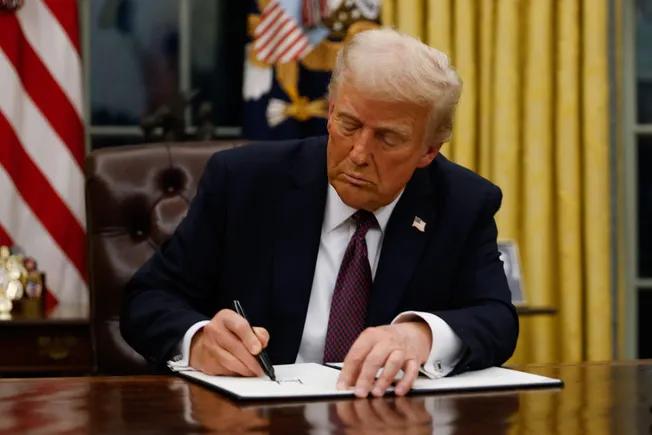
It also says the case involves Executive Order 14173, “Ending Illegal Discrimination and Restoring Merit-Based Opportunity,” which directed agencies to “include in every contract or grant award: a term requiring the contractual counterparty or grant recipient to agree that its compliance in all respects with all applicable Federal anti-discrimination laws is material to the government’s payment decisions for purposes,” including the False Claims Act (FCA).
Jackson Lewis adds that Executive Order 14173 directed the attorney general to develop a plan for encouraging the private sector to end “illegal DEI” and to identify up to nine potential civil compliance investigations into specified categories of entities.
Higher Ed Dive describes the same structure in more narrative terms, saying Abelson issued a preliminary injunction barring the Trump administration from ending all “equity-related” federal grants, requiring grant recipients to certify they don’t have any DEI programs, and bringing enforcement actions against wealthy universities to deter their DEI efforts.
Forbes adds that Abelson said the orders “do not define any of the operative terms,” including “DEI,” “equity-related” or “illegal DEI and DEIA policies.”
Forbes also quotes Abelson’s critique that Trump’s orders leave federal employees and recipients with “no idea whether the administration will deem their contracts or grants, or work they are doing, or speech they are engaged in” to be related to DEI.
Judge’s Free Speech Rationale
The court’s reasoning, as described across the coverage, centers on free speech concerns and the uncertainty created by the executive orders’ definitions.
“Takeaways - The federal district court for the district of Maryland issued a preliminary injunction temporarily stopping the Trump Administration from enforcing aspects of its EOs that ban “illegal DEI (Diversity, Equity and Inclusion)”
Higher Ed Dive reports that Abelson wrote that the executive order leaves the definition of “equity” unclear, risking “arbitrary and discriminatory enforcement over billions of dollars in government funding.”
Higher Ed Dive also includes Abelson’s hypothetical question about whether a grant would be stripped as “equity-related,” quoting: “If a university grant helps fund the salary of a staff person who then helps teach college students about sexual harassment and the language of consent, would the funding for that person’s salary be stripped as ‘equity-related’?”
The same outlet reports that Abelson said the certification requirement undermines free speech and that the plaintiffs were likely to succeed, quoting Abelson’s statement that plaintiffs “are unable to know which of their DEI programs (if any) violate federal anti-discrimination laws, and are highly likely to chill their own speech — to self-censor, and reasonably so — because of the Certification Provision.”
Higher Ed Dive further says Abelson wrote that the enforcement-investigation mandate represents “unlawful viewpoint-based restriction on protected speech,” and it quotes Abelson’s reference to Supreme Court doctrine: “As the Supreme Court has made clear time and time again, the government cannot rely on the ‘threat of invoking legal sanctions and other means of coercion’ to suppress disfavored speech.”
Forbes similarly emphasizes Abelson’s view that the orders provide “no reasonable way to know what, if anything, they can do to bring their grants into compliance,” and it describes Abelson’s hypothetical about a grant being used to fill potholes in a low-income neighborhood as potentially being deemed equity-related.
Jackson Lewis adds that the court ruled plaintiffs have a likelihood of establishing the illegal DEI executive orders are unconstitutional, at least in part, because they are vague and violate free speech.
Competing Reactions and Appeals
The ruling triggered immediate reactions from both supporters and critics of the Trump administration’s DEI approach, while the legal fight remained unresolved.
Higher Ed Dive reports that the plaintiffs celebrated the ruling, including NADOHE, and it quotes NADOHE President and CEO Paulette Granberry Russell saying in a Friday statement: “This ruling underscores that ensuring equity, diversity, and inclusion are the very goals of federal anti-discrimination law, not a violation of the law.”
Higher Ed Dive also records pushback from conservatives, quoting White House Deputy Chief of Staff Stephen Miller: “DEI is illegal race-based discrimination in violation of the federal Civil Rights Act,” and adding, “A judge cannot nullify the Civil Rights Acts and order the government to award federal taxpayer dollars to organizations that discriminate based on race.”
Jackson Lewis frames the injunction as temporary and says “it is likely the administration will appeal the decision on various grounds, making the overall fate of the EOs uncertain.”
Jackson Lewis also stresses that the decision does not stop private-sector litigation, noting that it “does not prevent plaintiffs — applicants, employees or third-party organizations — from bringing claims against private sector employers, contractors, or recipients of federal funds based on DEI initiatives.”
It further says the decision “arguably does not prevent the Department of Justice, agencies, or state attorneys general from voluntarily bringing legal claims or pursuing investigation based on DEI initiatives or programming.”
Forbes adds that Abelson granted a preliminary injunction requested by the city of Baltimore and higher education groups who sued the Trump administration, arguing his executive orders targeting DEI were made to “chill” free speech.
Broader Impact on Institutions
Beyond the courtroom, the coverage describes how the executive orders and the litigation were affecting institutions and private companies, and it highlights what the injunction does and does not pause.
“Dive Brief: - A federal judge on Friday temporarily blocked major portions of President Donald Trump’s recent executive orders that attempt to dismantle diversity, equity and inclusion efforts in the higher education sector and elsewhere”
Higher Ed Dive says Abelson’s preliminary injunction only blocks the provisions of the two executive orders contested in the lawsuit and “does not pause other elements of the orders.”
Forbes similarly describes that the judge blocked parts of Trump’s anti-DEI executive orders, and it details that Abelson said the orders “do not define any of the operative terms,” including “DEI,” “equity-related” or “illegal DEI and DEIA policies.”
Forbes also reports that Trump’s executive order in his first day directed federal agencies to eliminate DEI offices and positions and “equity-related” grants or contracts, and it notes that in other executive orders Trump targeted transgender people, barring them from military service and directing their passports to reflect their sex assigned at birth.
While that broader policy context is included, the immediate compliance pressure described in Forbes focuses on private companies rolling back DEI commitments in anticipation of or in response to Trump’s actions.
Forbes lists companies including Meta, Amazon, Citigroup, Pepsi, Target and Walmart as having cut some diversity programs, and it says Target made changes to its diversity policies, including cutting racial hiring targets and no longer participating in external diversity surveys, to stay “in step with the evolving external landscape.”
Jackson Lewis, meanwhile, emphasizes that the court’s decision does not prevent the Department of Justice, EEOC, or other federal and state enforcement agencies from investigating or asserting violations of Title VII or other civil rights laws on bases other than “illegal DEI.”
More on USA
ICE Agent Opens Fire After Van Strikes Him in Manahawkin, New Jersey; Friedrich Castillo-Ormeno Flees
14 sources compared

Donald Trump Says July 4 America 250 Celebration At Lincoln Memorial Will Be A Trump Rally
10 sources compared

Donald Trump Directed DOJ To Investigate Gavin Newsom And Jennifer Siebel Newsom
18 sources compared
United States and Iran Reach Initial Deal To End War, Reopen Strait of Hormuz
16 sources compared