Sports13 May, 20263 min read
FIA Details ADUO System For 2026 F1 Power Unit, Revises Monitoring After Bahrain And Saudi Unrest
This article is an automated aggregation of coverage from news outlets. Our editorials offer in-depth analysis curated by the NewsCord team.
ADUO enables additional development and upgrade opportunities under 2026 power unit regs. Revised ADUO monitoring periods with financial incentives for struggling manufacturers.

ADUO and monitoring
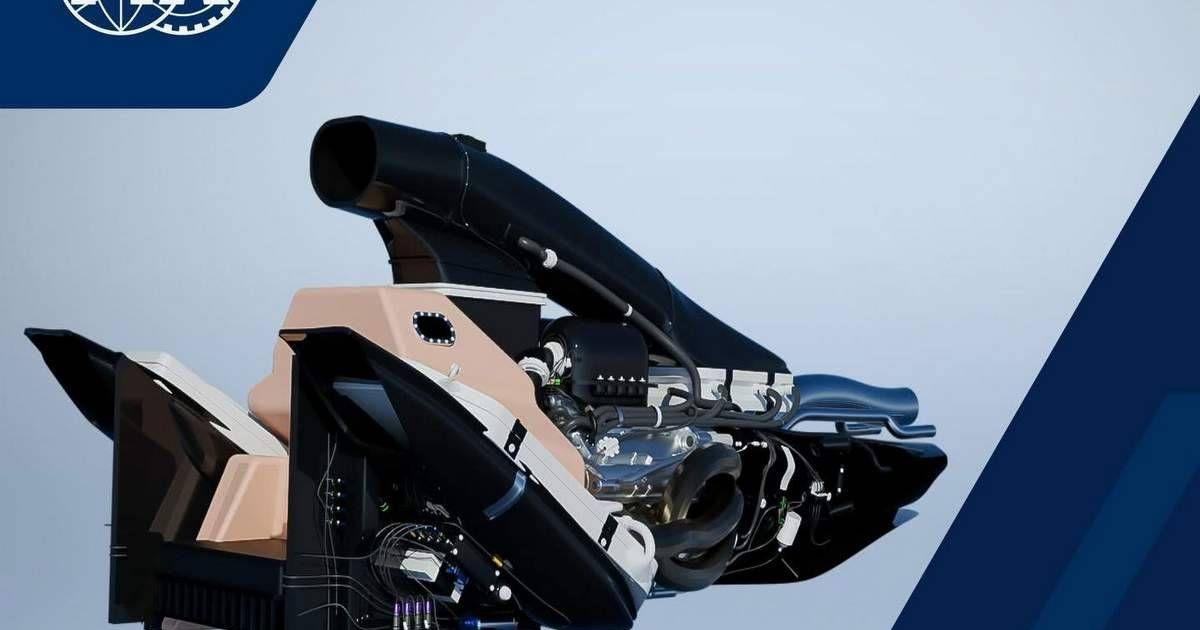
The FIA has detailed how Formula 1’s Additional Development and Upgrade Opportunities (ADUO) system will operate under the sport’s 2026 power unit regulations, focusing exclusively on the Internal Combustion Engine component of the hybrid power unit package. Under ADUO, the FIA will monitor and calculate an ICE Performance Index during defined periods across each season from 2026 to 2030, using factors including engine torque, engine speed, MGU-K power and the sensitivity of lap time to power output. A manufacturer whose ICE is measured to be at least 2% behind the benchmark power unit will qualify for ADUO support, with revised monitoring periods confirmed after the cancellation of the Bahrain and Saudi Arabian Grands Prix due to unrest in the Middle East.
The FIA said the first monitoring period has been revised to include Australia, China, Japan, Miami and Canada, and that results from the opening evaluation period will be communicated no later than two weeks after the Canadian Grand Prix. FIA Single Seater Director Nikolas Tombazis stressed the mechanism is not intended as a performance equalisation tool, saying: “It’s important to make clear that ADUO is not a kind of balance of performance mechanism.”
Critics and responses
As 2026 regulation changes take effect for the Miami Grand Prix, Max Verstappen has compared the sport to Formula E and labelled the regulations “anti-racing” and likened them to “playing Mario Kart”. In an alternative response to critics, Verstappen told Autosport: “We simply need to move away from that 55–45 split,” adding: “We need to go back towards how it was under the previous hybrid regulations, at the very least.” Audi driver Nico Hülkenberg argued the sport has to “go with the times,” telling The Drive: “And I mean, if you don’t like it, you don’t have to watch.”
The FIA confirmed in a statement that an agreement in principle had been reached with power unit manufacturers Mercedes, Ferrari, Red Bull Powertrains, Audi and Honda. Further changes for 2027 were announced for May 8, with the split between internal combustion and electrical energy described as either a 55/45 or 60/40 split “according to reports.”
Compression ratio and next steps
A separate 2026 controversy over the regulatory compression ratio was addressed after a meeting convened by the F1 Commission in Sakhir, with the FIA and engine manufacturers announcing they had “jointly developed a methodology to quantify the evolution of the compression ratio between ambient conditions and operating conditions”. The proposal submitted after validation would require that “from August 1, 2026, compliance with the compression ratio limit must be demonstrated not only in ambient conditions, but also at an operating temperature representative of 130°C.” The FIA said adjustments to the F1 2026 Regulations have been approved and will be submitted to the World Council for final validation, while also agreeing that “no immediate major regulatory modification was necessary” because initial data and feedback were still preliminary.
“It is happening, but of course consultation is needed.”
Regarding race-start concerns, the FIA said constructive discussions at the commission meeting addressed the starting procedure and that “a supplementary assessment of updates to the race systems and onboard management will be performed during the Bahrain tests.” Looking further ahead, BBC reported FIA president Mohammed Ben Sulayem is pushing for a return to a naturally aspirated V8 with a token hybrid system, saying: “It is happening,” but adding “of course consultation is needed.”