
Iran · 30 April, 2026 · 7 min read
Financial Times Report From Tehran Says Iran’s Crackdown Leaves Haft Hoz Square Burnt-Out Bus
Tehran after protests described as somber, hopeless, with eerie silence. Merciless crackdown ended weeks of anti-government demonstrations.
Framing and focus (domestic Tehran unrest vs Iran’s World Cup context).
2 of 3 outlets skipped it: tehran described as somber and hopeless with eerie silence swallowing it..
3outlets compared
Same story, two versions
tap a side to read it in full
BBC
“the merciless crackdown abruptly ended weeks of anti-government demonstrations, but the wounds from the violence—the harshest since the 1979 Islamic Revolution—remain visible across the city.”Read the original ↗
أأحداث اليوم
“Iran's national team is in a difficult position ahead of the start of the 2026 World Cup, and a new crisis is making things more complicated before the tournament.”Read the original ↗
Shows BBC foregrounds Tehran’s post-protest atmosphere and social impact, while the other outlet centers the narrative on Iran’s World Cup preparations.
Tehran After Protests
A report from Tehran by the London-based Financial Times depicts the Iranian capital as a city “somber and hopeless,” with an “eerie silence” that has swallowed it after weeks of anti-government demonstrations were abruptly ended by what the report describes as the “merciless crackdown.”
In the Haft Hoz Square area, described as a busy commercial hub in eastern Tehran, the report says armored vehicles and black-clad riot police were present, and at the center of the scene lies “the burnt-out shell of a municipal bus” that had been set ablaze during the protests.
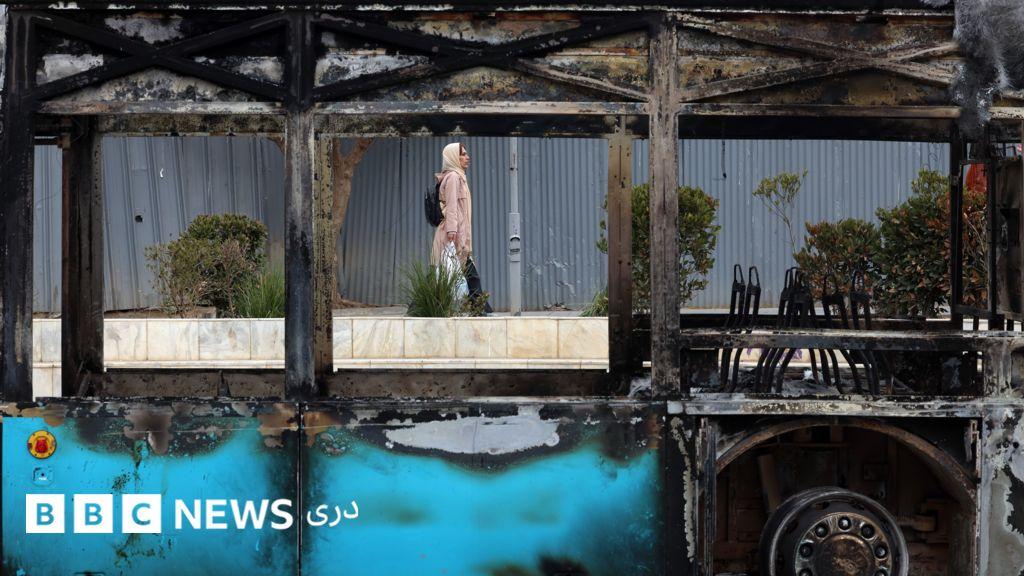
The report says a banner hangs “atop its charred remains” with a blunt message to citizens reminding them of the cost of unrest: “This cost was paid for with your taxes.”
It adds that many shops have reopened but “there are no customers,” and that efforts to restore life to normal are hampered by “internet outages” and the fact that “many ATMs remain inaccessible and blocked with metal bars to prevent damage.”
The Financial Times report also describes an interviewee in Haft Hoz speaking of “a sense of emptiness and despair,” saying he could not even imagine returning to normal.
Another citizen is quoted saying, “We were all waiting for something big to happen to save us, but nothing happened. Now we face quiet, empty roads, cut off from the world.”
The author also visited Kaj Square, described as the affluent western Tehran neighborhood that “used to be lively in the evenings,” and portrays it as “quiet and dark,” with security forces heavily present there as well.
Sites, Slogans, and Damage
Beyond Haft Hoz Square, the Financial Times report described other physical reminders of the protests and the crackdown across Tehran.
It says a large mosque was “severely burned” and that parts of its building were “completely destroyed,” and it places another scene in Shahrak-e Gharb, where it says a branch of the Saadineya cafe chain was “sealed with an official warning” after Instagram posts urging people to join the protests were circulated.
The report also says funeral processions for dozens of security forces members killed during the protests took place, and that “burnt-out remains of buses, fire engines, and ambulances were left as reminders of actions by those the authorities call 'rioters.'”
It adds that during demonstrations the Iranian government gathered “tens of thousands of supporters,” and that, as in the “12-day war Israel waged against Iran last summer,” the move helped unite a country that had been divided.
The authorities are also described as displaying nationalist slogans and banners bearing figures such as Arash Kamangir, including a banner spanning the main roads that reads: “The sacred unity of Tehran’s residents against Zionist-American terrorism.”
At the same time, the report says anti-government murals have been “scrubbed from the walls,” while still noting that for many people their hatred of the regime has deepened.
It also says some people feel that Iranian opposition figures abroad, including Reza Pahlavi, “betrayed them,” and it describes a woman opposing Reza Pahlavi as saying, “Opponents abroad hijacked our protests; otherwise, things would have moved forward and we might have won concessions from the regime. Instead, violence and suppression pushed the people back and left only death and ruin on display.”
The BBC’s account of the Financial Times report also says the Iranian government portrayed the growing protests as a plot to incite violence using people armed and trained by foreign powers, “especially Israel.”B
Government Narrative and Opposition
The BBC account of the Financial Times report lays out a contested narrative about why the protests escalated and who is responsible for the violence.B
It says the Iranian government, “after initially trying to acknowledge the protesters’ economic concerns,” portrayed the growing protests as “a plot to incite violence using people armed and trained by foreign powers, especially Israel.”
The report also says the authorities displayed nationalist slogans and banners bearing figures such as Arash Kamangir, and it quotes the banner spanning the main roads: “The sacred unity of Tehran’s residents against Zionist-American terrorism.”
In contrast, the BBC says the report notes that for many people their hatred of the regime has deepened and that they feel Iranian opposition figures abroad, including Reza Pahlavi, “betrayed them.”B
The BBC includes a direct quote from a woman opposing Reza Pahlavi who urged protesters to continue but “could not do anything to quell the chaos,” and she says, “Opponents abroad hijacked our protests; otherwise, things would have moved forward and we might have won concessions from the regime. BInstead, violence and suppression pushed the people back and left only death and ruin on display.”
The BBC also says the report describes the Iranian government gathering “tens of thousands of supporters” during demonstrations, and it links that to the idea that, like the “12-day war Israel waged against Iran last summer,” the move helped unite a country that had been divided.B
The BBC’s narrative also includes the report’s description of “burnt-out remains of buses, fire engines, and ambulances” left as reminders of actions by those the authorities call “rioters.”B
Finally, the BBC says the report notes that “Human rights groups abroad say thousands have been killed in these protests,” placing the death toll claim outside the government’s own framing.B
World Cup Disruptions
Separate from the protests coverage, the West Asian outlet أَحداث اليوم reports that Iran’s national team faces challenges ahead of the 2026 World Cup, with a new crisis complicating preparations before the tournament begins. It says the World Cup “will start in June,” and specifies that it “will begin on June 11 in the United States, Canada, and Mexico” and “will run until July 19.” The outlet says that according to Tehran Times, Iran’s match with North Macedonia, which was part of the team’s preparations, “has been canceled, despite a prior agreement between the two federations,” leaving the team “in a bind in terms of technical and physical preparations.”
It also reports “doubts about Iran's participation in the tournament due to the current tensions with the United States, which began last month,” and it says the crisis is not limited to that. The outlet adds that the Iranian team was informed of the cancellation of the second friendly against Angola, which would have been in the United States, and that this “has increased confusion in the training schedule at a sensitive time.”
It says the Iranian federation was forced to “move quickly to seek alternatives” to ensure continuity of the World Cup preparation plan “without major impacts.” Finally, it states that the draw placed Iran in “Group Seven with Belgium, New Zealand, and Egypt,” describing it as “a strong group that raises the challenge for the Iranian team.”
Editorial and Source Limits
The provided source set also includes a Tehran Times page labeled “Contact Us,” which contains contact details for the outlet rather than reporting on the protests or the World Cup.
That page lists a “Managing Director” and provides a phone number and email addresses, including “Phone: +98 (21)43051000” and “E-mail: [email protected],” along with “[email protected]” and an editorial department phone number “+98 (21) 43051601.”
It also includes a fax number “Fax: +98 (21) 88808214” and advertising department “Telefax: +98 (21) 43051430,” plus an address in Tehran at “No. 18, Reza Moghadasi Lane, Nejatollahi St., Tehran, Iran” with postal code “1599814713” and “P.O. BOX: 14155-4843.”
The page also provides a URL, “http://www.tehrantimes.com,” and then includes a long list of other Tehran Times headlines, including “66 American veterans and relatives arrested in Capitol protest against the war on Iran” and “Strait of Hormuz: Man-made crisis and the plight of stranded seafarers.”
However, within the supplied text, those additional items are not expanded with reporting details, and the only substantive sports reporting in the set is the World Cup preparation disruption described by أَحداث اليوم.
The BBC’s protests account is explicitly tied to the Financial Times report titled “Tehran after the protests: Security patrols, government propaganda and despair” by Bita Ghaffari, while the World Cup item is explicitly tied to “According to Tehran Times” within the أَحداث اليوم story.B
Taken together, the sources show two distinct threads—Tehran’s post-protest environment and Iran’s national team preparations—without any direct linkage between them in the provided material.
As a result, the stakes and next steps described in the sources remain confined to what the BBC reports about the aftermath and what أَحداث اليوم reports about the World Cup schedule and cancellations.B