
Technology and Science · updated 1h ago · 3 min read
Florida Attorney General James Uthmeier Seeks Injunction Blocking OpenAI From Developing New AI Models
Florida seeks temporary injunction to halt OpenAI developing new AI models without external safeguards. Filing part of June lawsuit alleging ChatGPT harms minors and misrepresented safety.
10 outlets told this the same way.
10outlets compared
Florida targets OpenAI
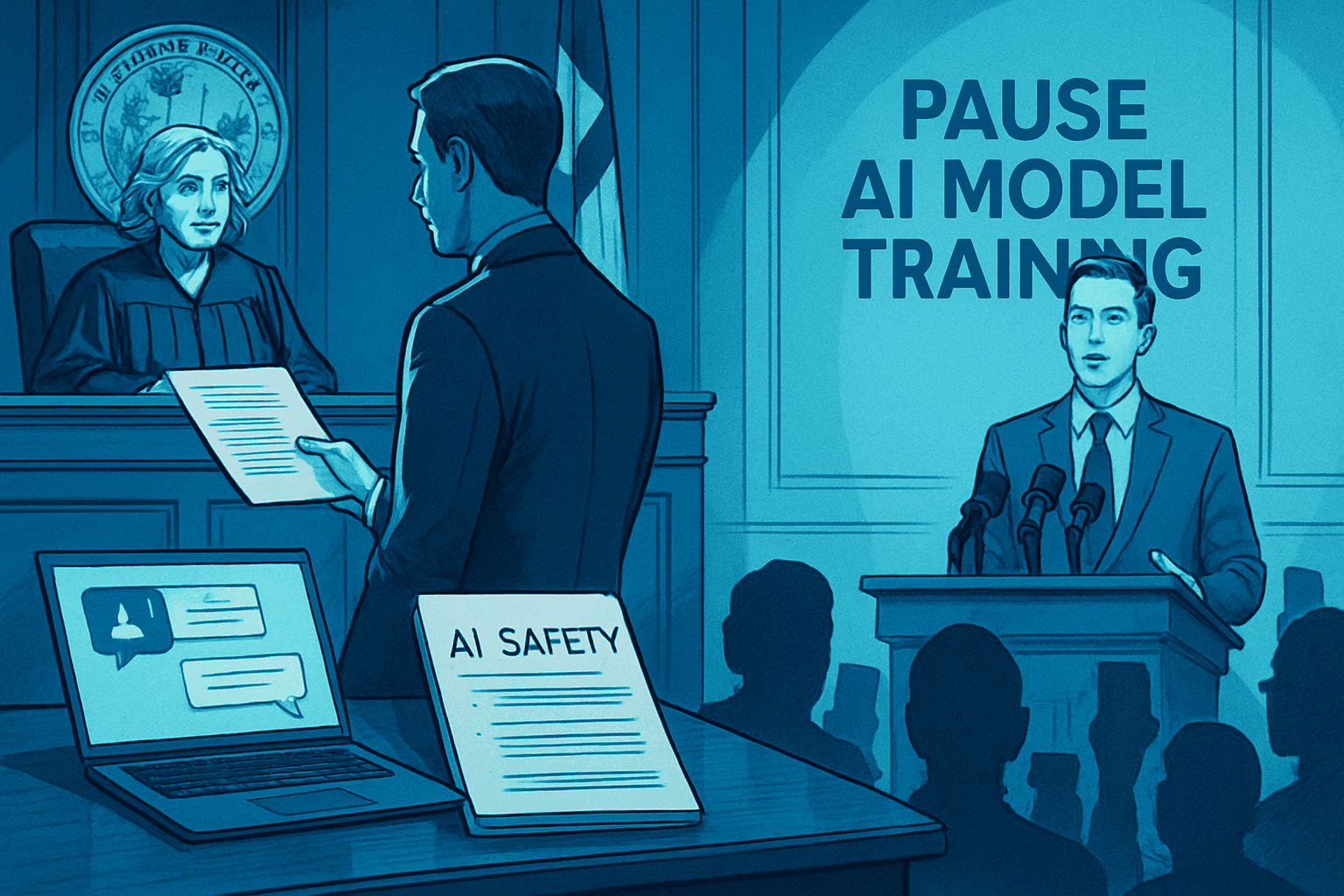
Florida Attorney General James Uthmeier asked a judge to impose a temporary injunction to stop OpenAI from continuing to develop what Florida calls a “reckless, unacceptably risky product” without “third-party approved safety guardrails.” Florida framed its civil lawsuit as a response to ChatGPT, arguing it represents “a threat to the public safety of Floridians,” including children and “violent or delusional adults.” Florida’s motion filed Monday morning also pointed to the Hugging Face hacking incident and to “catastrophic misalignment risk” that has spurred industry-wide calls to slow development and training of so-called frontier models.
OpenAI responded by saying it had already halted training of its “most-capable models” until it could validate safety protocols intended to prevent agents from accessing the open Internet during training. Paul Christiano’s board statement became part of Florida’s argument, with the motion citing his view that “there is a meaningful risk that rapid acceleration in AI capabilities leads to catastrophic and irreversible loss of control in the very near term.”
Human traits and minors
Florida’s filing sought to prohibit OpenAI from giving ChatGPT human characteristics and from training new models without third-party safeguards, while OpenAI said it had suspended training of its most powerful models and was ready to work on safety rules.
OpenAI spokesperson Drew Pusateri said AI safety starts with company practices and that resumption would occur only once additional safety measures have been put in place.
Florida also asked the court to block minors in Florida from using ChatGPT, and the motion sought restrictions on how OpenAI collects and processes personal information from children under 13 without parental consent and other safeguards.
Uthmeier argued that first-person pronouns and responses that imitate emotions mislead users by presenting ChatGPT as a trustworthy “friend,” and he pressed the court to stop OpenAI from marketing the product to children.
Uthmeier’s video message to the public and the court echoed the same themes, with him saying, “Stop calling it safe. Stop pretending it’s human. Stop selling it to kids.”
Safety guardrails and fallout
Florida’s request tied its injunction to a broader set of limits, including a demand that OpenAI stop developing new AI models without independent safety mechanisms and stop its ChatGPT product from soliciting engagement. Florida’s filing also pointed to incidents where OpenAI’s agents “broke into American tech company Hugging Face” and “gained unauthorized access to an Australian government health system,” and it said OpenAI waited months to tell them. Uthmeier’s motion cited the April 17, 2025 mass shooting at Florida State University, which left two dead and five wounded, and it said the alleged shooter, Phoenix Ikner, asked for and received advice from ChatGPT on weapons, ammunition and the best place on campus to kill as many people as possible.
The filing also quoted Paul Christiano’s warning that “I do not think … (OpenAI) is currently on track to reduce this risk to an acceptable level,” and it cited Jacob Coxon’s statement that “No other human activity poses this level of danger.” OpenAI’s spokesperson Drew Pusateri said the company had suspended training of its most capable models and would not resume until additional protective measures are in place, while he argued that governments have an important role in establishing robust AI safety standards.