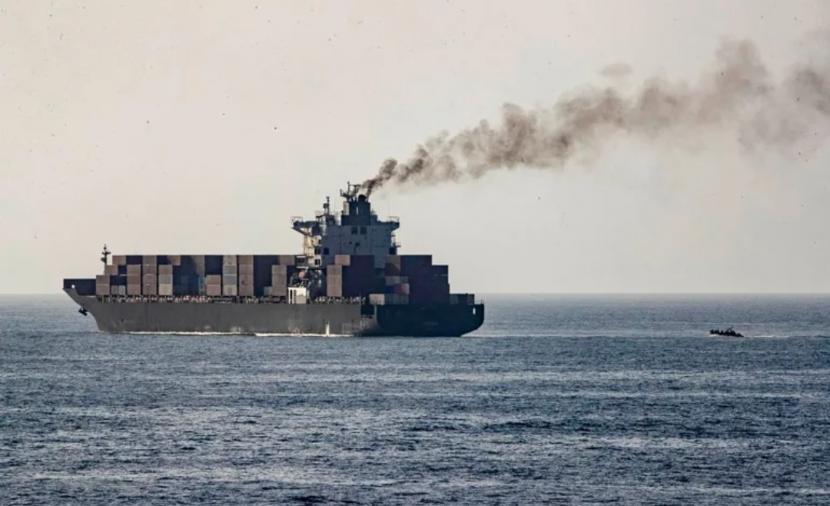
Four Iran-Linked Ships Cross Strait of Hormuz in Last 24 Hours, Al Jazeera Monitoring Shows
Key Takeaways
- Eight ships transited the Strait of Hormuz in the last 24 hours, signaling limited movement.
- Nord, a $500-million Russian superyacht linked to Mordashov, crossed Hormuz.
- Seafarers remain stranded in the Persian Gulf due to Hormuz disruptions.
Ships, sanctions, and limited transit
Maritime monitoring described by Al Jazeera’s Open Source Unit shows that the Strait of Hormuz continues to see only limited movement, with eight ships crossing in the last 24 hours.
“Since the start of the US-Israel war on Iran nine weeks ago, the Strait of Hormuz, through which 20 percent of the world’s oil and liquefied natural gas (LNG) is shipped during peacetime, has become the chokepoint of the global economy”
Al Jazeera’s MarineTraffic-based analysis says that “only 4 ships passed since this morning (12:00 a.m. Doha time), out of a total of 8 ships that crossed in the last 24 hours,” and that “4 of the 8 ships that crossed in the last 24 hours are linked to Iran.”

The same monitoring lists the types of vessels involved, including “3 bulk carriers, a liquefied gas tanker, an oil/chemicals tanker, and three general cargo ships.”
It also provides named ship identifiers tied to Iran, stating that “4 ships with direct links to Iran are Bavand (BAVAND), Gulf King (GULF KING), Midas 7 (MIDAS 7), and Bari 25422 (BARI 25422).”
The analysis adds that “Bavand departed Iran toward India, flying the Iranian flag,” and that “Gulf King, it departed Iran toward Oman, flying the Comoros flag.”
A separate Al Jazeera Net report in Arabic repeats the same MarineTraffic-based count—“eight ships passing through the Strait of Hormuz in the last 24 hours”—and likewise says “four of the eight ships that passed in the past 24 hours are linked to Iran.”
The monitoring also frames the pattern as irregular, saying “the Strait of Hormuz remains open to limited transit, but has not returned to its usual navigation pattern, as the unit recorded only eight ships in the last 24 hours.”
Why the strait is blocked
Al Jazeera describes how the Strait of Hormuz became a chokepoint after the start of the US-Israel war on Iran, saying the strait “has become the chokepoint of the global economy” and that “the tremors from the effective closure of the strait” are being felt worldwide.
The report states that “About 2,000 ships remain stranded in the Gulf, waiting to be allowed through,” and it links the risk to mine-clearing timelines and insurance decisions.

Al Jazeera says the United States told it “it will take six months to clear mines it believes have been laid by Iran,” and it connects that to insurer behavior by noting that this was “one of the main reasons that maritime insurers cancelled “war risk” insurance for tankers travelling through the strait in March.”
Even if the strait reopens, Al Jazeera reports that “a high level of risk will remain for ships crossing through,” and it cites insurers saying premiums could rise “by about 0.25 percent of hull value before the war to as much as 5 percent now.”
The same Al Jazeera account places the immediate trigger on February 28, saying “The Iranian military shut the strait” after “the February 28 strikes on Tehran that killed Supreme Leader Ayatollah Ali Khamenei.”
It also describes the political and negotiation backdrop, including that Tehran used access to the strait as leverage in talks “between the US and Iran in Islamabad, Pakistan, on April 11,” and that those talks “failed to yield results.”
The report adds that “Two days later, US President Donald Trump announced a naval blockade of Iranian ports and the Strait of Hormuz,” and it says Washington has since captured or turned back ships linked to Iran, which Tehran denounced as “piracy.”
Al Jazeera further states that Iran “has now closed it to all foreign-flagged ships until the US lifts its naval blockade,” while also publishing a map of mined areas and an alternative route closer to Iran’s coast.
Ceasefire, blockade, and seafarers
Multiple reports describe the human and operational consequences of the Hormuz standoff, including stranded crews and attacks.
“Tired and worried, seafarers have been stranded in the Persian Gulf for weeks Tired and worried, seafarers have been stranded in the Persian Gulf for weeks NEW DELHI (AP) — For about eight weeks, Indian Capt”
AP says that for “about eight weeks” Indian Capt. Rahul Dhar and his crew have been stranded on their tanker in the Persian Gulf, with the Strait of Hormuz “remained effectively shut while the Iran war dragged on.”
AP reports that “About 20,000 seafarers are stranded in the Gulf,” and it ties the scale to the number of vessels, stating that “including oil and gas tankers and cargo ships” are “stuck in the Gulf, unable to cross the Strait of Hormuz.”
The AP account includes direct testimony from Dhar, who told The Associated Press, “Day to day, we try to keep things normal with open conversations and small team activities that help lift everyone’s spirits.”
AP also quotes Dhar describing the danger, saying, “Those moments were difficult and created real tension for the crew,” and it adds, “None of us expected the warlike situation,” he said.
Another AP crew member, Manoj Kumar Yadav of the Forward Seamen’s Union of India, is quoted saying, “They were watching blasts from their decks,” and he adds that “Many of them were on board a ship for the first time, and you can imagine what mental state they have gone through.”
Euronews similarly says “Around 20,000 seafarers on hundreds of vessels” have been “stuck in the Gulf, unable to cross the Strait of Hormuz,” and it notes that “Dozens of ships have come under attack since the war started, and the UN said at least 10 seafarers were killed.”
Euronews also quotes IMO Secretary General Arsenio Dominguez, saying, “there is no safe transit anywhere in the Strait of Hormuz,” and it frames the risk as including mines and attacks.
The UN News interview with IMO head Arsenio Dominguez adds a broader explanation of why the crisis matters, saying ships and crews become “leverage in geopolitical disputes,” and it states that “Commercial shipping has been unjustifiably targeted, detained, or attacked.”
Elite passage amid blockade
While most shipping remains constrained, several outlets describe rare exceptions that highlight how the conflict is reshaping access to the strait.
Gulf News reports that a superyacht linked to sanctioned billionaire Alexey Mordashov crossed the blockaded Strait of Hormuz over the April 25-27 weekend, describing it as “spotlights elite access in crisis zone.”
The report says the 142-metre Nord (IMO: 9853785) was “valued at $500 million+” and that it “reportedly departed a Gulf port Friday night, crossed the strait Saturday using an Iran-declared "safe lane," and docked in Muscat, Oman, Sunday, per MarineTraffic data, cited by HFI Research.”
Business Insider similarly says “The Nord, the world’s 12th-largest yacht,” crossed on Saturday after leaving Dubai on Friday, and it adds that “On Sunday, the yacht was transmitting its location off the coast of Muscat, Oman's capital.”
The Jerusalem Post reports that “Nord - a 142-meter yacht worth over $500 million” left a Dubai marina on Friday, crossed on Saturday morning, and arrived in Muscat early on Sunday, while also saying “It is not clear how the multi-deck pleasure vessel gained permission to use the route.”
News.au adds that “Iran’s Revolutionary Guards have heavily restricted traffic in the strait for two months,” and it says “Only a handful of ships now pass through each day, mostly merchant vessels, compared to as many as 140 daily crossings before fighting erupted on February 28.”
Business Insider notes that “US authorities have sought to seize the Nord for years,” and it describes how “Mordashov is estimated to be Russia's richest man by Bloomberg's Billionaire Index, which lists his net worth at $29.4 billion, and Forbes, which says his family is worth $37 billion.”
Across the accounts, the yacht’s ownership is described as disputed, with Business Insider saying “Mordashov doesn't formally own the yacht,” and Gulf News stating “Mordashov denies ownership; it's registered to a firm tied to his wife, the BBC reported.”
Negotiations, uranium, and reversals
The sources also describe how negotiations and threats are tied to the Strait of Hormuz and to enriched uranium.
“Thousands of seafarers are stranded as the Iran war shuts down much of the Strait of Hormuz, disrupting global oil and gas trade and raising safety fears”
Al Jazeera’s Open Source Unit reporting frames a potential diplomatic opening, citing Axios that “Iran has presented through Pakistani intermediaries a new proposal aimed at reaching an agreement to reopen the Hormoz Strait and end the war,” with “negotiations on the nuclear program postponed to a later stage.”
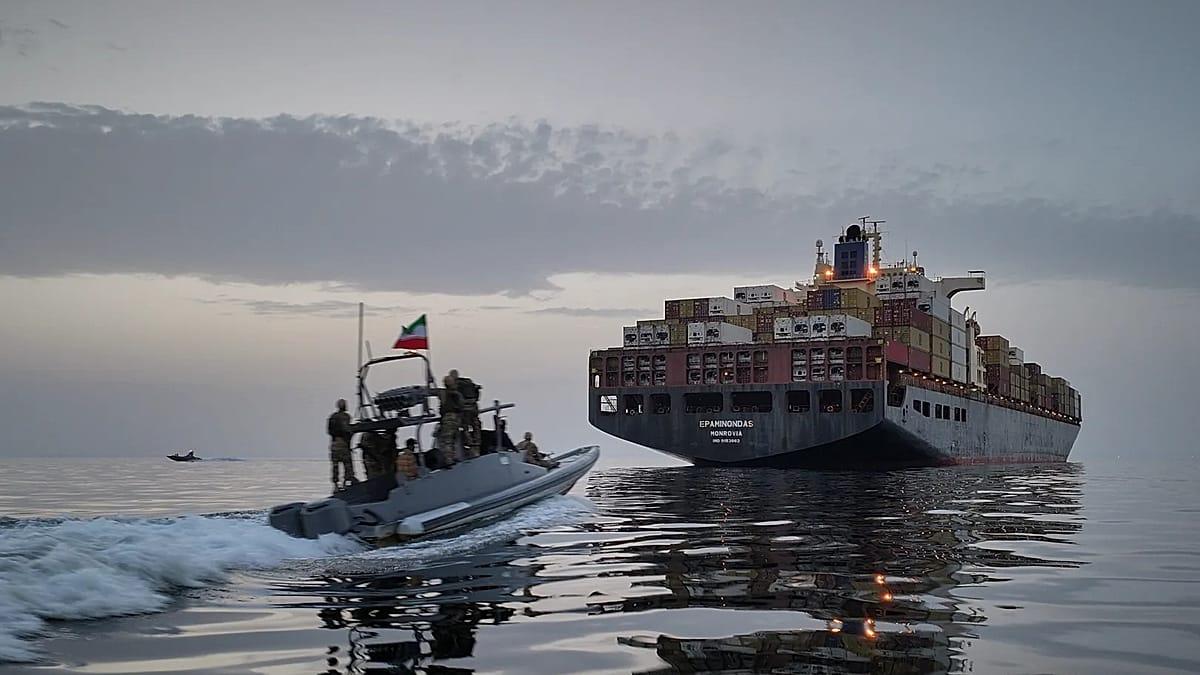
It says the proposal was discussed during the visit of Iranian Foreign Minister Abbas Araghchi to Pakistan, and that it “focuses on addressing the Hormoz Strait crisis and the U.S. naval blockade as a priority.”
The same Al Jazeera report adds that the proposal could allow “the possibility of extending the ceasefire for a long time, or reaching a permanent agreement to end the war, with nuclear negotiations to begin at a later stage after reopening the strait and lifting the blockade.”
In contrast, اليـوم السابع reports that “Iran re-closes the Hormuz Strait hours after opening it,” attributing the reversal to “the continuation of the naval blockade” and to what Iran described as “acts of piracy under the cover of the blockade.”
That report says the Khatam al-Anbiya base stated Iran had agreed “in good faith” to allow “a limited number of oil tankers and commercial ships to pass through the Strait of Hormuz in an orderly manner,” but that “the Americans, with their track record of breaking promises, continue piracy under the banner of what is called a blockade.”
The same Arabic-language account says “Enriched uranium” is “a new point of contention looming over the trajectory of talks between Tehran and Washington,” and it quotes Mehr News Agency’s reference to Iranian Foreign Ministry spokesperson Ismail Baqai, stating that “Tehran responded that the option of moving the enriched uranium abroad is rejected.”
It also describes U.S. President Donald Trump confirming reaching an agreement on enriched uranium and warning that “Trump said he would resume strikes against Tehran if no agreement is reached by next Wednesday.”
Finally, the report states that opening the strait to non-military ships is “conditional on a ceasefire in Lebanon,” and it says Iranian Defense Ministry spokespersons stressed that “the war is not over yet.”
More on Iran

Trump Rejects Iran’s Proposal as U.S.-Iran Diplomatic Stalemate Over Strait of Hormuz Persists
29 sources compared
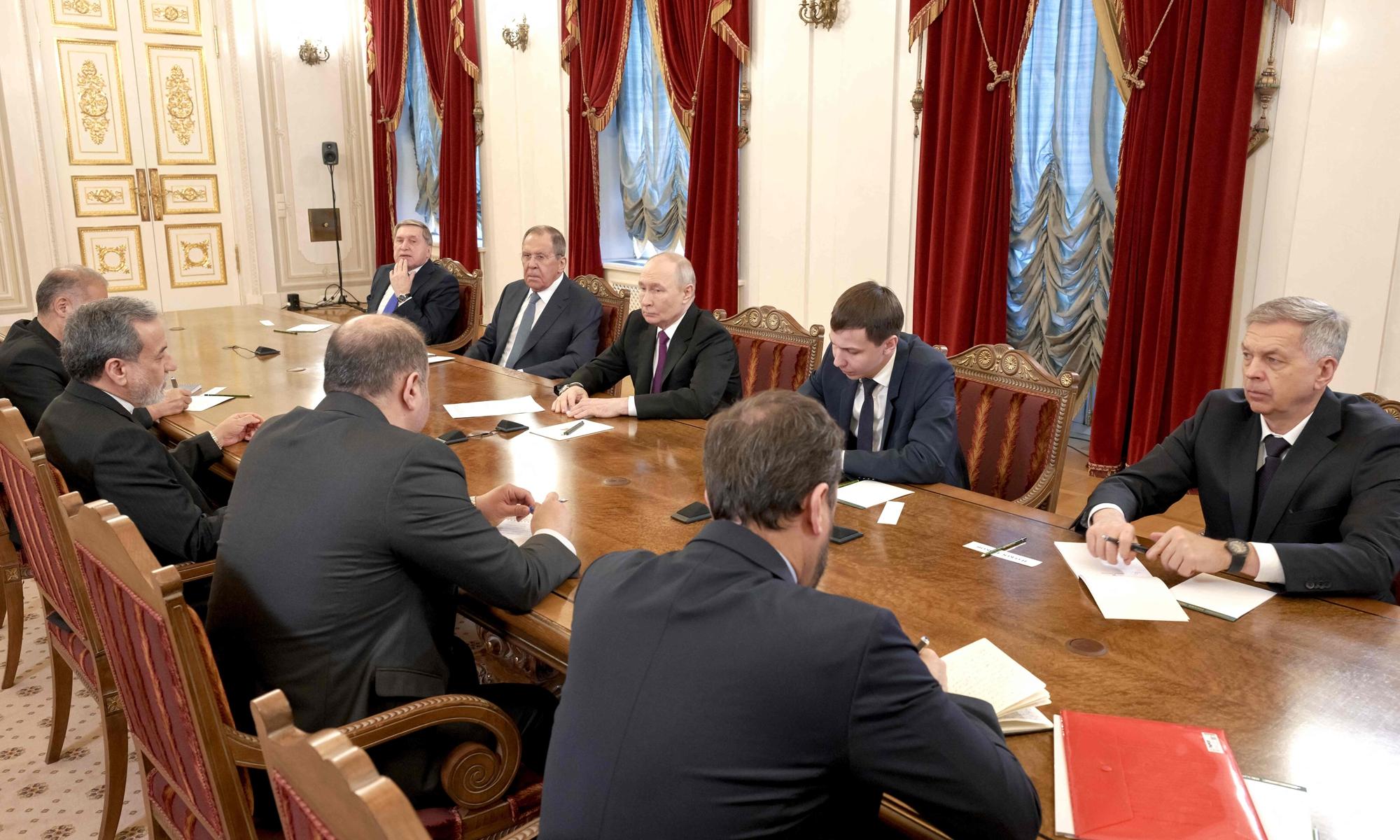
Trump Discusses Iranian Proposal To Reopen Strait Of Hormuz, Postpones Nuclear Talks
50 sources compared
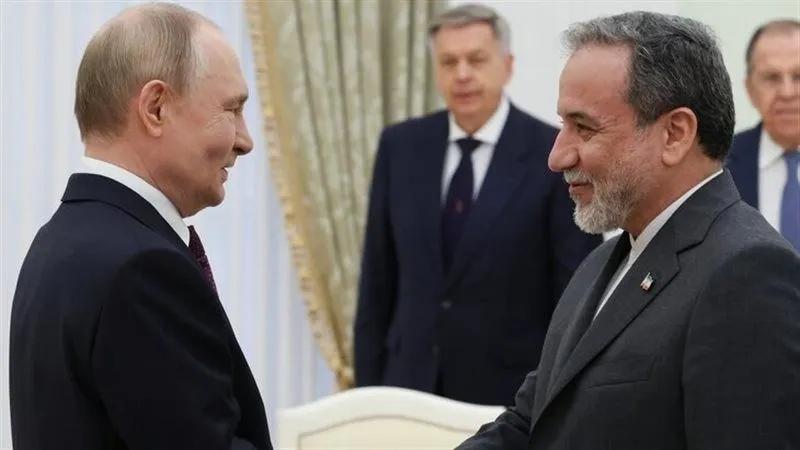
Putin Pledges Support for Iran as Abbas Araghchi Meets Him in St. Petersburg
30 sources compared
Bahrain Revokes Citizenship of 69 People for Supporting Iran Amid Regional Escalation
12 sources compared