Putin Pledges Support for Iran as Abbas Araghchi Meets Him in St. Petersburg
Key Takeaways
- Putin pledged to do everything possible for Middle East peace during Araghchi's visit.
- Iran’s foreign minister met Putin in St. Petersburg.
- The talks included consideration of a new round of US-Iran negotiations.
Putin backs Araghchi
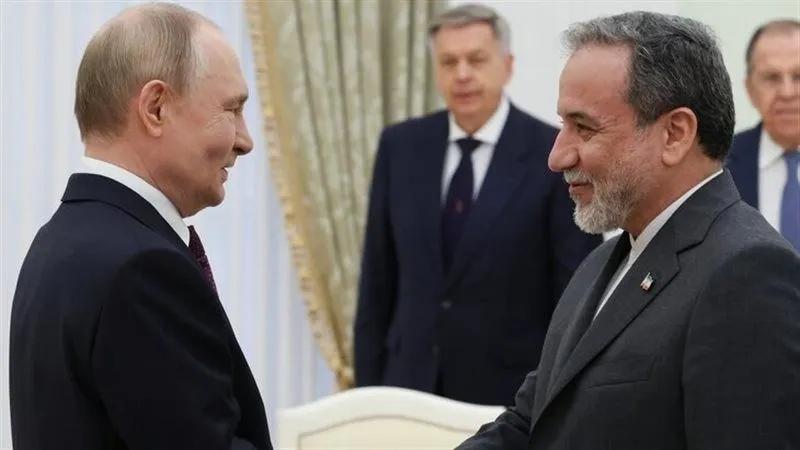
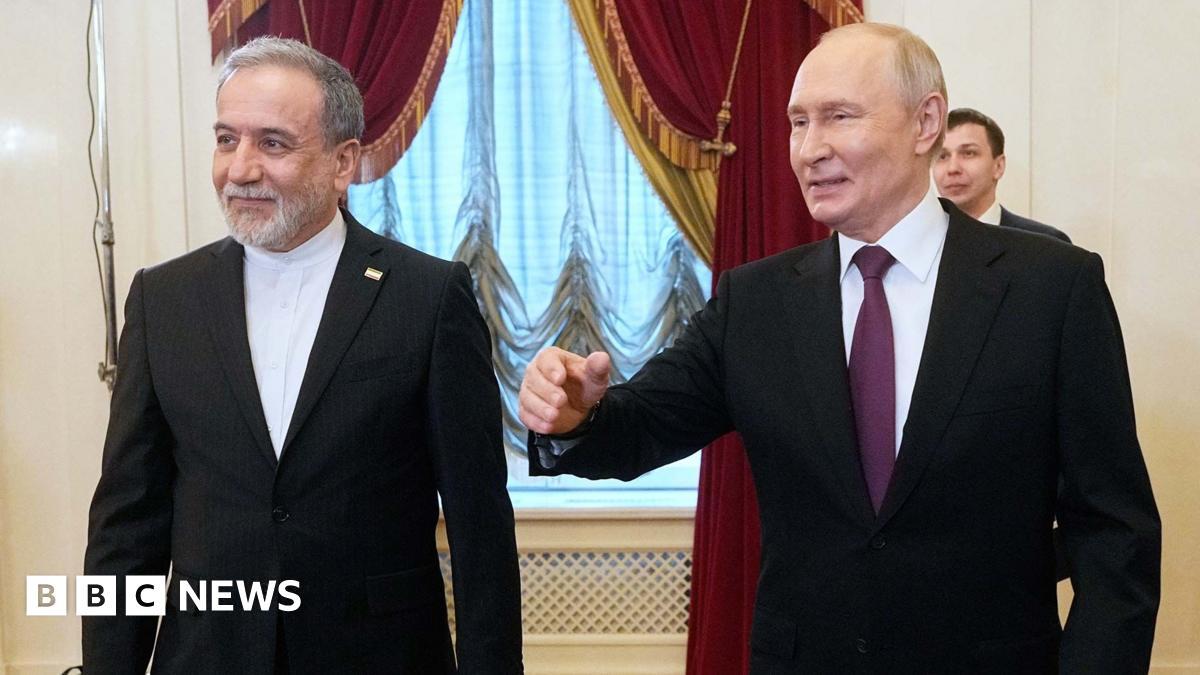
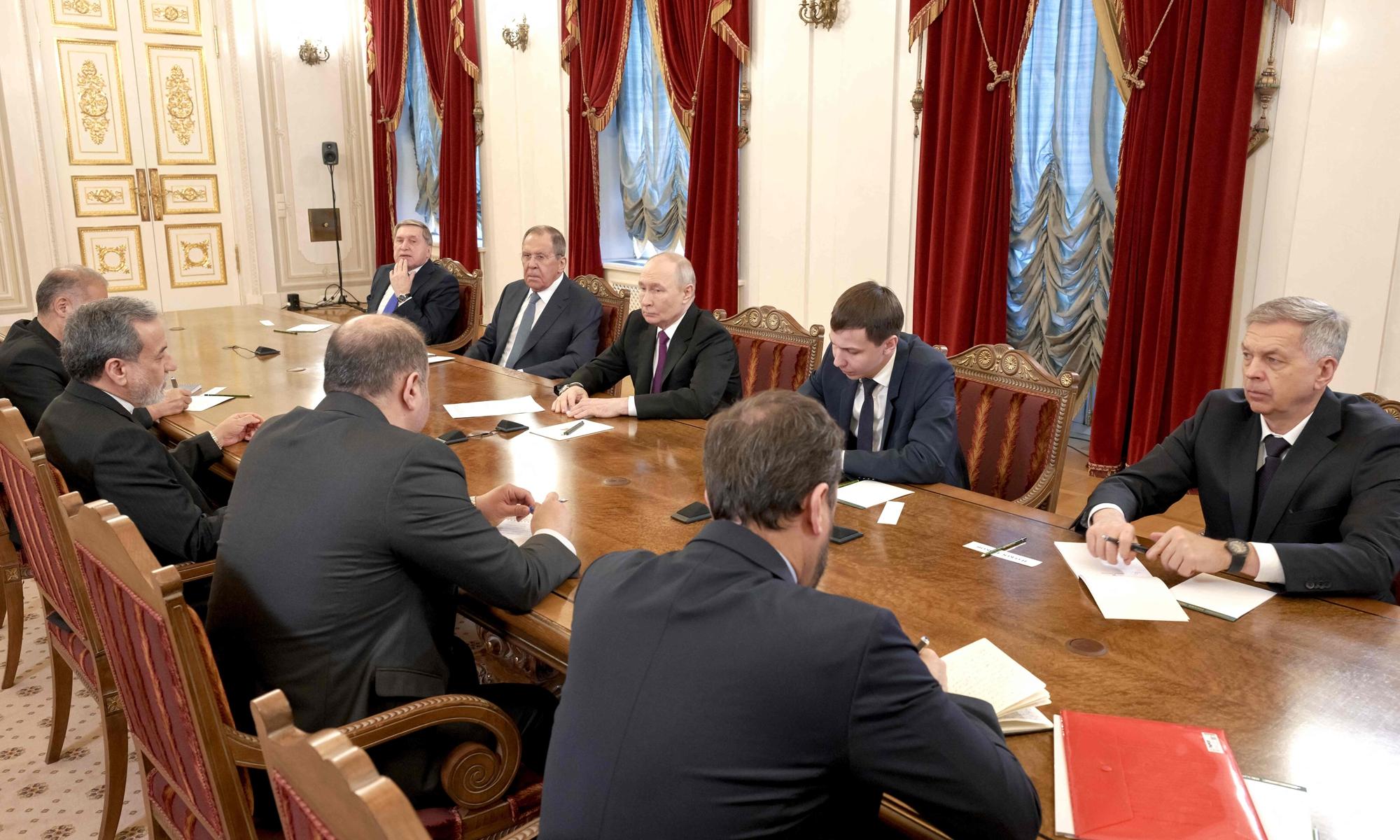
Iranian Foreign Minister Abbas Araghchi met Russian President Vladimir Putin in St. Petersburg on Monday, as Putin pledged support for Iran in its war with the U.S. and Israel and said he hoped for peace soon.
DW reports that Putin told Araghchi, “For our part, we will do everything that serves your interests, the interests of all the people of the region, so that peace can be achieved as soon as possible,” quoting Russia’s state news agency RIA.

DW also says Putin offered support to Iran and that Iran would navigate this “difficult period” of war, while Russia has resisted being drawn into the Middle East conflict as it continues with its full-scale invasion of Ukraine.
NPR adds that Putin told Araghchi he received a message last week from Iran’s supreme leader, Mojtaba Khamenei, and that Putin conveyed “gratitude for this message and best wishes for his health and well-being,” according to Tass and Fars.
NPR further reports that Putin said the Iranian people are fighting “courageously and heroically” for their sovereignty, as quoted by Tass.
NBC News frames the same meeting as part of a standoff over the Strait of Hormuz, quoting Araghchi after meeting Putin as saying, “Iran is resisting the biggest superpower in the world,” and adding, “That’s why” Trump is “asking for negotiations, and we’re considering it.”
Diplomacy after canceled talks
Araghchi’s Russia visit followed a weekend of shuttle diplomacy that included stops in Pakistan and Oman, after which the U.S. canceled a planned trip by its envoys to Islamabad.
DW says Araghchi landed in Russia on Monday after trips to mediators Pakistan and Oman to discuss the Middle East conflict, with peace efforts between Tehran and Washington remaining on hold.

DW also reports that on Saturday, U.S. President Donald Trump scrapped a planned trip to Islamabad by his envoys Steve Witkoff and Jared Kushner, saying talks there would amount to “sitting around talking about nothing.”
NPR describes the same sequence as a “whirlwind weekend of diplomacy,” saying Araghchi visited Islamabad and that Trump said he would send a team there for talks, but that Araghchi left Pakistan on Saturday and Trump canceled the U.S. delegation’s trip.
CBS News adds that Araghchi returned to Islamabad on Sunday for talks focused on ending the war with the U.S., while U.S. envoys Steve Witkoff and Jared Kushner had been expected to head to Islamabad Saturday before Trump said the talks could take place over the phone.
CBS News quotes Trump telling Fox News, “If they want to talk, they can come to us, or they can call us. You know, there is a telephone,” and adds that Trump said, “we're not sending people to travel 18 hours to meet.”
NBC News similarly frames Trump’s message to Iran as “call us,” and says the U.S. scrapped the planned trip by its envoys, leaving face-to-face diplomacy at an impasse.
Strait of Hormuz as the lever
Across multiple reports, the Strait of Hormuz is presented as the central bargaining point in the Iran-U.S. standoff, with Iran seeking reopening and the U.S. maintaining pressure through a naval blockade.
DW says Iran is said to have offered the U.S. a deal to reopen the Strait of Hormuz over the weekend, and that Axios reported Tehran wanted nuclear negotiations postponed to a later stage.
DW also says a White House spokesperson told Bloomberg News that the “US holds the cards” in negotiations, while Iran’s Fars news agency said efforts were ongoing to create conditions for a second round of U.S.-Iran talks, saying Tehran had sent “written messages” to Washington via mediator Pakistan.
NPR adds that the Trump administration discussed the latest Iranian proposal to end both Iran’s closure of the strait and the U.S. naval blockade on Iranian ports, and it says countries meeting at the United Nations called to reopen the Strait of Hormuz.
NPR also notes that the strait is a key shipping passage where about one-fifth of the world’s oil and natural gas, as well as other goods, transited before the war, and that traffic is largely at a standstill as Iran tries to exert control while the U.S. imposes a naval blockade.
NBC News describes the standoff over the Strait of Hormuz as driving energy price surges again Monday, and it says the U.S. blockade is pressuring Iran by preventing it from raising crucial funds by selling oil.
Gulf News adds that Fars said Iran passed “written messages” via Pakistan spelling out red lines including “nuclear issues and the Strait of Hormuz.”
Competing narratives on blame and terms
While the diplomatic moves converge on the Strait of Hormuz, the sources diverge on who is responsible for the breakdown and what the U.S. is offering.
DW reports that Araghchi said the U.S. was responsible for the failure of the first round of negotiations in Pakistan in mid-April, quoting him as saying, “The US approaches caused the previous round of negotiations, despite progress, to fail to reach its goals because of the excessive demands.”

DW also says Araghchi told reporters that “safe passage through the Strait of Hormuz is an important global issue,” and it describes the U.S. maintaining increased pressure on Tehran, including a blockade of fossil fuel exports, as it calls upon Iran to abandon its uranium enrichment program.
NPR, by contrast, emphasizes that the Trump administration discussed the latest Iranian proposal, and it includes White House press secretary Karoline Leavitt’s response when asked about phased negotiation, quoting her: “Well only because it's been reported, I will confirm that the president has met with his national security team this morning” and adding “the proposal was being discussed.”
NPR also quotes Leavitt on red lines, saying, “The President’s red lines with respect to Iran have been made very, very clear,” and it reports that Trump said, “We have all the cards. If they want to talk, they can come to us, or they can call us.”
NBC News adds a direct quote from Araghchi after meeting Putin, saying the U.S. “hasn't 'achieved a single goal. That’s why' Trump is 'asking for negotiations, and we’re considering it.'”
Gulf News further complicates the picture by reporting that Fars said Iran passed “written messages” to Washington via Pakistan spelling out red lines, while also stating that the exchange of messages was not related to Iran-U.S. negotiations but intended to “clarify” the current regional landscape and thresholds Iran is unwilling to cross.
Energy shock and next steps
The sources tie the diplomatic standoff to immediate economic and humanitarian stakes, especially as shipping through the Strait of Hormuz remains constrained and energy prices rise.
NPR says traffic is “largely at a standstill” and that the situation is deepening a global energy crisis, while NBC News says energy prices surged again Monday as the standoff over the Strait of Hormuz continued.
CBS News provides specific oil price figures, reporting that West Texas Intermediate was selling for $96.50 a barrel Sunday, up 2% since the market closed on Friday, and that Brent crude was trading at $107.75 per barrel Sunday, up about 3% since Friday and 48% since the war began.
CBS News also says tankers full of crude became stranded in the Persian Gulf, unable to safely transit through the Strait of Hormuz, and it frames the blockade as part of the pressure campaign.
DW describes the strait’s effective closure as leading to “massive disruptions in the global oil and gas supply,” and it notes that negotiations are ongoing.
In terms of next steps, NPR says Trump met with his national security team and discussed the latest Iranian proposal, while Leavitt told reporters, “I don't want to get ahead of the president or his national security team,” and reiterated that the president’s “red lines” are “very, very clear.”
NBC News adds that members of the Gulf Cooperation Council will hold a meeting Tuesday where the Iranian proposal will also be discussed, according to two Gulf officials, and it says opening the Strait of Hormuz and restarting the flow of oil remains the priority for Gulf allies.
More on Iran
Abbas Araghchi Proposes Reopening Strait of Hormuz, Defers U.S. Nuclear Talks in Russia Trip
29 sources compared
Bahrain Revokes Citizenship of 69 People for Supporting Iran Amid Regional Escalation
12 sources compared

Iran Offers U.S. Strait of Hormuz Reopening, Ending War, Postponing Nuclear Talks
29 sources compared

Oil Prices Rise as US-Iran Peace Talks Stall and Strait of Hormuz Remains Constrained
14 sources compared