Trump Discusses Iranian Proposal To Reopen Strait Of Hormuz, Postpones Nuclear Talks
Key Takeaways
- Iran offers to reopen Hormuz and end the war, delaying nuclear talks.
- Trump and top national security aides are reviewing the Iranian proposal.
- Trump remains skeptical about Iran's Hormuz proposal.
Trump reviews Iran proposal
President Donald Trump discussed an Iranian proposal aimed at reopening the Strait of Hormuz and ending the war, while postponing negotiations over Tehran’s nuclear programme until a later stage, as the White House confirmed Trump met with his national security advisers on Monday.
Al Jazeera reported that Trump’s national security team was reviewing a plan to halt its joint war with Israel, reopen the Strait of Hormuz and delay nuclear talks until after the war ends, and it said the White House confirmed Trump met his advisers on Monday to discuss the plan.
Axios similarly said Iran gave the U.S. a new proposal to reopen the Strait of Hormuz and end the war, with nuclear negotiations postponed for a later stage, citing a U.S. official and two sources with knowledge.
NPR described the same sequence as Iran’s foreign minister arriving in Russia while the Trump administration discussed the latest Iranian proposal to end both Iran’s closure of the strait and the U.S. naval blockade on Iranian ports.
CBS News framed the situation as the White House saying the administration is discussing—though not “considering”—an Iranian proposal that would see Iran and the U.S. mutually drop restrictions on the Strait of Hormuz while delaying talks on Iran’s nuclear program.
In the same reporting stream, White House press secretary Karoline Leavitt told reporters, “I will confirm the president has met with his national security team this morning,” and she added, “the proposal was being discussed.”
Diplomacy and the nuclear standoff
The proposal under review arrived amid a wider diplomatic push in which Iran’s leadership sought leverage through regional and major-power engagement while the U.S. insisted nuclear issues be addressed from the outset.
Al Jazeera reported that Iranian President Masoud Pezeshkian said Tehran will not enter negotiations while the U.S. maintains restrictions on Iranian ports, and it said Washington and Tehran agreed to a temporary ceasefire on April 8 after more than a month of fighting that began with joint US and Israeli strikes on Iran.
It also said the truce mediated by Pakistan has come under strain because of disputes over maritime access through the Strait of Hormuz and US measures targeting Iranian ports.
Axios described the diplomacy as a stalemate deepening over the weekend after Iranian Foreign Minister Abbas Araghchi’s visit to Pakistan ended with no progress, and it said Trump signaled in an “When you have vast amounts of oil pouring through your system ... if for any reason this line is closed because you can't put it into containers or ships ... what happens is that line explodes from within.”
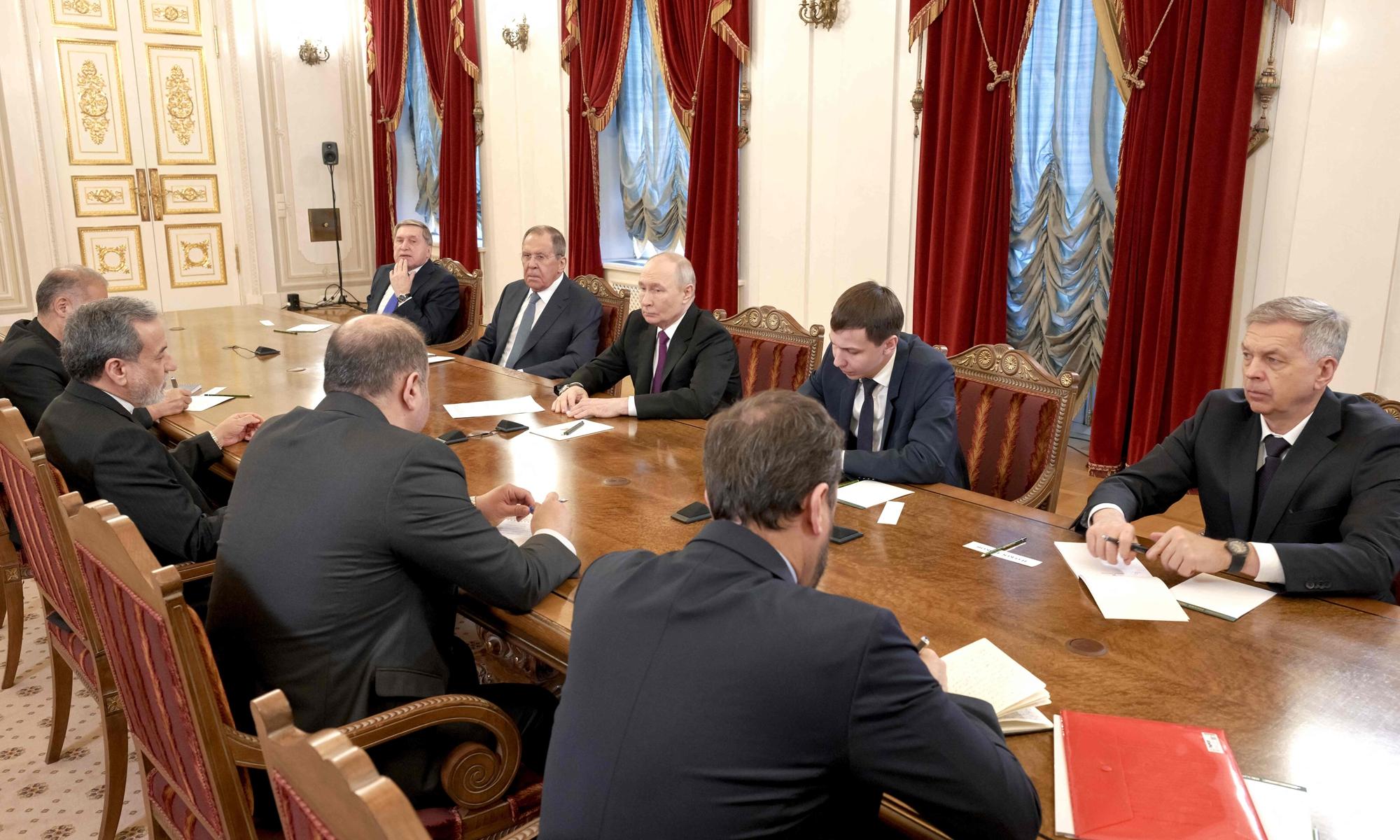
NPR added that Araghchi’s visit to Russia came as countries meeting at the United Nations again called to reopen the Strait of Hormuz, and it said Putin told Araghchi he received a message last week from Iran's supreme leader, Mojtaba Khamenei.
In the U.S. position, NBC News said Secretary of State Marco Rubio told Fox News that “Suffice it to say that the nuclear question is the reason why we’re in this in the first place,” and it quoted Rubio saying any agreement would have to “definitively prevents them from sprinting toward a nuclear weapon at any point.”
CBS News and CNBC both tied the dispute to the nuclear program, with CNBC noting the administration’s insistence that the central goal is keeping Iran from ever obtaining a nuclear weapon.
The result, across outlets, was a phased offer—open the strait and end the war first, then address nuclear negotiations later—that the U.S. treated as a non-starter under its “red lines.”
Voices: Leavitt, Rubio, Putin
The proposal triggered sharply different public messaging from U.S. officials and Iranian-aligned voices, while Russia’s leadership offered support for diplomacy.
White House press secretary Karoline Leavitt told reporters that the proposal was being discussed, saying, “I wouldn’t say they’re considering it,” and she added, “there was a discussion this morning that I don't want to get ahead of.”
Axios reported that Trump’s national security team was reviewing the plan and that CNN said Trump was unlikely to accept it because postponing talks on Iran’s nuclear activities would weaken Washington’s leverage, while Reuters said Trump wants the nuclear issue addressed at the start of any negotiations.
NBC News quoted Secretary of State Marco Rubio telling Fox News that “Suffice it to say that the nuclear question is the reason why we’re in this in the first place,” and it also quoted Rubio saying any agreement must “definitively prevents them from sprinting toward a nuclear weapon at any point.”
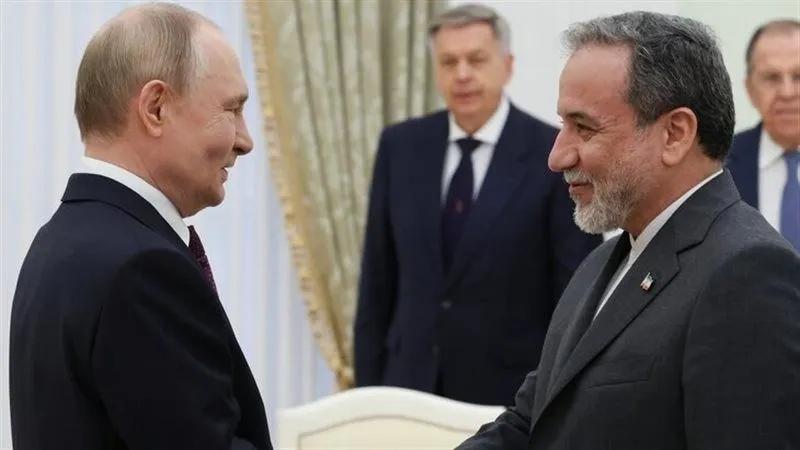
On the Russian side, NPR said Putin told Araghchi to convey his “gratitude for this message and best wishes for his health and well-being,” and it described Putin telling Araghchi that the Iranian people are fighting “courageously and heroically” for their sovereignty.
The Guardian added a separate Russian framing, saying Russian state media quoted Putin telling Araghchi during a meeting in Saint Petersburg on Monday, “For our part, we will do everything that serves your interests, the interests of all the people of the region, so that peace can be achieved as soon as possible,”.
Iran’s foreign minister Abbas Araghchi also used public messaging to signal openness to diplomacy, with Al Jazeera reporting he wrote on X that he welcomed engagement with Russia at the “highest level” and that “Recent events have evidenced the depth and strength of our strategic partnership.”
In parallel, Al Jazeera’s reporting from Tehran said Araghchi was expected to return to Iran after meetings with regional partners, and it quoted Al Jazeera’s Almigdad Alruhaid saying, “But the Iranians are trying to say that they are open to diplomacy. They are sending messages.”
UN warnings and maritime access
Beyond bilateral talks, the Strait of Hormuz dispute drew warnings from the United Nations and from countries affected by shipping disruptions, with the standoff framed as a threat to global supply chains.
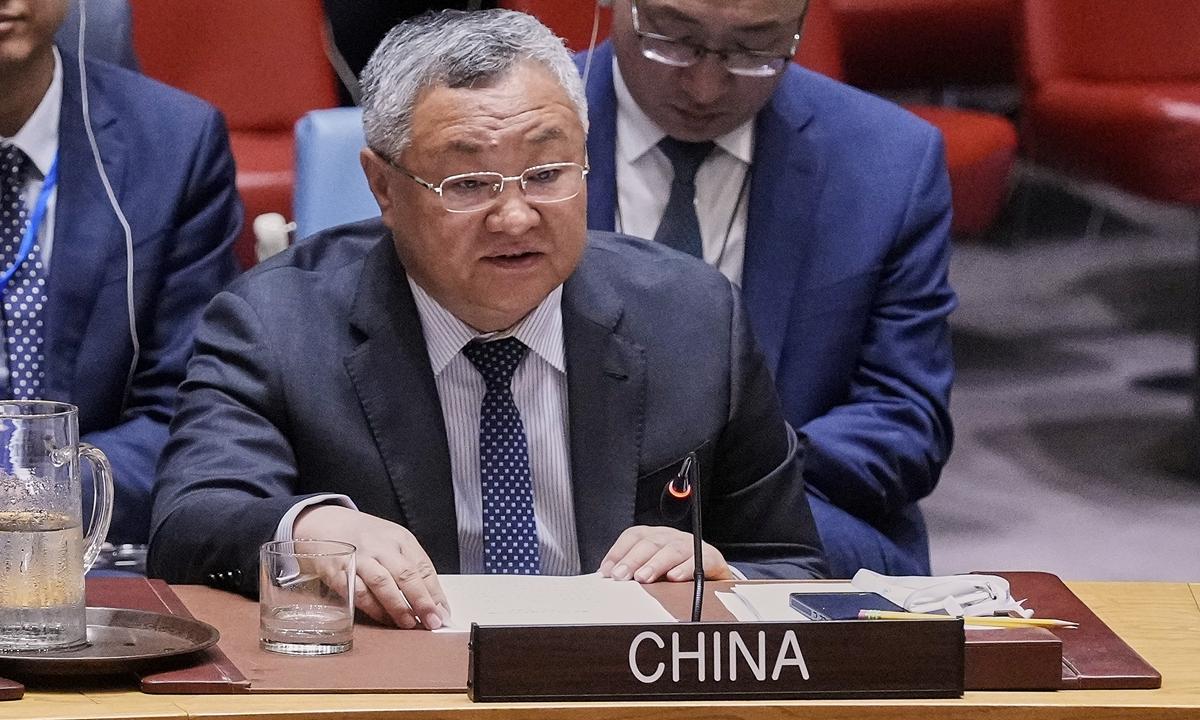
Al Jazeera reported that dozens of countries called for the “urgent and unimpeded reopening” of the Strait of Hormuz, while United Nations chief Antonio Guterres warned the standoff could trigger a global food emergency.

It said diplomats appealed for de-escalation during a Security Council meeting, and it described speakers highlighting the disruption caused by thousands of stranded cargo vessels and tens of thousands of maritime workers unable to move through the waterway.
Al Jazeera also reported that Guterres warned shipping disruptions were hitting vulnerable countries hardest, with about 20 percent of global oil and natural gas supplies passing through the strait.
Bahrain, which requested the meeting with support from dozens of countries affected by higher fuel prices, described the closure as a violation of international law and called for attacks on ships to end.
The Guardian added a maritime-security angle by reporting that the head of the UN’s maritime agency said there was “no legal basis” for imposing any fees for ships to pass through the strait of Hormuz.
In parallel, CNBC and CBS News described the economic pressure as oil prices rising while the strait remained constrained, with CBS News saying oil prices continued ticking up Tuesday and with Brent Crude topping $111 dollars a barrel early in the day.
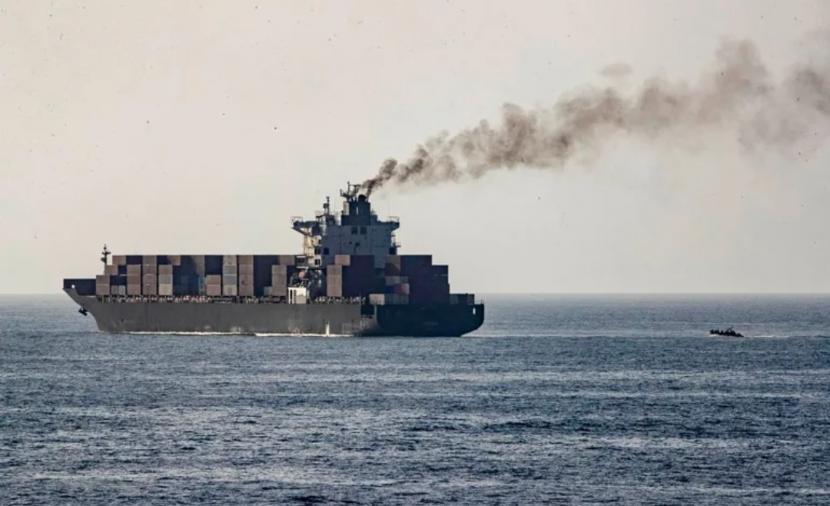
CNBC also said the strait remains Iran’s main source of leverage and that Tehran effectively closed the passage through force, with just a small fraction of prewar ship traffic making it through.
Maritime seizures and competing frames
As the U.S. weighed the proposal, competing narratives about maritime actions intensified, with Iranian officials condemning U.S. seizures as piracy and Western officials emphasizing nuclear red lines.
“United States President Donald Trump’s national security team is reviewing an Iranian proposal aimed at halting its joint war with Israel, reopening the Strait of Hormuz and delaying negotiations over Tehran’s nuclear programme until after the war ends”
The Guardian reported that Iran’s foreign ministry condemned the U.S. seizure of Iran-linked tankers as the “outright legalization of piracy and armed robbery on the high seas,” quoting Iranian foreign ministry spokesperson Esmail Baghaei’s post on X that began, “Welcome to the return of the pirates — only now, they operate with government-issued warrants, sail under official flags, and call their plunder ‘law enforcement.’”

The Guardian said the post attached a screenshot of a post from US attorney for the District of Columbia, Jeanine Pirro, detailing the U.S. seizure of two tankers “laden with Iranian oil.”
In a separate U.S.-leaning frame, CNBC quoted Secretary of State Marco Rubio criticizing the idea of “opening the straits” without addressing Iran’s nuclear program, saying, “What they mean by opening the straits is, 'Yes, the straits are open, as long as you coordinate with Iran, get our permission, or we'll blow you up and you pay them,'” and it added that Rubio said those are “international waterways.”
Reuters and Axios reporting also described Trump’s skepticism, with Axios saying CNN reported Trump was unlikely to accept the proposal because it postpones talks on Iran’s nuclear activities, and with Fox News reporting an official told Reuters that “He doesn't love the proposal,” because it did not address Iran’s nuclear program.
Fox News also quoted Rubio saying “There’s no doubt in my mind that at some point in the future, if this radical clerical regime remains in charge in Iran, they will decide they want a nuclear weapon,” and it included Rubio’s warning that Washington must ensure “any agreement that is made, is one that definitively prevents them from sprinting toward a nuclear weapon at any point.”
At the same time, the Guardian reported that the UN maritime agency head said there was “no legal basis” for imposing any fees for ships to pass through the strait, underscoring that even the legal framing of maritime access was contested.
Together, these accounts show the proposal being debated not only as a negotiation sequence but also through sharply different interpretations of maritime security and international law.
More on Iran
Four Iran-Linked Ships Cross Strait of Hormuz in Last 24 Hours, Al Jazeera Monitoring Shows
12 sources compared

Trump Rejects Iran’s Proposal as U.S.-Iran Diplomatic Stalemate Over Strait of Hormuz Persists
29 sources compared
Putin Pledges Support for Iran as Abbas Araghchi Meets Him in St. Petersburg
30 sources compared

Bahrain Revokes Citizenship of 69 People for Supporting Iran Amid Regional Escalation
12 sources compared