Business · 18 June, 2026 · 2 min read
G7 Agrees In Evian-Les-Bains To Cut China Reliance On Rare Earths Below 60% By 2030
G7 aims for no more than 60% of rare earths from China by 2030. G7 forms critical minerals alliance and platform to align stockpiling with IEA.
G7 frames policy as market-standard vs China frames as “small circles”.
9 of 10 outlets skipped it: critics warn the G7 creates a “consumer club”..
10outlets compared
Same story, two versions
tap a side to read it in full
Shows competing legitimacy narratives around the same diversification effort.
G7 targets China share
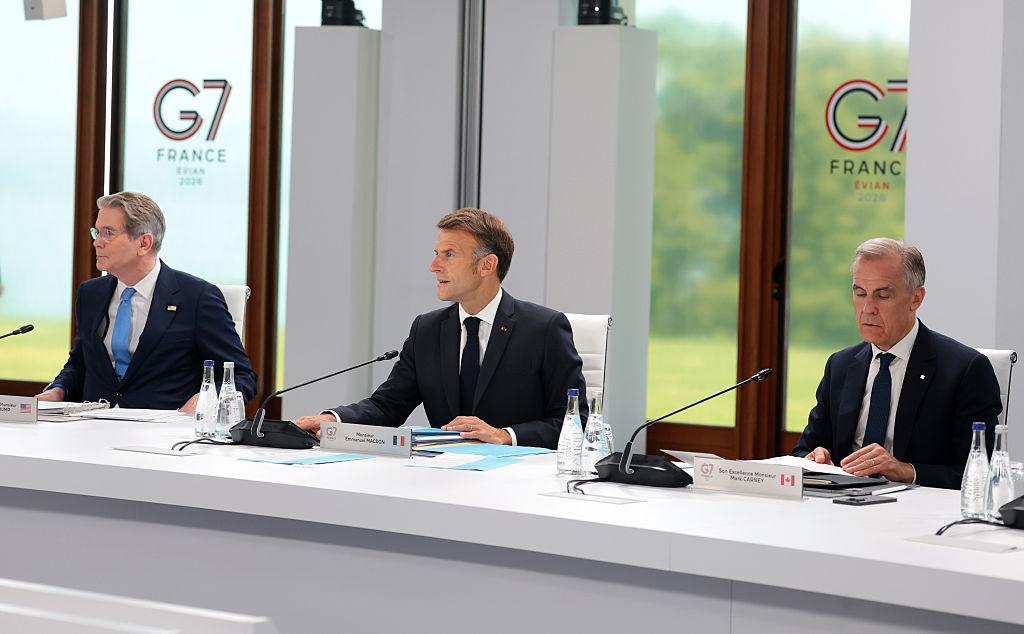
Leaders of the Group of Seven agreed in Evian-les-Bains to step up coordination to cut their countries’ reliance on China for critical minerals, including plans to align stockpiling and expand the role of the International Energy Agency.
“reduce dependence on any one supplier outside the G7 and partner countries for rare earths and permanent magnets to below 60% by 2030”
In a joint statement, the G7 said it aims to reduce dependence on any one supplier outside the G7 and partner countries for rare earths and permanent magnets to below 60% by 2030, with an ultimate goal of 50% “as soon as possible”.

The plan also sets out a pathway for traceability and transparency, beginning with lithium and nickel, and then expanding to additional minerals each year.
A Reuters report cited by The Star says the mechanisms would start with two pilot critical minerals—lithium and nickel—and later expand to five new minerals each year, with a focus on rare earth elements.
China rejects “small circles”
China responded to the G7’s critical minerals declaration by urging the bloc to respect international trade rules and avoid what it described as using “small circles” to disrupt the global economic order.
Chinese Foreign Ministry spokesperson Lin Jian told reporters that Beijing’s position on maintaining the stability and security of global industrial and supply chains “remains unchanged.”
In the same reaction, Lin urged the grouping to “earnestly abide by market economy principles and international economic and trade rules and stop undermining the international economic and trade order with ‘small circles’ rules.”
The Anadolu Ajansı report also said the G7 initiative, which did not explicitly name China, emphasized reducing dependence on a single supplier of critical minerals and rare earths where China holds a dominant global position.
Investment, stockpiles, and tools
Beyond targets, the G7 declaration pledged to reduce vulnerabilities stemming from concentrated supply chains and arbitrary trade restrictions, and it said it would work with partners to ensure attempts or threats to weaponise economic dependencies fail.
“195 projects announced since the beginning of 2026 have already attracted EUR 64 billion in investment”
The declaration also said the G7 would cooperate closely to advance production, processing and recycling projects across the entire supply chain, and it noted that 195 projects announced since the beginning of 2026 had already attracted EUR 64 billion in investment.
To prepare for disruptions, the countries agreed to expand stockpiling capacities and establish a cooperation mechanism, supported by the International Energy Agency, to share alerts and data on future market stress and supply disruptions.
The G7 said it would continue exploring measures including diversification requirements, joint procurement tools, revenue stabilisation mechanisms and trade-related instruments to support resilient supply chains.