
Gadi Eisenkot Challenges Benjamin Netanyahu as Polls Show 38% Support vs 35%
Key Takeaways
- Direct head-to-head poll shows Eisenkot 38% vs Netanyahu 35%.
- Eisenkot's Yashar party is rising as main rival to Netanyahu.
- Opposition coordination sought to form 61-seat majority to unseat Netanyahu.
Eisenkot’s Gaza-linked rise
Gadi Eisenkot, described as a former chief of staff, a member of the former War Cabinet, and now leader of his own political formation, is positioning himself as a leading rival to Benjamin Netanyahu in Israeli politics ahead of elections scheduled for 2026.
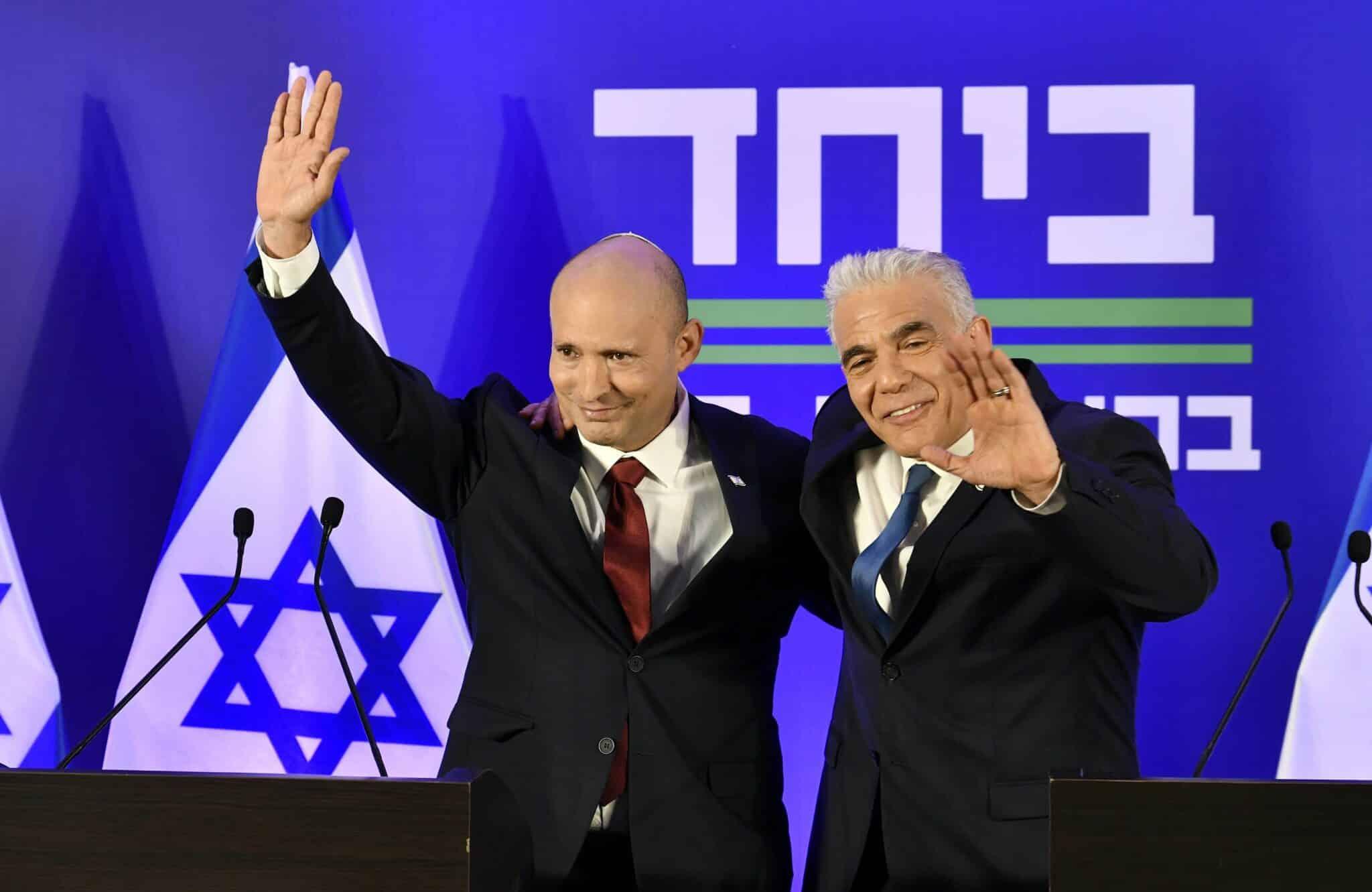
“With only a few months left before decisive elections, Naftali Bennett and Yair Lapid are merging their parties in an effort to reshape the opposition and defeat Benjamin Netanyahu”
The Tunisie Numerique profile says Eisenkot joined the emergency government after October 7, 2023 and participated, as an observer, in the war cabinet tasked with guiding the Gaza operations, before leaving the government in June 2024 with Benny Gantz.
It adds that Eisenkot’s son, Gal Meir Eisenkot, a 25-year-old reservist, was killed in Gaza in December 2023 after the explosion of an device near a tunnel in the Jabalia area, and that Eisenkot has repeatedly accused Netanyahu of prolonging operations without a sufficiently clear political strategy.
The same source frames Eisenkot’s rise in polls as tied to his military credibility and his positioning between the center and the moderate right, while also citing “government fatigue” over controversies over the conduct of wars in Gaza, Lebanon, and against Iran, and tensions with Washington.
In parallel, the Al Jazeera-linked political coverage in the provided materials centers on Netanyahu’s political challenge, with Tunisie Numerique saying Eisenkot obtained 38% support against 35% for Netanyahu in a direct head-to-head in a recent poll cited by Israeli media.
Debate, coalition math, and Gaza
Tunisie Numerique reports that Likud launched a campaign claiming Eisenkot could form a government only with the support of Arab parties, and it says Netanyahu circulated a video attacking that hypothesis.
It then quotes Eisenkot’s response as a public challenge: “Set the place and the time, and come answer the questions of the citizens.”

The same article stresses that in Israel the prime minister is not directly elected and must gather a coalition with at least 61 seats in the 120-seat Knesset, meaning Eisenkot could top a popularity poll yet still be unable to govern if the opposition fails to agree.
A separate provided poll account from شبكة مصدر الاخبارية says the Israeli opposition reaches the 61-seat threshold required to form a government, while also stating that Netanyahu’s coalition hovers around 49 to 50 seats.
That poll account further says the opposition bloc’s strength ranges from 60 to 61 seats depending on strategic mergers, and it frames the central dilemma as whether the next bloc is “merely an anti-Netanyahu coalition” or a nationalist right-wing bloc seeking to inherit Likud’s popular base.
What’s at stake next
The stakes described in the provided materials are explicitly tied to whether opposition leaders can translate polling gains into a governing coalition with at least 61 seats in the 120-seat Knesset.
Tunisie Numerique says Eisenkot has urged opposition leaders to coordinate their strategies to build a 61-seat majority capable of replacing Netanyahu, while warning that “everyone wants unity, but none necessarily wants to cede leadership of the bloc to a rival.”
It also argues that Netanyahu’s advantage is institutional and coalition-based, saying it is not essential for Likud to obtain an absolute majority as long as Netanyahu can build a more cohesive coalition than his rivals.
In the same materials, شبكة مصدر الاخبارية says ideological complexities threaten the stability of any future opposition coalition, including the governing formula, and it adds that the opposition still faces the challenge of uniting “the soft right, the security-centered center, liberals, and the Zionist left.”
Finally, Haaretz’s provided excerpt frames the political environment in terms of the “soft right” as a demographic sought-after yet elusive in Israeli electoral politics, underscoring that the opposition’s ability to assemble a coherent bloc could hinge on whether that segment can be won.
More on Gaza Genocide
Israeli Security Forces Detain Palestinian Women in West Bank Raids Across Hebron, Ramallah, Nablus, Bethlehem
12 sources compared
CPJ Launches Review Of Gaza Journalist Death Database After Hamas, PIJ Obituaries
18 sources compared

Israeli Strikes Kill At Least Eight in Gaza, Including Two Children, and a Teen in West Bank
12 sources compared
Israeli Airstrikes Kill Three Palestinians, Injure 19 in Gaza Despite Ceasefire
15 sources compared