Gaza Genocide01 July, 20263 min read
Gaza Water And Environmental Disaster Peaks After 1,000 Days Of War, UN Reports Epidemics
This article is an automated aggregation of coverage from news outlets. Our editorials offer in-depth analysis curated by the NewsCord team.
Gaza's water crisis peaked after 1,000 days of war, with thirst, contamination, epidemics. Displaced residents face crowded camps, waste buildup, and spread of infectious diseases.
Thirst and sewage
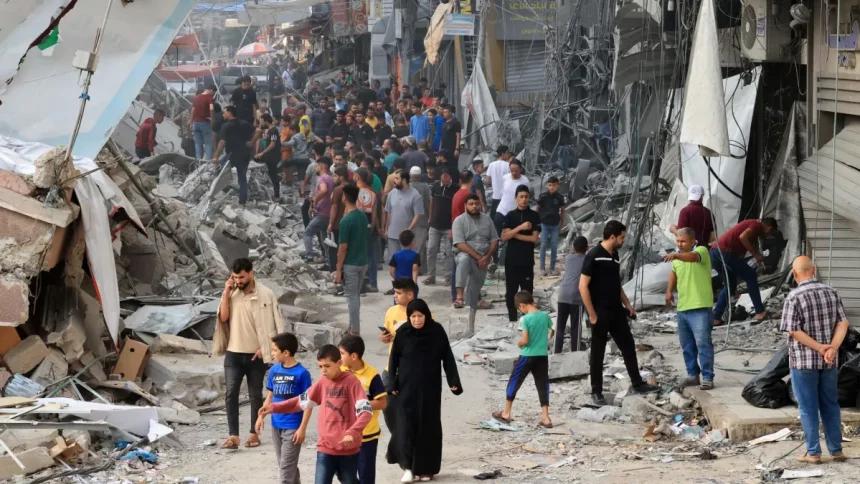
In Gaza, the water and environmental disaster has peaked after 1,000 days of ongoing war, with planned thirst and water contamination described as trapping millions of displaced people in tents under summer heat and triggering epidemics. Al Jazeera’s correspondent reports that displaced people say, "most people wish for death," as they describe a war on thirst that has wiped out any alternative to life in Gaza. UN reports cited by Al-Jazeera Net say 82% of Gaza’s displaced have been deprived of their water security, and more than 70% now rely entirely on delivered water tankers.
The same Al Jazeera Net report says 90% of water and sanitation facilities have ceased to operate, depriving 200,000 people in a single location in Gaza City of service entirely. Environmental and water expert Mazen Al-Bana told Al Jazeera that the occupation has destroyed more than 85% of water networks, storage tanks, wells and desalination plants, along with sewage networks and treatment plants.

Water intake collapses
Al Jazeera Net says the destruction has driven per-capita daily water intake to between 5 and 10 liters in the early days of the war, compared with 85 liters before, while the World Health Organization standard is 100 liters.
The report adds that municipal crews and the Water Authority have tried to raise production to 150,000 cubic meters per day for about 2.2 million people, but operating the facilities faces shutdown due to reliance on generators and fuel shortages after the destruction of the power plant and transmission lines.

Al Jazeera Net also says a catastrophic environmental spill is occurring, with 60,000 cubic meters per day of raw sewage pumped directly into the sea by gravity due to the destruction of pumping and treatment plants.
It further states that the remaining 20,000 cubic meters are directed into absorption pits in the camps, especially in the southern region with sandy, highly permeable soil and groundwater near the surface.
In the same account, Dr. Mohammad Abu Afash, head of medical relief, confirmed a flood of patients daily suffering from severe skin and intestinal problems due to lack of clean water and a complete lack of medicines and antibiotics.
Disease pressure and aid
Chronique de Palestine describes Gaza City’s Abu Amr family living in a tent next to a massive landfill in the Remal neighborhood, where Saada Abu Amr says, "we are living two wars in Gaza, one that kills through bombardments, and the other that kills through waste." The same report quotes Suryya Abu Amr saying, "We are infected with gastroenteritis several times a month," and adds that she said she had to use toilets shared by dozens of people. Le Temps reports that the Palestinian Ministry of Health warned in early April that the Gaza health crisis had surpassed emergency definitions and reached a catastrophic level where "the most fundamental human rights are being violated."
Le Temps says more than half of essential medicines in Gaza are out of stock, and it adds that 71% of laboratory equipment and 57% of single-use medical products are also out of stock. In parallel, SANA reports that the UN warned of an imminent health and environmental disaster, saying the reduction of essential humanitarian aid flows combined with overcrowding risks triggering "the total collapse of the Palestinians' remaining resilience capacities in Gaza."