Full story
Election Date, Gaza Shadow
Israel’s parliament, the Knesset, set legislative elections for October 27, describing the date as the latest legally allowed and framing the vote as a referendum on Prime Minister Benjamin Netanyahu’s leadership since the start of the war on Gaza.
The Knesset said there was “no need to enact a Knesset Dissolution Law in the usual sense,” because it expected the current Knesset to serve its full term and the next general election was already set by law for October 27.
Al Jazeera reported that the election comes after Hamas-led attacks on October 7, 2023, which it called “the deadliest attack in Israel’s history,” and after critics blamed Netanyahu for security failures that allowed armed groups from Gaza to breach Israel’s advanced border defences and take 251 people hostage.
The Al Jazeera account also said Netanyahu, Israel’s longest-serving prime minister, confirmed in June that he would run again, while it noted he is also on trial for corruption and could face up to 10 years in prison if found guilty.
In parallel, Al-Monitor said the coalition approved the dissolution of parliament and set a voting date for October 27, describing the move as testing Netanyahu’s political future and exposing divisions over exempting ultra-Orthodox Jews from military service.
Rivals, Polls, and Criticism
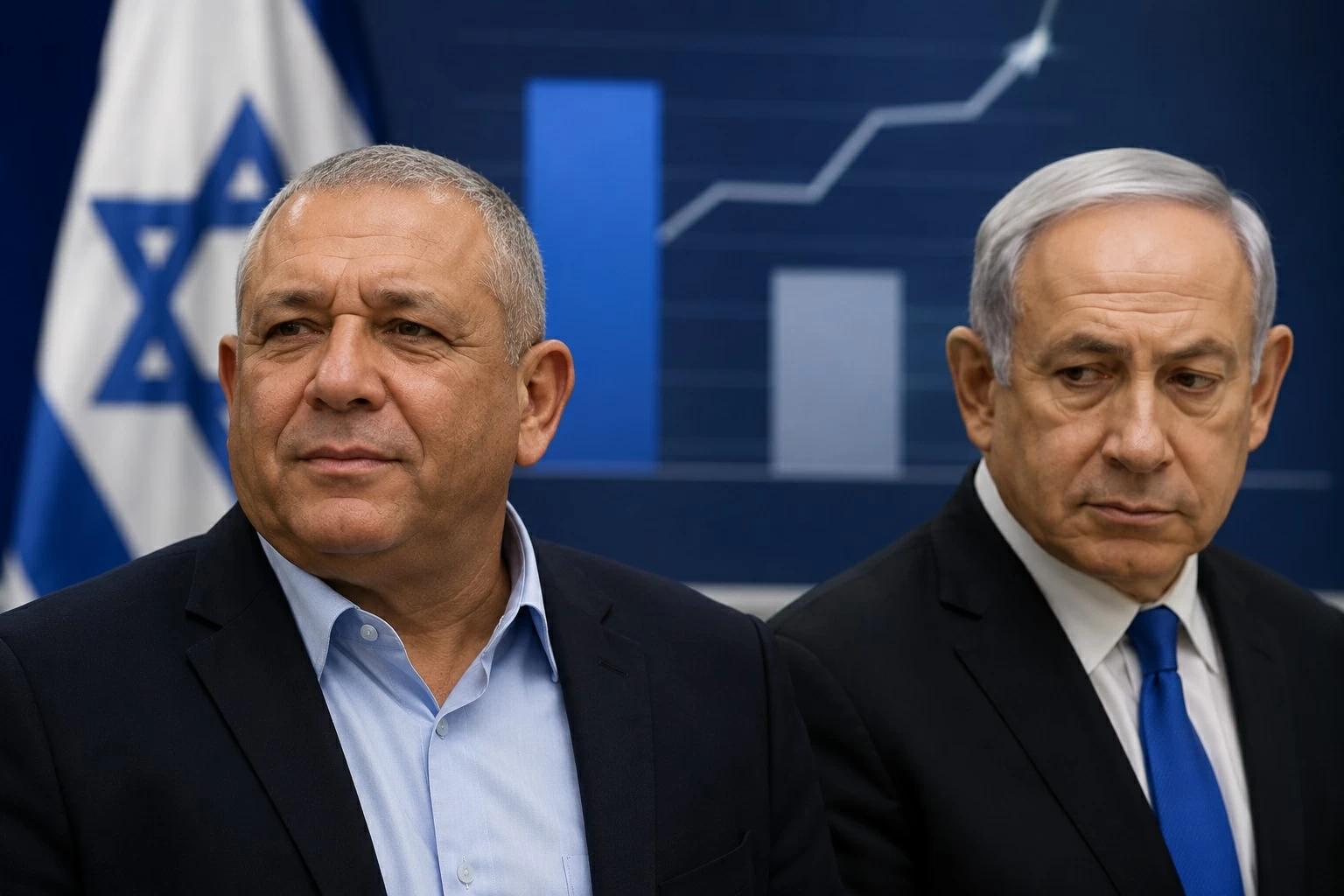
Al Jazeera named Gadi Eisenkot, a former Israeli army chief of staff, as Netanyahu’s main rival and said a Channel 13 poll published on Thursday showed Eisenkot’s Yashar party narrowly ahead of Netanyahu’s Likud.
Al Jazeera also quoted Eisenkot’s resignation from Netanyahu’s war cabinet in June 2024 after he said the government “had completely failed” to achieve any of its objectives in Gaza.

France 24 described the election as “a race widely regarded as a referendum on the leadership of Prime Minister Benjamin Netanyahu since the Gaza war began,” and it said the Knesset announced October 27 as the latest date permitted by law.
France 24 further described Eisenkot as 66, noting he resigned from Netanyahu’s War Cabinet from October 2023 to June 2024 and founded his own party “Yeshar” in 2025, while it also profiled Naftali Bennett and Yair Lapid as prominent potential rivals.
Al-Monitor added that the Israeli opposition has been calling for the government to resign for more than two years over its failure to prevent Hamas’s massacre on October 7, 2023, and it said Netanyahu rejected a call for a national commission of inquiry into security and strategic failures.
What’s at Stake Next
The election date is tied to the Knesset’s schedule, with Al Jazeera saying the Knesset is set to hold the final session of its current term on Friday and that Netanyahu’s far-right coalition government is the first in half a century to complete a full four-year term.
“Upcoming Israeli elections: who is leading in the polls and what is at stake”
Al Jazeera said the government is seeking to pass several laws before parliament enters recess on Friday, including legislation to reform the judiciary and a bill to suspend the detention of ultra-Orthodox Jews who evade mandatory military service.
Al Jazeera also quoted Yossi Mekelberg, a senior consulting fellow at Chatham House, saying October’s election will be the most consequential in Israel’s history and warning that “Every day, the government is introducing legislation that fatally undermines the democratic foundations of the state of Israel.”
Al-Monitor described the Knesset’s Friday deliberations on a bill regulating party financing and said the Knesset approved a proposal to dissolve the 25th Knesset on July 17 and hold new elections three months later, with the measure passing by a majority and needing formal approval by the full Knesset.
In the same election context, Al-Monitor said polls projected that Netanyahu would not be able to form a governing majority, with Channel 13 projecting an opposition coalition of 69 seats versus a coalition of 51, and Kan projecting 68 seats for the opposition versus 52 for the coalition.