Full story
Leipzig Drone Escalation
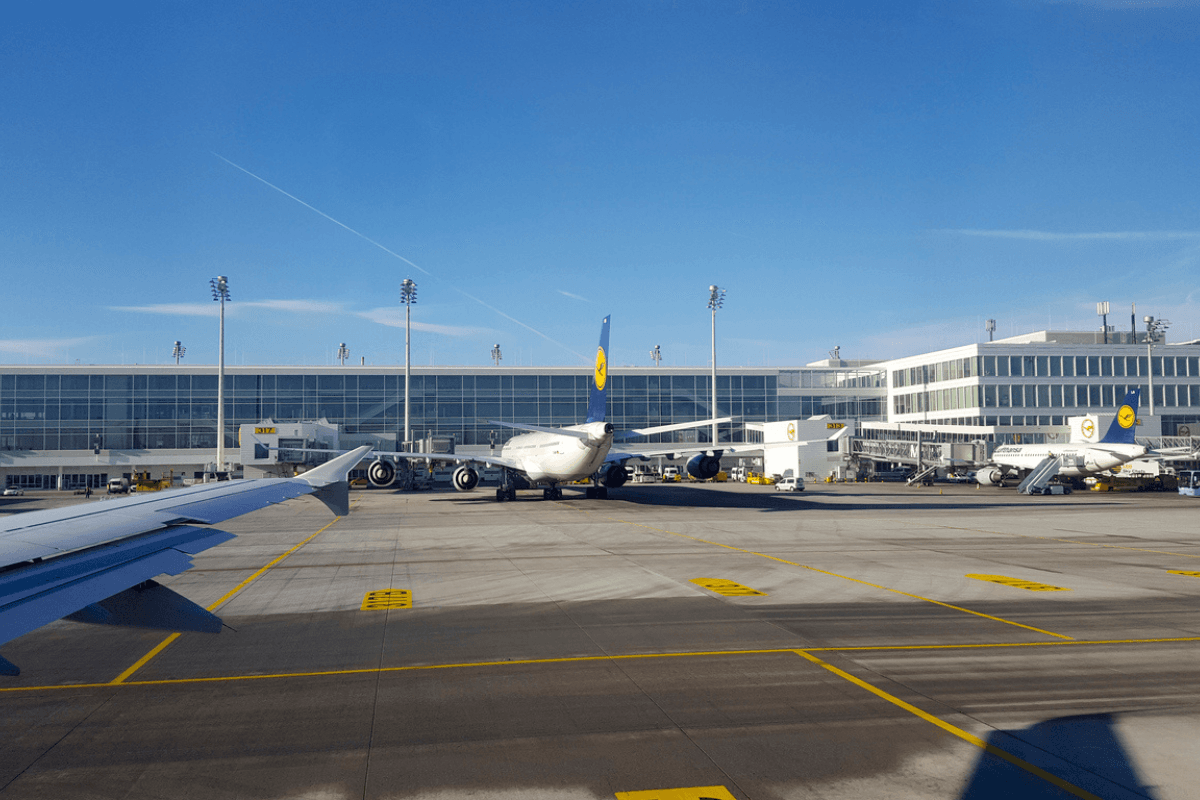
Germany blamed Russia for an attempted drone attack at Leipzig/Halle Airport, where a drone carrying an explosive device was found near Ukrainian cargo planes on 4 August and failed to explode, prompting Germany to announce countermeasures.
“Kallas says incident has 'all the hallmarks of state-sponsored terrorism'”
EU foreign policy chief Kaja Kallas said the incident had “all the hallmarks of state-sponsored terrorism,” and she told reporters that “The question is, what do we do about this?” as EU foreign ministers met in Ireland.

European Commission president Ursula von der Leyen said the attempted Leipzig drone attack “marks a new escalation on EU soil” and warned that it fitted “a broader pattern of increasingly dangerous incidents” involving Russia.
NATO secretary general Mark Rutte said the alliance’s unity was “unshaken” and warned that “Russia has grown increasingly reckless” in recent years, while AP reported the EU was weighing responses “without resorting to military means.”
Summons, Sanctions, Dispute
Kaja Kallas said she summoned Russia’s envoy in Brussels over the alleged attempted hybrid attack at Leipzig/Halle Airport, and Germany’s foreign and interior ministers said Berlin had concluded that Russia was responsible.
French foreign minister Jean-Noël Barrot said he summoned Russia’s charge d’affaires in Paris “to protest,” while AP reported the EU discussed sanctions, visa restrictions and shutting Russian consulates as part of its response.
Russia rejected the allegations, with Vladimir Putin calling Germany’s attribution “a grave mistake” and questioning the evidence, while the Russian foreign ministry said Germany’s actions would be met with “a harsh response.”
In Berlin, Interior Minister Alexander Dobrindt said the means used were “known to us from other hybrid operations by Russia and its war against Ukraine,” and BBC reported he would order the closure of the Russian consulate in Bonn and terminate the contract for the Russian House in Berlin.
What Europe Does Next
The EU response centered on tightening pressure on Russia, with von der Leyen saying the EU “will not just maintain pressure on Russia; we will increase it,” and Reuters reporting the bloc was working on sanctions related to Russia’s military complex and the “shadow fleet” of ships.
“"Europe and NATO will not just maintain our pressure on Russia; we will increase it"”
Reuters also said Germany would close Russia’s consulate general in Bonn and terminate its agreement with the Russian House cultural centre in Berlin, while AP reported the EU was preparing additional travel bans and asset freezes on another 1,600 people.
The dispute over visas and entry controls fed into the wider debate, as Kaja Kallas said “we really need to curb the visas” for Russians and argued that it was “not okay” for Russia to be “bombing Ukraine, killing civilians” while Russians entered and “enjoy[ed] the hospitality of European countries.”
In parallel, European leaders linked the Leipzig case to broader security concerns, with Reuters noting that Rutte said more drones and missiles had crossed into NATO airspace on Europe’s eastern flank and that there was an increase in malign activities including the Leipzig attack.