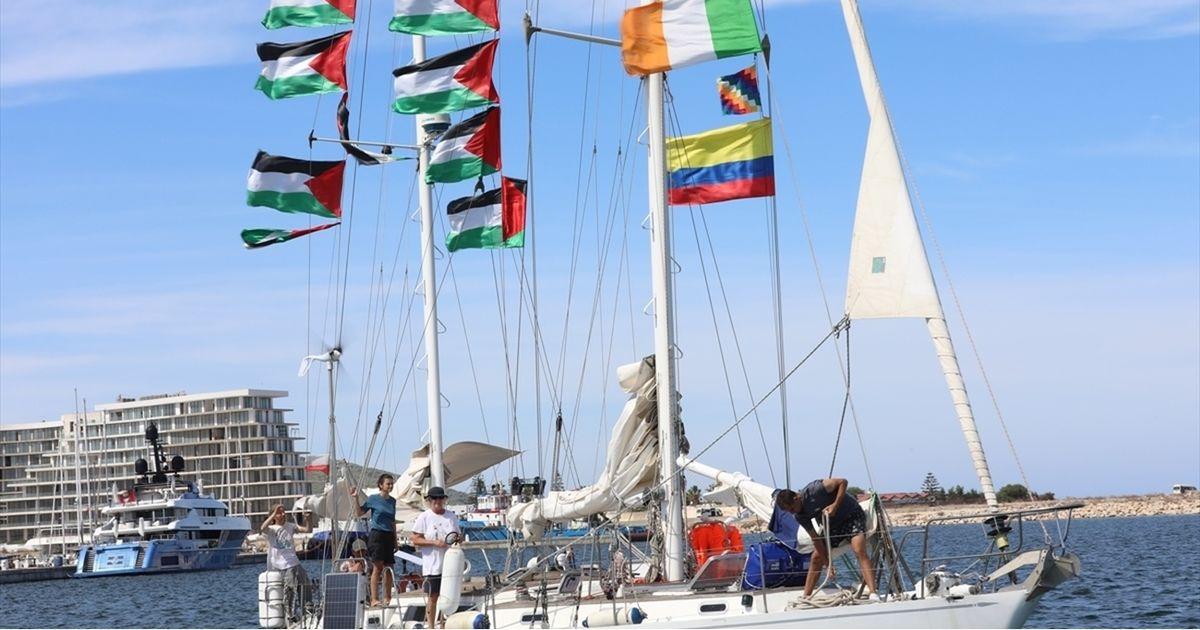
Global Resilience Flotilla Sets Sail From Spain to Break Israel’s Gaza Naval Blockade
Key Takeaways
- Global Sumud flotilla sails from Spain to Gaza to break blockade with humanitarian aid.
- More than 70 boats and about 1,000 participants from around the world.
- Organizers describe mission as peaceful humanitarian effort delivering vital medical supplies.
A flotilla sets sail
A new Gaza-bound flotilla set out from Spain as international activists sought to break Israel’s naval blockade and deliver humanitarian aid.
“International activists are preparing on Sunday to set sail from northeastern Spain to the Gaza Strip in a massive 70-boat flotilla, aiming to break Israel’s devastating naval blockade and deliver much-needed humanitarian aid”
Al Jazeera reported that international activists were preparing on Sunday to set sail from northeastern Spain to the Gaza Strip in a massive 70-boat effort dubbed the “Global Resilience Flotilla,” with “about 1,000 volunteers from 70 countries” taking part.

The vessels were described as departing from the port of Barcelona and carrying “food, medicine, school bags, and stationery for Palestinian children.”
Reuters, via Al-Monitor, said a second flotilla carrying humanitarian aid was due to set sail on Sunday from the Spanish port of Barcelona, with “About 30 boats” planned to leave laden with “medical aid and other supplies” on the Global Sumud Flotilla.
ynetnews similarly described the Global Sumud Flotilla as aiming to break the Israeli blockade, saying organizers planned for “more than 70 boats and 1,000 people” and that “Nearly 40 boats” were leaving Barcelona while the rest would join from other Mediterranean ports.
Zeteo’s dispatch placed the departure in the waters off Barcelona, saying it was “not long after setting sail today aboard the Iqrit, a 50-foot schooner” and that it was sailing with the Global Sumud Flotilla alongside “hundreds of international activists, humanitarian workers, doctors and clinicians, teachers, journalists, and members of Greenpeace and Open Arms.”
The different accounts also placed the timing slightly differently, with ynetnews saying bad weather forced organizers to delay a departure “originally planned for April 12,” while Zeteo and PNN described the mission as setting sail on April 12.
Across the reporting, the stated aim was consistent: to open a maritime route for aid deliveries and challenge the blockade while drawing attention to conditions in Gaza.
Why they say they sail
Organizers and supporters framed the flotilla as a response to what they described as government failure and an ongoing humanitarian crisis in Gaza.
Al Jazeera quoted flotilla spokesperson Pablo Castilla, saying the primary goal was to “condemn international complicity in the genocide committed by Israel in Gaza, demand accountability, and open a humanitarian corridor by sea and land.”

ynetnews carried statements from Saif Abukeshek, a Palestinian activist and member of the flotilla’s global steering committee, who said, “We sail because governments have failed,” and added, “We refuse to be that society.”
Reuters, via Al-Monitor, reported that Liam Cunningham—described as an actor who starred in the Game of Thrones television series—told Reuters, “Every kilogram of aid that is on these ships is a failure because all these people on these ships giving up their time to help their fellow human beings are doing what their governments are legally obliged to do.”
In the same Reuters report, Saif Abukeshak said, “This is a mission that aims to open a humanitarian corridor so the aid delivery organisations can arrive.”
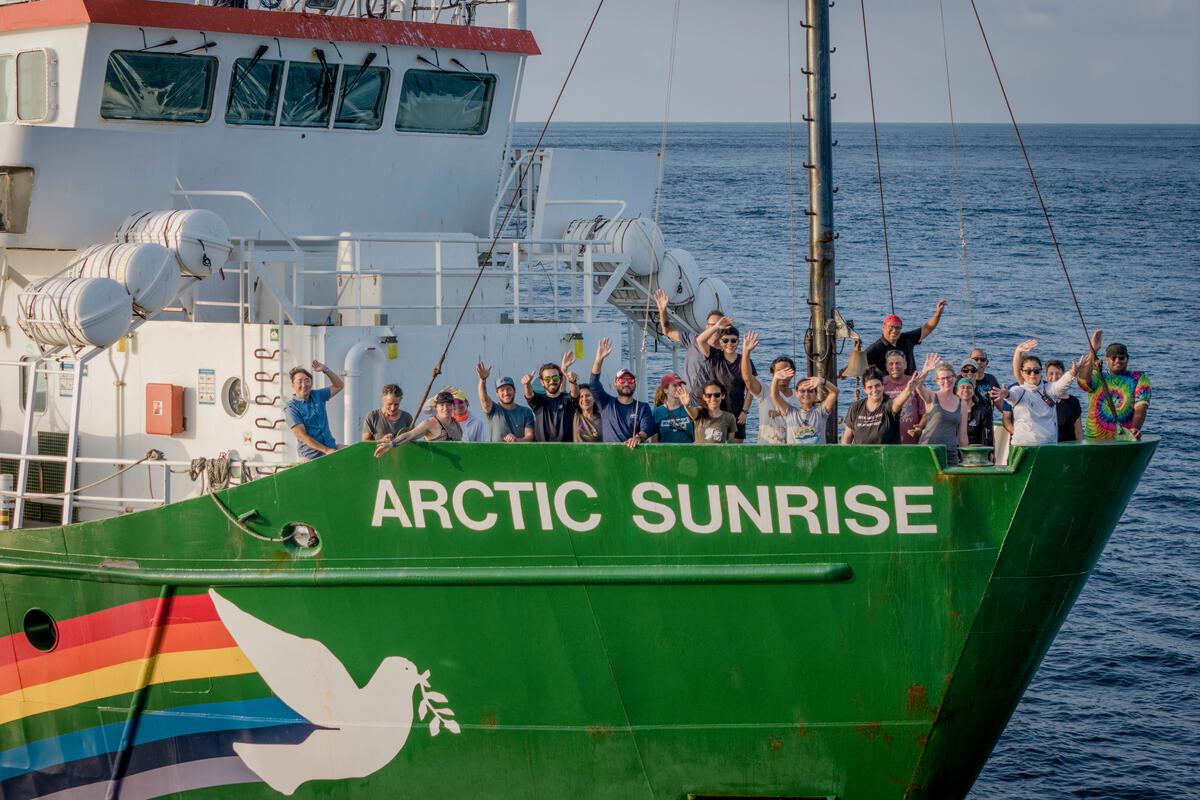
Greenpeace’s update described the mission as “a peaceful civilian mission challenging the blockade on Gaza and demanding safe, unhindered humanitarian access,” and said the ship’s role was “to provide technical and operational maritime support” so vessels could “safely transiting across the Mediterranean before they complete the last 200 nautical miles onto Gaza’s shores.”
PNN described the Arctic Sunrise as joining “more than 70 boats” and said the initiative was “peaceful and humanitarian,” with organizers saying it represented “a form of civilian action driven by the belief that public mobilisation is necessary when governments fail to uphold international law and protect civilian lives.”
Zeteo’s dispatch similarly described the mission as “a maritime direct action organization committed to breaking Israel’s siege and blockade by sea and by land,” and said the goal was “technically a relatively simple one: sail some boats – carrying food, medical supplies, baby formula, and other aid – from any available port in the Mediterranean to the shores of Gaza in Palestine.”
The crisis they cite
The flotilla’s backers anchored their case in the scale of casualties, displacement, and restrictions on aid described in the reporting.
“On 12 April 2026, the Global Sumud Flotilla will once again set sail in a coordinated civilian initiative aim at breaking Israel’s unlawful blockade on the occupied Gaza Strip”
Greenpeace’s update said that between “7 October 2023 and 14 January 2026, 71,439 Palestinians were killed in Gaza and 171,324 injured,” citing “Gaza health ministry figures reported by the United Nations Office for the Coordination of Humanitarian Affairs (OCHA).”
It added that “As of mid-February 2026, around 1.4 million of Gaza’s 2.1 million people were displaced,” with many living in “roughly 1,000 makeshift sites,” and it described severe restrictions on fuel and medical supplies.
PNN likewise cited OCHA-reported figures, saying that between “October 7, 2023, and January 14, 2026” there were “71,439 Palestinians were killed and 171,324 injured,” and it stated that by “mid-February 2026, around 1.4 million people — out of a population of 2.1 million — had been displaced.”
Amnesty International’s statement described the blockade as “now approaching its 19th year” and said the mission would deliver assistance to Palestinians enduring “Israel’s ongoing genocide and decades of cruel apartheid,” while also asserting that “Israeli authorities must ensure safe passage for these unarmed activists and human rights defenders.”
Amnesty also said that “over 60% of children under two years are experiencing food poverty” and that “thousands of pregnant and breastfeeding women continue to suffer from malnutrition,” according to the UN.
Greenpeace’s update further emphasized the targeting of those trying to save lives and document events, saying Amnesty International reported “at least 408 aid workers had been killed in Gaza since 7 October 2023,” including “at least 280 UNRWA staff and 34 Palestine Red Crescent Society staff.”
It also described press freedom groups’ assessments, saying the conflict was “the deadliest conflict for journalists since CPJ began recording such data in 1992,” and it referenced “a June 2025 public appeal said nearly 200 journalists had been killed by the Israeli military over 20 months.”
Past flotillas and the risk
Reporting across outlets tied the 2026 flotilla to a longer pattern of interception and detention in international waters, and it described how earlier missions ended.
Al Jazeera said that “Since 2010, all flotillas attempting to break the Gaza blockade have been intercepted or attacked by Israel in international waters,” and it detailed earlier cases including the 2010 raid on the aid ship the Mavi Marmara, where “The assault killed 10 activists and injured dozens,” and it noted that Israel later apologized in 2013 for “operational mistakes.”
It also described the 2015 Freedom Flotilla III, saying that on “June 29, 2015,” Israeli naval forces intercepted the Marianne about “100 nautical miles (185km) off the Gaza coast,” boarded it, and diverted it to Ashdod, with activists detained and later deported.
Greenpeace’s update referenced the September 2025 Sumud Flotilla, saying it sailed with “42 boats and 462 people” before Israeli forces intercepted and forcibly boarded the vessels “about 70 nautical miles off the Gaza coast,” cutting communications and jamming signals.
PNN similarly said that in September 2025 “a flotilla of 42 boats carrying 462 participants was intercepted by Israeli forces about 70 nautical miles off Gaza’s coast,” and it said communications were disrupted.
Amnesty International warned that there must be “no repeat of Israel’s unlawful interceptions and arbitrary detentions that occurred in 2025,” including “the seizure of the Madleen and other vessels participating in the Global Sumud Flotilla,” and it said there should be no repeat of “the abuse and ill-treatment inflicted on activists during their detention last October.”
Al-Monitor’s Reuters report described last October’s halt of “the roughly 40 boats assembled by the same organisation,” and it said Israeli authorities arrested “Swedish activist Greta Thunberg and more than 450 other participants,” with the report stating that activists alleged inhumane conditions and that an Israeli foreign ministry spokesperson rejected the allegation.
ynetnews added that last fall’s flotilla included Swedish climate activist Greta Thunberg and said those sailing were “arrested, imprisoned and deported by Israel,” with organizers saying Israeli authorities abused them while in detention.
International responses and next steps
As the flotilla prepares to move across the Mediterranean, multiple institutions and organizations are publicly positioning themselves around safety, access, and legal obligations.
“Gift this articleShare to FacebookPrint article Article printing is available to subscribers only Print in a simple, ad-free format Subscribe Comments: SaveZen Reading Zen reading is available to subscribers only Ad-free and in a comfortable reading format Subscribe”
Amnesty International said “States must ensure safe passage for Global Sumud Flotilla challenging ongoing genocide in Gaza,” and it quoted Erika Guevara-Rosas saying, “Israeli authorities must ensure safe passage for these unarmed activists and human rights defenders.”

The same Amnesty statement said there must be “no repeat of Israel’s unlawful interceptions and arbitrary detentions that occurred in 2025,” and it added that “States must also ensure the protection of those taking action to stop Israel’s impunity for its violations of Palestinians’ rights in Gaza.”
The EU-related reporting in عربي21 described a European Commission spokeswoman, Eva Hernsirova, saying the EU “repeatedly reiterate[s] our call for unrestricted access to Gaza so that we can deliver our humanitarian aid,” while also emphasizing that the EU “do[es] not support such methods (sending a humanitarian flotilla with volunteers) in delivering aid, as they put the safety of participants at risk.”
Greenpeace’s update described operational work underway, saying the Arctic Sunrise was performing “complex engine and gearbox overhauls, restoring electrical systems, delivering food supplies and transferring doctors between vessels,” and it said the crew was “working around the clock to keep the flotilla moving.”
It also described the fleet’s scale as “more than 50 ships,” calling it “the largest flotilla ever assembled,” and said “More ships are expected to join later.”
Zeteo’s dispatch framed the mission as preparing for “eight months” and said the flotilla had been “preparing for eight months to sail this spring,” while also describing the editor’s note that Zeteo was “aboard the Global Sumud Flotilla.”
PNN said the Arctic Sunrise was expected to “provide technical and operational maritime support” and help escort vessels “across the Mediterranean before they approach Gaza’s coast,” and it described the initiative as urging supporters worldwide to “follow updates and amplify verified information.”
More on Gaza Genocide
Palestinians Vote In Deir Al-Balah And West Bank Municipal Elections After Hamas Exclusion
20 sources compared

Bennett and Lapid Announce Alliance to Oust Netanyahu in Israel’s Knesset Elections
68 sources compared
Israeli Attacks Kill At Least Four Palestinians in Gaza Despite Ceasefire
22 sources compared

Israel Prevents Essential Materials as Aid Trucks to Gaza Fall After Iran War
11 sources compared