USA28 July, 20262 min read
Hadi Matar Declines To Testify In Salman Rushdie Federal Terrorism Trial In Buffalo
This article is an automated aggregation of coverage from news outlets. Our editorials offer in-depth analysis curated by the NewsCord team.
Hadi Matar declined to testify or call witnesses in his federal terrorism trial. His attorney said the 28-year-old would not take the stand.
Defense rests in Buffalo
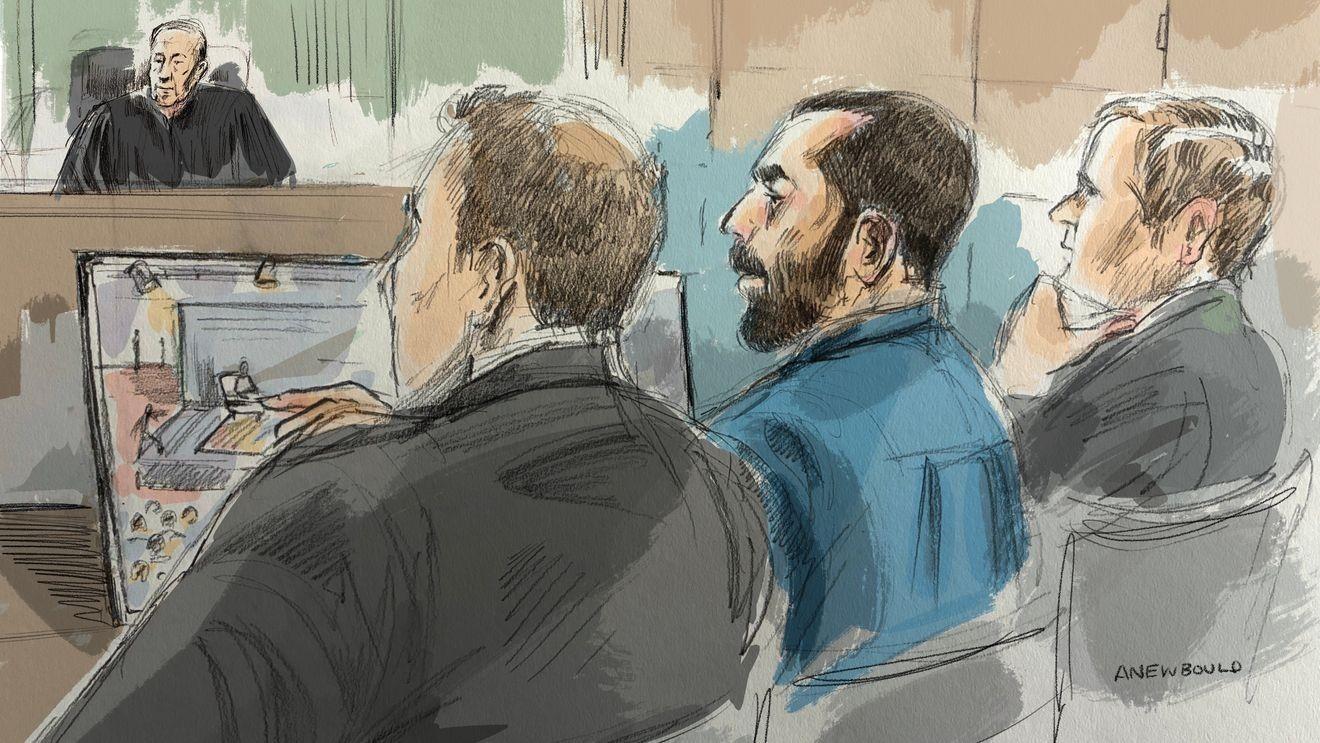
Hadi Matar, the man accused of stabbing author Salman Rushdie, declined to testify and did not call any witnesses in his federal terrorism trial in Buffalo, New York, with the case expected to go to the jury as early as Wednesday. Matar’s lawyer Nathaniel Barone told the court, “At this time, the defense rests,” after prosecutors also finished presenting their case on Tuesday. The trial centers on a 2022 attack at the Chautauqua Institution, where Rushdie testified last week about an assault that prosecutors said involved Matar stabbing him 15 times.
“‘At this time, the defense rests,’ Barone told the court.”
Rushdie, who is described in the reports as a U.S. citizen, testified that the attack nearly cost him his life and left him blind in one eye. The Los Angeles Times and United News of Bangladesh both reported that closing arguments were expected to begin Wednesday morning.

Motives and alleged links
Prosecutors allege that Matar acted in response to a 1989 death order, or fatwa, issued by Iran’s then-Supreme Leader Ayatollah Ruhollah Khomeini against Rushdie following the publication of The Satanic Verses.
The reports say Rushdie had spent years in hiding after the fatwa was issued and gradually returned to public life after Iran’s government distanced itself from Khomeini’s order in 1998.
U.S. prosecutors also claim Matar, described as a US-born citizen of Lebanese descent, acted in support of Iran and the Lebanon-based Hezbollah militant group, which the U.S. government designates as a foreign terrorist organization.
Assistant U.S. Attorney Timothy Lynch said Matar described Hezbollah as a terrorist organization in a 2016 paper, as the jurors were outside the courtroom.
In the same legal framing, the Los Angeles Times reported that the late Hezbollah leader Hassan Nasrallah said in 2006 that if the fatwa had been carried out, European newspapers would not have dared to publish a cartoon of Muhammad.
What’s at stake next
The defense position, as described by the reports, is that prosecutors have failed to prove Matar’s motives, with Barone arguing there was no direct evidence showing his intentions. In a post-trial interview outside the courtroom last week, Barone said, “There are no facts or hard evidence,” and the Los Angeles Times reported he noted there could be several reasonable explanations for what Matar was thinking. The judge rejected Barone’s motion to dismiss the case, and Matar is currently serving a state sentence of 25 years in prison.
“If convicted in the federal terrorism case, Matar could face a maximum sentence of life in prison.”
If convicted in the federal case, the reports say Matar could face a possible life sentence, with the jury expected to be seated soon. The United News of Bangladesh report also said Matar has pleaded not guilty and that closing arguments are scheduled for Wednesday morning, placing the next phase of the trial immediately after the defense rests.