Full story
Disarmament, withdrawal, and delay
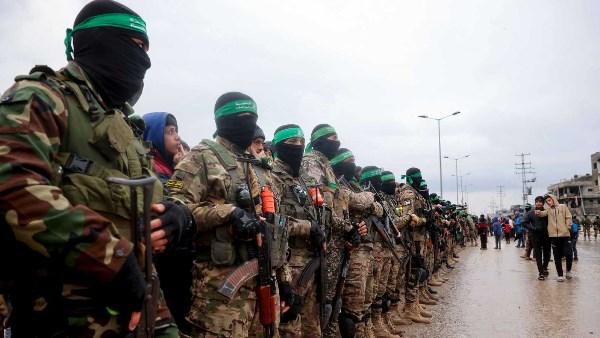
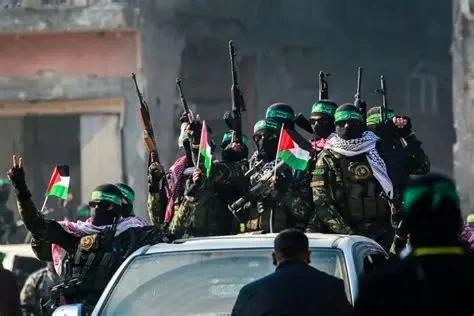
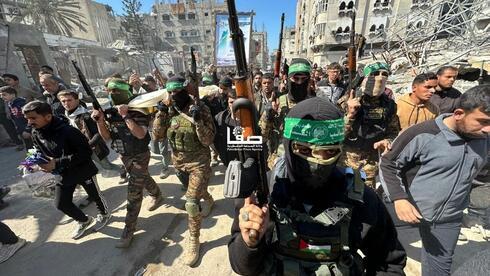
Hamas said Friday it will begin disarming as part of a deal announced by U.S. President Donald Trump that also requires Israel to end its strikes and withdraw from Gaza, but NBC News reported that implementation faces major challenges.
“Hamas said Friday that it will begin disarming”
The BBC said a key step in the 20-point Gaza peace plan appears to have been reached after Hamas agreed to lay down its heavy weapons on condition that Israeli forces fully withdraw from the Gaza territory, while a senior Israeli official said today "there will be no IDF withdrawal from the current Yellow Line without the genuine disarmament of Hamas".

NBC News reported that Hamas said laying down its heavy weapons would come later and be contingent on the creation of a Palestinian state, which Israel’s current government rejects, and it said Israel has not officially commented on the deal.
The NBC News report also said the agreement is part of a U.S.-brokered ceasefire announced last October that called for Hamas to disarm and hand over power to an independent Palestinian administration, with Israel to withdraw and an International Stabilization Force to deploy, but progress stalled.
In the same NBC News account, the deal’s guarantors were listed as the U.S., Turkey, Egypt and Qatar, and it said a process to decommission and store heavy weapons, military production sites and tunnels would begin after the arrival of the Palestinian committee and the deployment of international forces.
Competing voices and skepticism
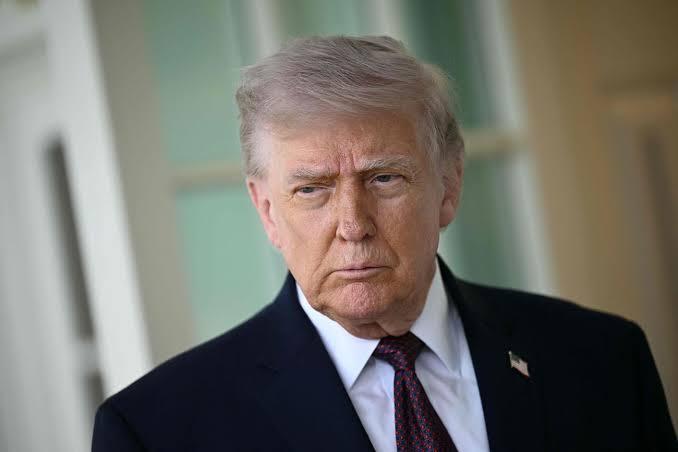
At Camp David, the BBC reported that U.S. President Donald Trump appeared optimistic, describing the agreement as "a big step for the Middle East" while acknowledging the "very complex situation" at play.
NBC News quoted Neil Quilliam, a Middle East expert at London’s Chatham House think tank, saying, "I think that Netanyahu’s silence speaks volumes," and it added that Quilliam said expectations are low that Hamas will actually disarm or that Israel will withdraw from Gaza.
The BBC also framed the remaining questions around implementation, including who would take possession of the weapons and the sequence of disarmament and withdrawal.
DW reported that Israel’s National Security Minister Itamar Ben Gvir said the plan to disarm Hamas is "not acceptable" to Israel and that committing to stop "the eliminations" of Hamas members would be "tantamount to consenting for Hamas to regroup toward the next massacre" akin to the October 7 terror attacks.
In a separate thread of skepticism, ABC News & Headlines quoted University of Sydney Middle East politics analyst Martin Kear saying he would "find it difficult to believe that Hamas has agreed to completely disarm" and that complete disarmament has always been contingent on Israel ceasing the occupation of the West Bank, Gaza Strip and East Jerusalem.
What’s at stake next
NBC News said the agreement would be implemented in stages, with Trump writing that "As disarmament is completed, Israeli forces will withdraw, and the International Stabilization Force will work with a new Palestinian police force" to take responsibility for Gaza being safe for residents and neighbors.
“As disarmament is completed, Israeli forces will withdraw”
It also reported that the agreement obtained and verified by The Associated Press said all weapons held by the Hamas-run police would be transferred to the U.S.-backed Palestinian technocratic committee known as the National Committee for the Administration of Gaza upon its arrival in the enclave.
The Boston Herald, citing AP, described the disarmament agreement as a major test for the Board of Peace established by Trump to oversee the ceasefire in Gaza, and it said the agreement announced by Trump late Thursday could pave the way for ending the latest Israel-Hamas war that broke out on Oct. 7, 2023.
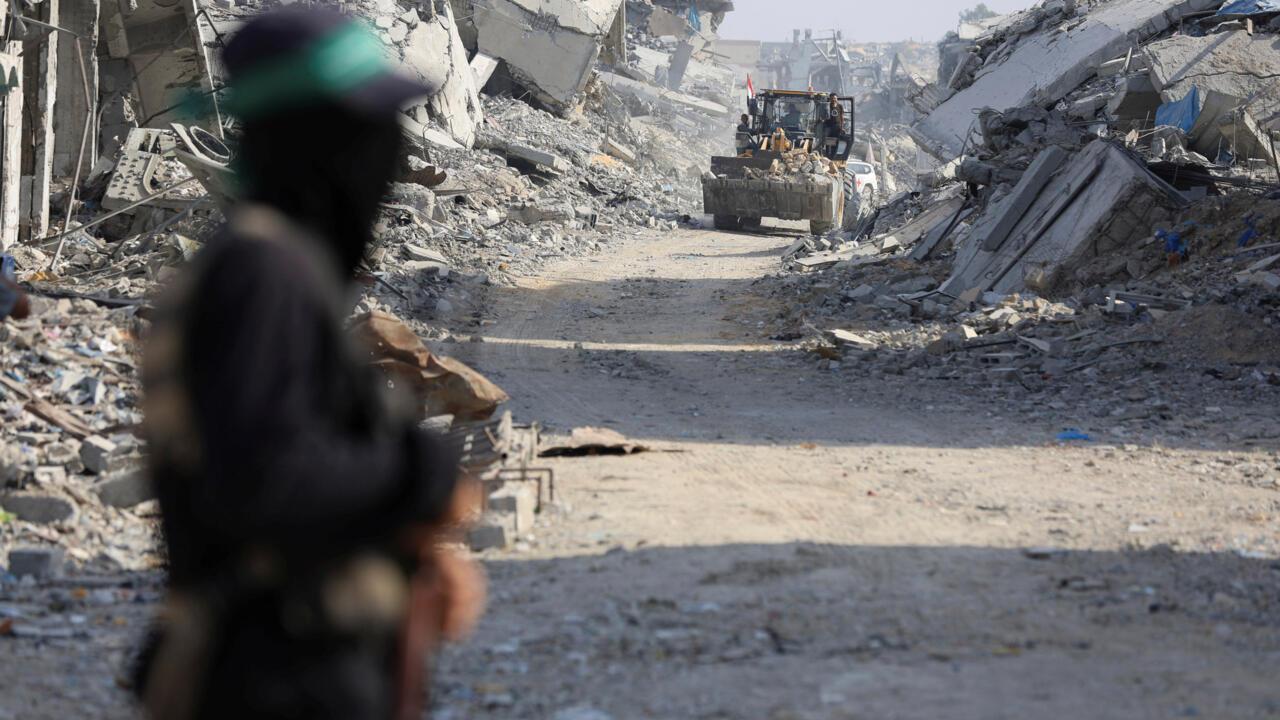
The Boston Herald reported that the United Nations, World Bank and European Union estimate reconstruction will cost $70 billion, and it said the Board of Peace’s role includes overseeing the deal’s implementation and the transition to a civilian body to run the war-ravaged region.
In the same Boston Herald account, Nickolay Mladenov said in comments posted on X that "Implementation and verification have to be real" and that "withdrawal must move in lockstep with decommissioning," while it said the NCAS said it is ready to assume responsibility for governing Gaza and restoring public services and the rule of law.