Full story
Deal announced, conditions clash
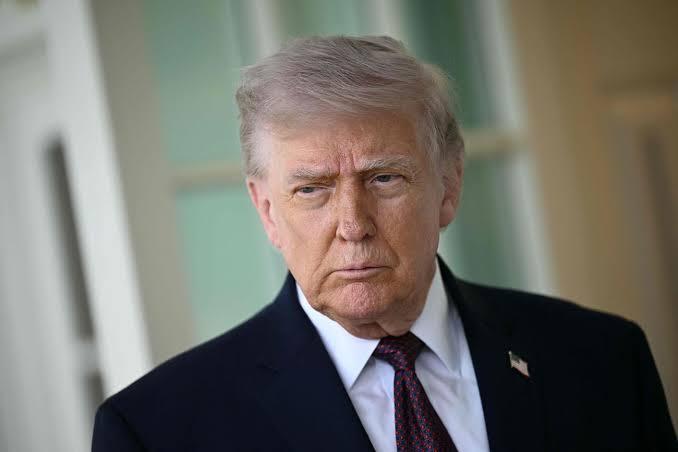
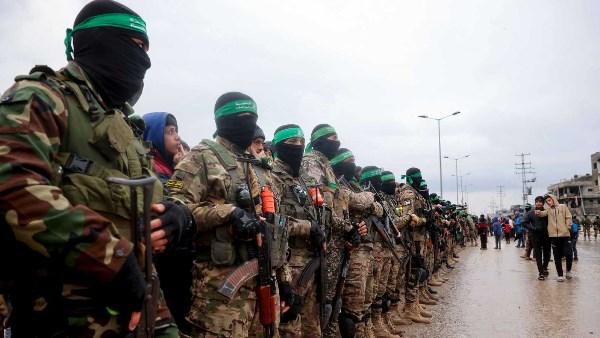
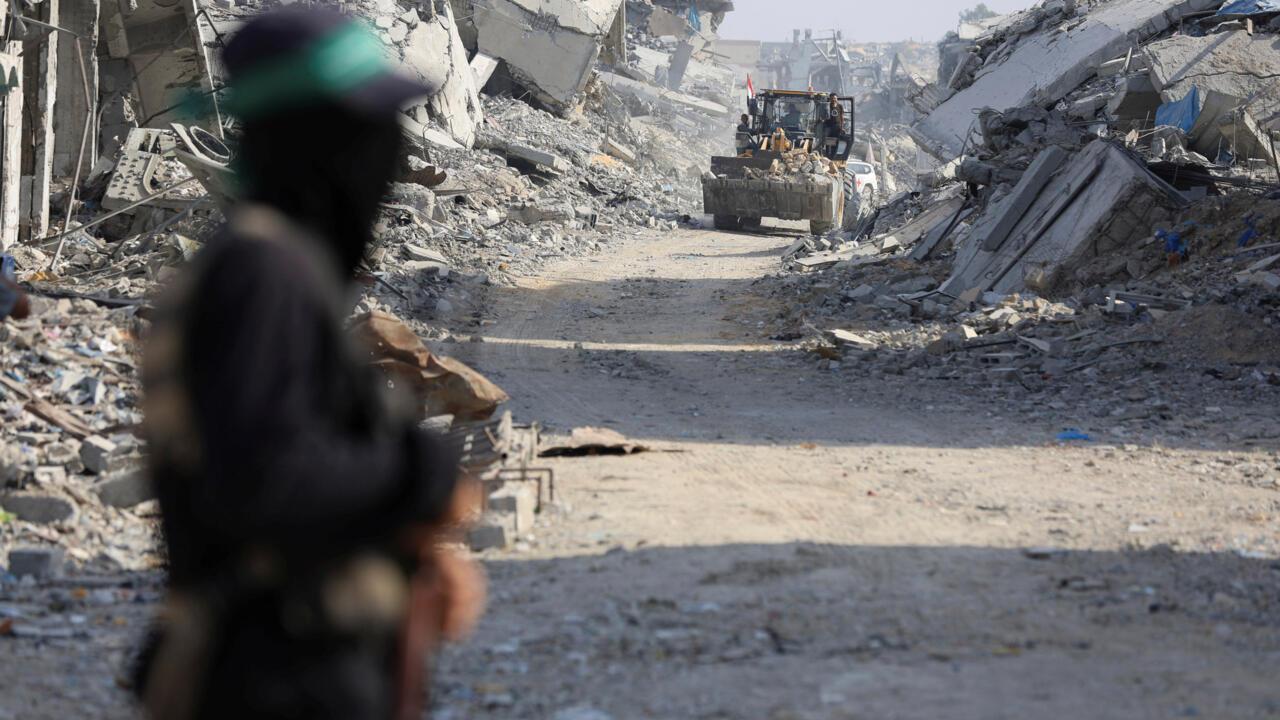
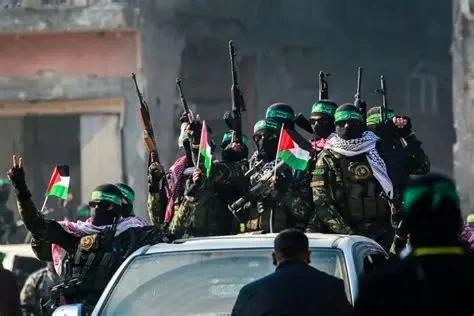
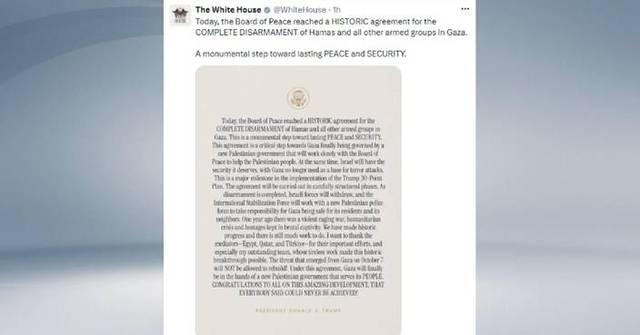
Hamas said Friday it will begin disarming as part of a deal announced by U.S. President Donald Trump that also requires Israel to end its strikes and withdraw from Gaza, but implementation faces major challenges.
“it will begin disarming as part of a deal announced by U.S. President Donald Trump”
The NBC News report said the process would be carried out in “carefully structured phases,” with Israeli forces withdrawing as disarmament is completed and an International Stabilization Force working with a new Palestinian police force.

NBC News also said Hamas tied laying down its heavy weapons to the creation of a Palestinian state, which Israel’s current government rejects, while Israel’s position was that everything hinges on Hamas disarming.
The Associated Press text published by AP News set out that progression from one phase to the following one would be contingent on verified completion of the commitments of the previous phase, with verification by an International Verification Committee established by the Board of Peace.
In the same AP News deal text, the roadmap also described that the timetable and implementation mechanisms of “Implementation of Phase 2” would be prepared within 14 days after all parties approve the Roadmap, and could be extended by a decision by the International Verification Committee.
Israel objects, Hamas demands
While Trump claimed progress, Israel’s position was described in The Times of Israel as rejecting the proposal and refusing withdrawals unless Hamas meets conditions including “the full disarmament of Hamas, including removal of the weaponry from Gaza and the complete demilitarization of the Strip.”
The Times of Israel also reported that a senior Israeli official said Israel would not pull back its troops and reiterated that there will be no IDF withdrawal from the current Yellow Line without “the genuine disarmament of Hamas.”

Hamas, in turn, told CNBC that it would not disarm until Israel ended its attacks in Gaza, increased the flow of goods and aid, and pulled back its forces, per a ceasefire agreement reached last year.
CNBC also quoted Hamas official Ghazi Hamad saying, “We insisted to the mediators that Israel must abide by the agreement,” linking disarmament to Israel’s commitments.
In NPR’s account, a senior Hamas official told NPR on Friday that Israel must withdraw from parts of Gaza first, including withdrawal, as part of the first phase of the ceasefire agreement.
What’s at stake next
The AP News deal text laid out that the National Committee for the Administration of Gaza (NCAG) would enter the Strip and start to assume its responsibilities after the timetable and implementation mechanisms were prepared and the International Verification Committee certified both parties fulfilled their commitments.
“up to a total amount of no more than $400M USD”
It also specified that NCAG would carry out a comprehensive audit of the financial and administrative affairs in Gaza with international support and assess legitimate commitments to suppliers and contractors “up to a total amount of no more than $400M USD.”
NPR reported that Board of Peace officials said a transitional authority would “hold a full monopoly on weapons in the Gaza Strip” and that “hopefully all the tunnels will be disclosed and destroyed,” tying security changes to the disarmament sequence.
CNN’s live updates described the stakes as uncertain even as Hamas agreed to a specific plan for weapon handover, with a senior Hamas official telling CNN that the group will only disarm if Israel upholds its end of the ceasefire agreement.
CNN also placed the Gaza effort alongside a wider regional conflict, noting that the United States was planning a wave of new strikes on Iran as soon as this weekend, with Trump signaling the US would be “hitting them very hard.”