Technology and Science21 March, 20263 min read
Hawaii Officials Warn Oahu Dam Could Fail, Evacuations Ordered
This article is an automated aggregation of coverage from news outlets. Our editorials offer in-depth analysis curated by the NewsCord team.
Thousands ordered to evacuate on Oahu amid imminent dam failure risk. The dam is about 120 years old and could fail, triggering catastrophic flooding.
Dam Threat Emerges
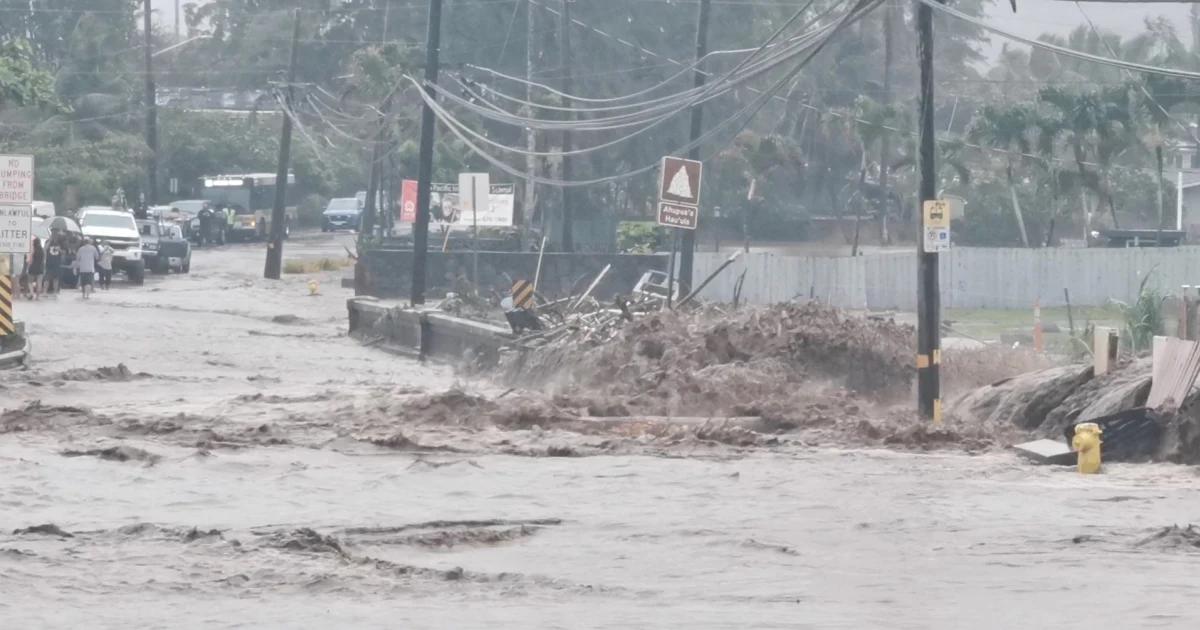
Severe flash floods have struck Hawaii's island of Oahu, forcing thousands of residents to evacuate as officials warn of a potential dam failure that could worsen the crisis. The emergency unfolded as relentless storms triggered rapidly rising waters that submerged roads, homes, and vehicles within hours. Honolulu officials issued urgent evacuation orders, particularly around Wahiawā, where a 120-year-old dam has been flagged as being at risk of imminent failure.
“Severe flash floods have forced thousands of residents to evacuate parts of Hawaii, as authorities warn of a potential dam failure that could worsen the crisis. The emergency unfolded on the island of Oahu, where relentless storms triggered rapidly rising submerging roads, homes, and vehicles within hours.”
Authorities warned that the structure 'may fail at any time,' raising fears of sudden and catastrophic flooding in nearby communities. Emergency teams have been deployed, and residents have been urged to leave immediately or risk becoming trapped by the fast-moving floodwaters.
Emergency Response
Emergency management officials are coordinating extensive response efforts as the situation remains critical.
The Hawaii National Guard has been activated to assist in relief operations, with Gov. Josh Green describing the storm as 'very severe, particularly on the northern part of Oahu' and warning that it would be 'a very touch-and-go-day.'

Emergency sirens blared along Oahu's North Shore, where rising waters damaged homes in a community world-renowned for its surfing.
Honolulu Mayor Rick Blangiardi reported that dozens—if not hundreds—of homes had been damaged, stating that 'there's no question that the damage done thus far has been catastrophic.'
Crews searched by air and water for stranded residents, though efforts were hampered by people flying personal drones to capture images of the flooding.
Weather Patterns
The extreme weather event stems from meteorological patterns connected to larger climate systems.
“According to senior digital meteorologist Jonathan Belles, 'This flooding in some ways is connected to the heat dome entrenched into the Lower 48. We often talk when one area of the country is seeing heat, another is seeing cooler, wetter weather.'”
According to senior digital meteorologist Jonathan Belles, 'This flooding in some ways is connected to the heat dome entrenched into the Lower 48. We often talk when one area of the country is seeing heat, another is seeing cooler, wetter weather.'
The weather pattern has brought a 'Kona Low'—a slow-moving low-pressure system that pulls warm and wet air across the islands, resulting in some areas receiving more than 10 inches of rain and winds reaching 100 miles per hour in some locations.
Meteorologists are providing regular forecasts to emergency planners to help anticipate changing conditions that could affect both the dam's stability and evacuation efforts, with additional rainfall potentially accelerating the dam's deterioration.
Evacuation Scale
The scale of the evacuation and potential damage assessment reveals the severity of the crisis. Authorities have ordered immediate evacuations for 5,500 people living downstream from the dam, treating the situation as an emergency requiring evacuation now rather than waiting for more definitive assessments.
The National Guard airlifted about 70 children and adults who had been attending a spring break youth camp at a retreat on Oahu's west coast called Our Lady of Kea'au, as authorities didn't want to leave them stranded despite the camp being on high ground. The combination of intense rainfall and already saturated ground conditions has made it difficult to control water flow, with floodwaters rising rapidly in low-lying regions and cutting off access routes to isolate neighborhoods.
Recovery Planning
Long-term recovery planning is already underway as authorities brace for extended emergency operations. Emergency shelters have been established outside the flood zone, with humanitarian organizations coordinating additional support services for evacuees. Insurance companies have been notified and are preparing to deploy claims adjusters to the area once it's safe to return.
“Emergency management officials are coordinating with state and federal agencies to ensure all necessary resources are available. This includes engineering expertise to assess repair possibilities, additional emergency personnel, and long-term housing solutions if the evacuation extends beyond a few days.”
Community leaders are discussing long-term recovery plans, including how to support residents who may have lost homes or businesses if flooding occurs. The duration of the evacuation depends on structural assessments and potential repair work, which could range from days to weeks depending on the dam's condition. Once the immediate danger has passed, comprehensive structural assessments will determine whether the dam can be repaired or if it requires complete replacement—a process that could take weeks or months depending on the extent of the damage.
