Technology and Scienceupdated 49m ago2 min read
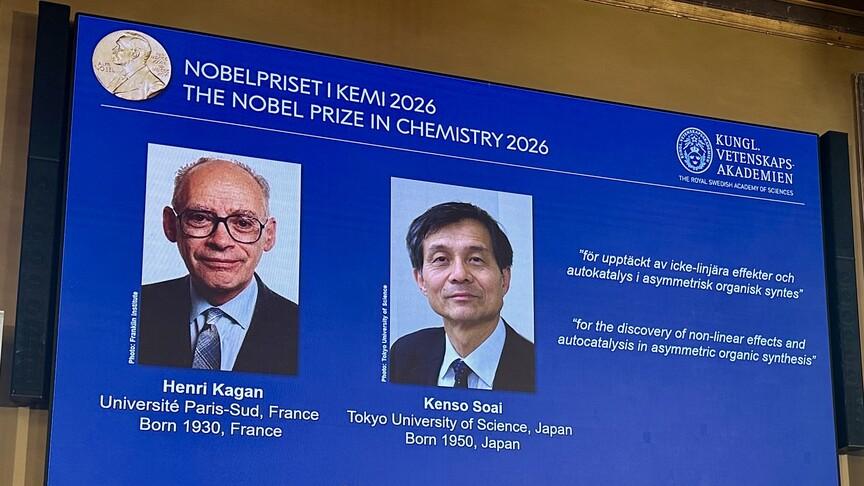
Royal Swedish Academy Awards 2026 Nobel Prize in Chemistry to Henri Kagan and Kenso Soai
Kagan and Soai won 2026 Nobel Prize in Chemistry for nonlinear effects in asymmetric synthesis. Their work on autocatalysis explains how life’s handedness emerges and aids drug manufacturing.
36 outlets told this the same way.
Nobel for molecular handedness
The Royal Swedish Academy of Sciences awarded the 2026 Nobel Prize in Chemistry to Henri Kagan and Kenso Soai for “the discovery of non-linear effects and autocatalysis in asymmetric organic synthesis.” Heiner Linke, chair of the Nobel Committee for Chemistry, said the laureates “have provided a solution to a chemical mystery that is over a century old: how homochirality can emerge spontaneously.” The Academy of Sciences described the prize as recognizing work on nonlinear effects and autocatalysis in asymmetric organic synthesis, and it said the research is important in the chemistry of life and for the manufacturing of medicines.
The Nobel Prize in Chemistry will be presented to the laureates in Stockholm on December 10, 2026, the day of Alfred Nobel’s birthday celebration, according to the Academy of Sciences. The prize announcement also framed the discovery as a way to explain how chemistry can favor one molecular “hand” over its mirror image, with the Academy of Sciences and the Nobel Committee linking the work to homochirality.
Kagan and Soai’s methods
Henri Kagan, described as an emeritus professor at Université Paris-Sud Orsay and a member of the Academy of Sciences, was recognized for discoveries in asymmetric catalysis that favor one molecular mirror image over another. Anadolu Ajansı said Kagan’s Nobel-recognized breakthrough came in 1986, when he demonstrated a nonlinear effect in which even a modest imbalance in the catalyst could produce a substantially greater excess of one mirror-image product. Kenso Soai, born in Hiroshima in 1950 and later associated with the Tokyo University of Science, pursued asymmetric autocatalysis, a process in which a chiral product catalyzes the production of more of itself.
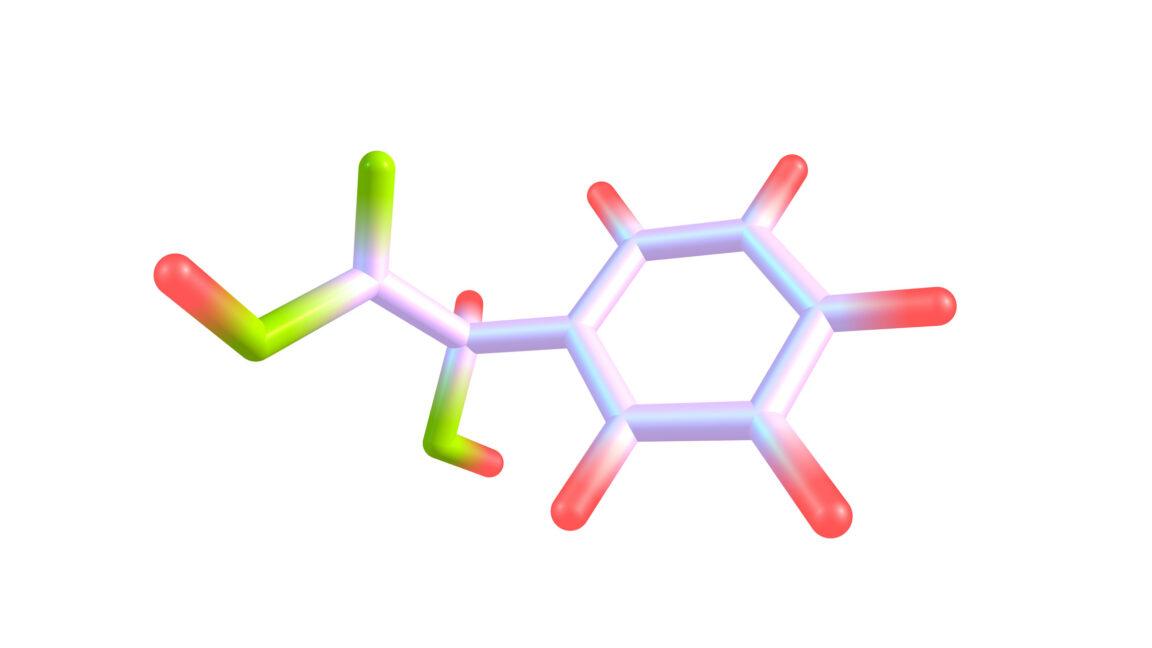
Anadolu Ajansı said Soai published the first reaction with the potential to become homochiral in 1995, and it said that by 2003 he demonstrated a reaction beginning with non-chiral materials that produced only one of two possible mirror-image molecules. The BBC connected the prize to chirality and said chemical reactions in a lab usually create a 50-50 mix of both left- and right-handed molecules, while living organisms function with only one.
Why it matters for life
The BBC said the Nobel laureates answered why life favors just one of the mirror-image molecules over the other, explaining that amino acid molecules exist as two mirror-image forms but living organisms only function with one of those forms. Heiner Linke told the BBC that “The chemical reactions they have developed are spectacular,” and he tied the work to how homochirality can emerge spontaneously. The BBC also highlighted drug safety stakes by describing the Thalidomide example, where the right-handed version was an effective treatment but the left-hand was toxic, and it said the original drug was a mixture of the two.
“The chemical reactions they have developed are spectacular.”
The BBC said the Nobel-winning chemistry worked out how to design chemical reactions to produce much more of the desired version of a molecule, rather than its mirror image. The Academy of Sciences said the prize is important in the chemistry of life and for the manufacturing of medicines, linking the molecular mechanism to practical outcomes for pharmaceuticals.