Full story
Ceasefire, Lebanon, and Iran
The war in Gaza is framed in the sources through a wider U.S.–Iran diplomatic track that has been disrupted by renewed fighting in Lebanon between Israel and Hezbollah, with the talks in Switzerland postponed after escalation.
“Is the war in the Middle East profitable for Trump”
Salon says Iranian officials declined to proceed with scheduled talks in Switzerland, saying the escalation in Lebanon made continued negotiations untenable unless hostilities stopped, and it adds that Vice President JD Vance postponed his trip amid the deteriorating security situation.
El Mundo reports that the death of four Israeli soldiers, including an officer of the 52nd Battalion, in a Hezbollah attack in southern Lebanon late Thursday night triggered Israel’s response with waves of bombardments against targets of the pro-Iranian militia, causing at least 47 dead in Lebanon.
El Mundo also says early Friday afternoon U.S. sources told several media outlets that a new ceasefire had gone into effect, while Hezbollah’s Ibrahim al-Moussawi told Al-Araby TV, "We will respect the ceasefire if Israel does, and we reserve the right to respond."
Trump’s pressure and Hezbollah
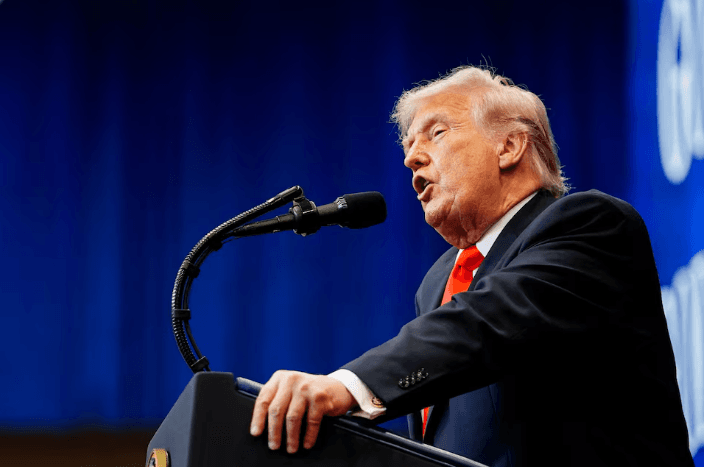
Anadolu Ajansı reports that U.S. President Donald Trump shared an article on his social media platform detailing his influence over Israeli Prime Minister Benjamin Netanyahu’s political future as tensions between the two countries intensify over Tel Aviv's military strategy in Lebanon.
Anadolu Ajansı says Trump told Israeli media in an interview highlighted in the article, titled "Trump holds the cards in Netanyahu’s shaky reelection chances," and it also reports that a senior U.S. administration official said the discussions often involved the Israeli leader calling for more military action and that Trump was tired of it.

El Mundo adds that the Israeli military spokesman, Effie Defrin, clarified that the army on the ground has "freedom of action to neutralize any threat and to respond to truce violations by Hezbollah."
El Mundo further reports that the United States demands Netanyahu halt the offensive in Lebanon to shield the negotiation with Iran, and it quotes the memorandum of understanding as establishing a ceasefire "on all fronts including Lebanon" while guaranteeing "the territorial integrity and sovereignty" of the Arab country.
What’s at stake next
İran International reports that David Schenker, former US Assistant Secretary of State for Near Eastern Affairs, said, "I don't feel good about it," arguing he was surprised by the scope of benefits Iran could receive under the U.S.–Iran Memorandum of Understanding.
İran International says the MOU outlines a 60-day negotiation period during which the future of Iran's nuclear program, sanctions relief, frozen Iranian assets, reconstruction funding and the administration of the Strait of Hormuz will be discussed, and it quotes Schenker saying, "In the meanwhile, it's a tremendous win for Iran."
The same source links the Lebanon front to the deal, saying Foreign Minister Abbas Araghchi warned that negotiations could not move forward unless fighting in Lebanon ended, while other Iranian officials described Lebanon as being at the "forefront" of discussions with Washington.
El Mundo, meanwhile, describes Netanyahu as trapped between Lebanese mud, Washington’s anger, and the agreement with Iran that conditions the negotiation on the end of the Israeli offensive against Hezbollah, and it says Netanyahu seeks an exit while the U.S. demands he act with more softness in Trump’s words.